

I drink a lot of hot coffee and tea throughout the day during most of the year, but that changes once the weather warms up. I like iced tea, but it doesn't feel like as much of a treat as a Cold-Brew Iced Coffee does.
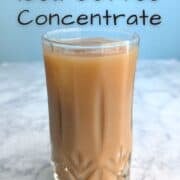
I make a concentrated, double-strength version of cold-brew coffee for my iced coffee. I love keeping this coffee concentrate in the refrigerator - it means I can pour an iced coffee whenever I want, without having to leave the house. And although I originally made it for iced coffee, I've been turning to this coffee concentrate for hot coffee, too.

In the summer, I'd recommend having an iced coffee at brunch alongside my Chocolate Chip Cookie Scones. The coffee concentrate is perfect to use in any recipes calling for double-strength coffee, like my Chocolate Espresso Tiramisu. It's also fantastic in cold punches, especially ones with coffee and chocolate ice cream.
Jump to:
- Why You'll Love This Cold Brew
- Choosing the Right Coffee Beans
- How Much Coffee to Use
- How to Grind the Coffee for Cold Brew
- Steeping the Coffee
- How to Strain Cold Brew
- Straining Without a French Press
- How to Use the Concentrate
- Storage
- My Best Cold Brew Tip
- Cold Brew Iced Coffee Concentrate FAQs
- Pair It with These Chocolate Sweets
- 📖 Recipe
Why You'll Love This Cold Brew
Cold brew coffee is steeped at room temperature or in the refrigerator overnight. There's no heat involved - and no bitterness. The overnight steep makes a rich, smooth brew that stays bright. It's very convenient: mix it before bed, strain it in the morning, and you have a ready-to-use concentrate for the rest of the week.
- Naturally smooth - The slow, gentle extraction keeps flavors soft and rounded.
- Full, rich flavor - The double-strength coffee holds up beautifully with milk or over ice.
- Perfect for iced coffee - It stays balanced when chilled, unlike traditionally brewed coffee.
- Make-ahead friendly - One batch lasts all week in the fridge.
SUMMARIZE AND SAVE THIS CONTENT ON:
Choosing the Right Coffee Beans
TL;DR: choose fresh, quality, whole bean coffee.
Cold brew only uses two ingredients - water and coffee beans - so the beans matter. You don't need anything fancy, but freshness and quality make a noticeable difference in your drink.
Freshness
Coffee beans don't "go bad," but they can go stale and lose flavor. Look for the roasted-on date or best-by date so you'll be able to choose beans that still taste like something.
Quality
I once made cold brew coffee concentrate from a very cheap can of beans, and it sat untouched in my fridge until it spoiled - I just didn't like it enough to drink it.
Pre-ground, inexpensive coffee can work if you're adding a lot of cream and sugar, but if you drink your iced coffee black or with minimal milk, choose decent-to-high quality coffee beans. If you normally buy budget coffee, try something one tier up in quality from your usual brand. Cold brew pulls out more flavor, so you need to like the flavors you start with.
Roast Level
I'm a light roast coffee person, but I use medium and dark roasts for iced coffee. That's what coffee shops use for cold brew, and it makes sense - the stronger flavor holds up better when you dilute it with milk or ice. When using the cold brew for hot coffee, I choose a darker roast because I mix the concentrate with 2 parts boiling water; a light roast tastes too weak mixed with that dilution. This varies by bean and brand, so experiment to see what you like.
Ask Your Local Coffee Shop
If you're undecided on what to use, ask a local coffee shop what beans they use for their cold-brew coffee, or simply ask the barista for a recommendation. They're usually happy to help if they're not busy.
Decaf
Good decaf whole coffee beans can be difficult to find in grocery stores, but often smaller coffee shops carry them. Decaf cold brew stays smooth and flavorful, so it's great for an afternoon pick-me-up without the caffeine.
How Much Coffee to Use
You'll want around 3 ounces of coffee beans, which will be around 1 cup by volume. This is why I recommend using a digital kitchen scale - the same measuring cup of beans can weigh very different amounts depending on the roast and the roaster.

I weighed out 3 ounces of coffee beans from two medium-dark roasts from different roasters, both bought at a grocery store. You can see that one fills the bowl much more than the other, despite the identical weight. Coffee on the left is from a large specialty roaster; on the right, a regional roaster. Both made delicious cold brew. The regional roaster's coffee had an earlier best-by date (meaning it was older), but I preferred it - it had a more nuanced flavor, especially when I used the concentrate for hot coffee.
A quick note about oily beans
One coffee had shinier beans than the other. Oil on the surface of coffee beans is a sign of oxidation and occurs more often on dark roast or older beans. It doesn't happen to all dark roast beans, as you can see in the picture above, but it's less common with light roasts. If you see oily light roast beans, they're likely older or stale.
How to Grind the Coffee for Cold Brew
Cold brew is flexible - after all, you can use pre-ground coffee depending on how you'll drink it. A burr grinder is the gold standard for coffee lovers, but a blade grinder works perfectly well with a little technique.
Coffee starts to lose its freshness within 20 minutes of being ground, which is why I recommend using whole bean coffee and grinding it right before you brew. Grinding beans yourself also means you control the coarseness. For cold brew, you'll want coarse grind. I use a bullet blender for convenience, since it's an appliance I already have.
I suggested medium-coarse grind years ago, but I've changed my mind. Coarsely ground coffee beans strain better, with less sediment in your coffee. Finer grounds extract more quickly, which can make the concentrate taste over-extracted and bitter.
If you don't have a coffee grinder, ask your local coffee shop to grind the beans for you. Some grocery stores also have grinders if they have bulk coffee beans. Be sure to tell them you're making cold brew (or French press), since both use coarsely ground beans.
At home, I use a Magic Bullet blender with the flat blade, which is designed for grinding things like spices. Because the cup is small, I grind my beans in 2 batches - it's much easier to grind when the cup isn't overfilled. I pulse my beans 10 times to get them to the right size. (I'm listing this here so I remember 😆 - hat tip to Coffee Geek for the Magic Bullet coffee grinding times.)
Steeping the Coffee
It takes longer to read about choosing coffee and grinding beans than it does to actually prepare the cold brew.

- Grind your coffee to a coarse grind, and put in a large container that will hold 4+ cups. I use my French press.
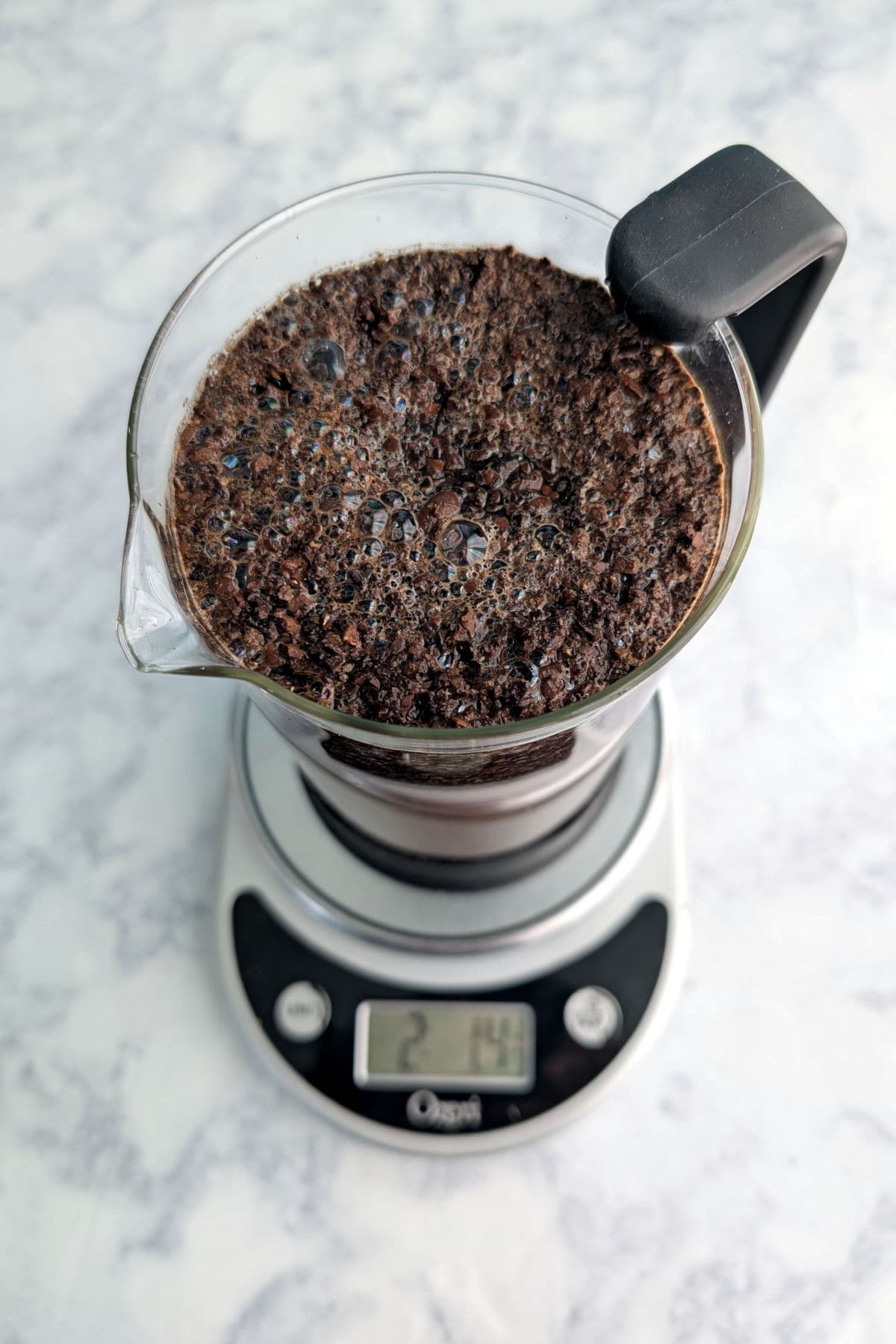
- Add around 4 cups of water.

- Give everything a good stir, for about 30 seconds. I use a chopstick since it's thin. I love how the coffee turns foamy at the top.

- Cover your container, and store at room temperature or in the refrigerator overnight.
How to Strain Cold Brew
After around 12 hours, it's time to strain the coffee. I find it okay if I wait 13 or 14 hours, but you may find you're pickier than I am.

- Give everything another stir.

- If you're using a French press (affiliate link), add the lid and slowly press the plunger down. If you go too fast, coffee will splash out.

- Pour the coffee concentrate into a clean container. The plunger holds the grinds down so you don't get much sediment.

- Although you added 32 ounces of water, you'll have about 28 ounces (or 800 milliliters) of concentrate, since some water stays behind with the grounds.
Place a lid on your container of coffee concentrate, and store in the refrigerator until you're ready to have coffee!
Hint: After you've strained the coffee, don't press on the coffee grounds to try to get more liquid from them. It will be bitter, in a bad way.
Straining Without a French Press
Using a French press is the easiest way to make and strain the cold brew, but if you don't have one, you can use a handheld mesh strainer, paper coffee filters, or both.

- Strain through a mesh strainer into a clean container. There will be some finer coffee sediment left behind at the bottom of the container; the mesh usually doesn't catch it all. Filter it a few times if this will bother you.

- Strain through a coffee filter, placed either in a strainer or a large funnel. Straining this way will take longer since the coffee goes through the paper drip by drip. You may need to use multiple coffee filters.
I highly recommend using a funnel or strainer to provide structure for the coffee filter, to prevent messes.
How to Use the Concentrate
Once you have the batch of concentrate, you can use it a few different ways. Iced coffee, hot coffee, stronger, lighter - it's all up to what you feel like. These are the ratios I use.
Iced Coffee Ratio
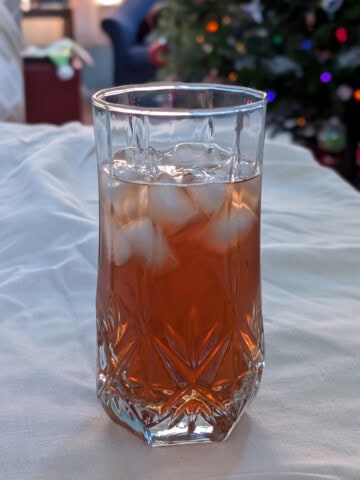
This coffee concentrate is double strength, which makes it perfect for making iced coffee. Just mix equal parts of coffee concentrate with water or milk of your choice. If you're adding ice to your coffee and will sip it slowly, cut back on the amount of milk or water - the melting ice will dilute the coffee over time.

Hot Coffee Ratio
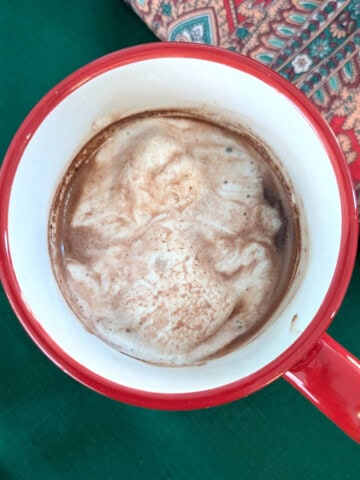
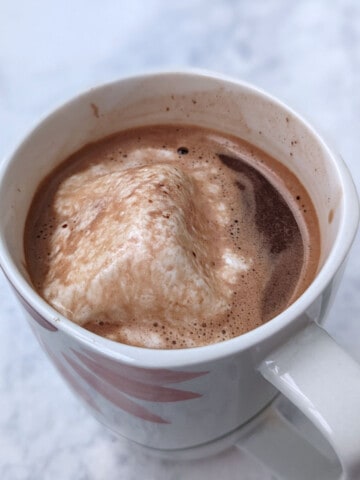
I sometimes use cold brew to make hot coffee as well, since I got rid of my Keurig. (Your results may vary; not all beans work well for this.) I mix 4 ounces of cold brew concentrate with 8 ounces of boiling water. The water needs to be at a full, rolling boil to get the coffee hot enough.
I still add a splash of milk, but less than I would for traditionally brewed hot coffee. If you take your coffee with milk, heat the milk a little in the mug first, then add the coffee concentrate and boiling water. When you use milk, add slightly less boiling water to keep the coffee from tasting thin.
You can heat the cold brew, but do it very gently - too much heat will dull the delicate flavors extracted during the long overnight steep.
Remember: If you're going to make hot coffee with the concentrate, choose a darker roast than you would normally drink. I'm a light roast person, but I use a medium-dark or dark roast here. A light roast coffee concentrate won't be flavorful enough when mixed with that much hot water.
Storage
Store the cold brew coffee concentrate in a sealed container in the refrigerator. It will stay good for a week or two, possibly longer, as long as you keep it toward the back of the fridge and away from temperature fluctuations.
If you're not sure you'll drink it that quickly, coffee concentrate makes great coffee ice cubes. Freeze it in ice cube trays, then transfer the cubes to a freezer bag to prevent evaporation from exposure to dry freezer air.
My Best Cold Brew Tip
Use coffee beans that you like, whether that's light or dark roast, or inexpensive versus expensive. There's nothing sadder than spending the time and money to make something that you won't enjoy!
Cold Brew Iced Coffee Concentrate FAQs
Iced coffee is brewed hot, then chilled and poured over ice. Cold brew coffee is steeped for a long period of time, usually overnight, without any heat. Brewing with hot water releases different flavors from the coffee grounds than cold steeping does, which is why cold brew is usually smoother and more flavorful and nuanced than iced coffee is. And because cold brew is already chilled, you can enjoy it iced without worrying about it watering down nearly as much as you would pouring hot coffee over ice.
Inspired by the DIY Coffee Concentrate recipe from Oh She Glows - a recipe my friend Kate shared with me years ago.
Pair It with These Chocolate Sweets
Here's some delicious chocolate sweets to have with your afternoon pick-me-up:

Interested in other recipes? I save and share recipes I like or want to try on my Pinterest page - follow me there! You can also check out my Facebook page for more recipes and helpful tips. I'm also happy to try to help troubleshoot my recipes there.
Have you tried this recipe? Or have a question about it? Rate it or leave a comment below! (PS: rating my recipes helps other people find them, too!)
📖 Recipe

Cold-Brew Coffee Concentrate
Equipment
- French Press (affiliate link)
- Paper coffee filters (optional)
Ingredients
- 1 cup coffee beans (3 ounces)
- 4-4.5 cups water (32-34 ounces, at room temperature)
Instructions
The Night Before
- Grind your coffee beans to a coarse grind. This takes me 10 pulses in the Magic Bullet blender (affiliate link) with the flat blade. I do this in 2 batches; don't overfill your appliance. Consult your coffee grinder's instructions.
- Stir together ground coffee and water in a pitcher; I prefer using my French press (affiliate link). Give it a good stir, at least 30 seconds, to get everything moistened. The top should get a little foamy.
- Cover with plastic wrap and let rest 12 hours, in the fridge or on the counter. It's ok if it rests longer.
The Next Day
- Stir coffee and grounds again.
- Push down the plunger of the French press (affiliate link), then strain. Don't squish or press on the coffee grounds. Pour the coffee concentrate into a clean container.
- If not using a French press (affiliate link), you can strain the coffee concentrate through a mesh strainer (affiliate link) or paper coffee filter. The mesh strainer (affiliate link) will let a small amount of sediment through; you may want to strain it more than once. A paper coffee filter lets only a little coffee through at a time, will need a support (like a strainer or funnel), and will take a while to filter. You may need multiple paper filters.
- Refrigerate coffee concentrate in a sealed container until ready to use. It will last a few weeks if stored in the back of the refrigerator.
Making Iced Coffee
- To make iced coffee, mix equal parts coffee concentrate and water or milk. If you'll nurse your iced coffee, cut back on the water since your ice will dilute the coffee as it melts.
- The coffee concentrate makes about seven 8-ounce iced coffees.
Making Hot Coffee
- I prefer light roast coffee in the mornings, so I find using a medium or dark roast for the coffee concentrate gives me a tasty cup of hot coffee. Note: this only works for some coffee brands.
- Combine 1 part coffee concentrate with 2 parts boiling water in a heat-proof mug. You'll have the best results if your water is at a full, rolling boil, but even so, your hot coffee may not be incredibly hot. You may gently warm up the coffee concentrate before adding the boiling water, but not too much or the flavor will be off.
- If you usually add milk to your hot coffee, milk should replace some of the boiling water. Heat the milk first, then add coffee concentrate, then add the remaining boiling water.
Coffee Concentrate Ice Cubes
- If you can't drink all of the coffee concentrate within 2 weeks, freeze it in ice cube trays. After the coffee ice cubes have frozen, store them in an airtight container.
Notes
Nutrition



Leona Konkel says
Clearly, I love my recipe. I knew it was great iced coffee, but I'm truly surprised at how much I've been enjoying using this cold brew coffee concentrate for hot coffee every morning. I hope you enjoy it as much as I do. Drop me a note and let me know how it turns out!