

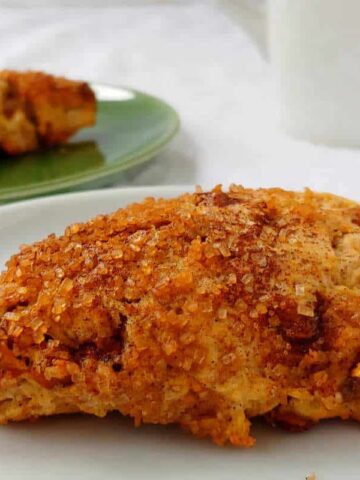
These Layered Cinnamon Scones have cinnamon chips strewn throughout, and a brown sugar-cinnamon filling between pull-apart layers. They're like cinnamon rolls, but faster and easier!
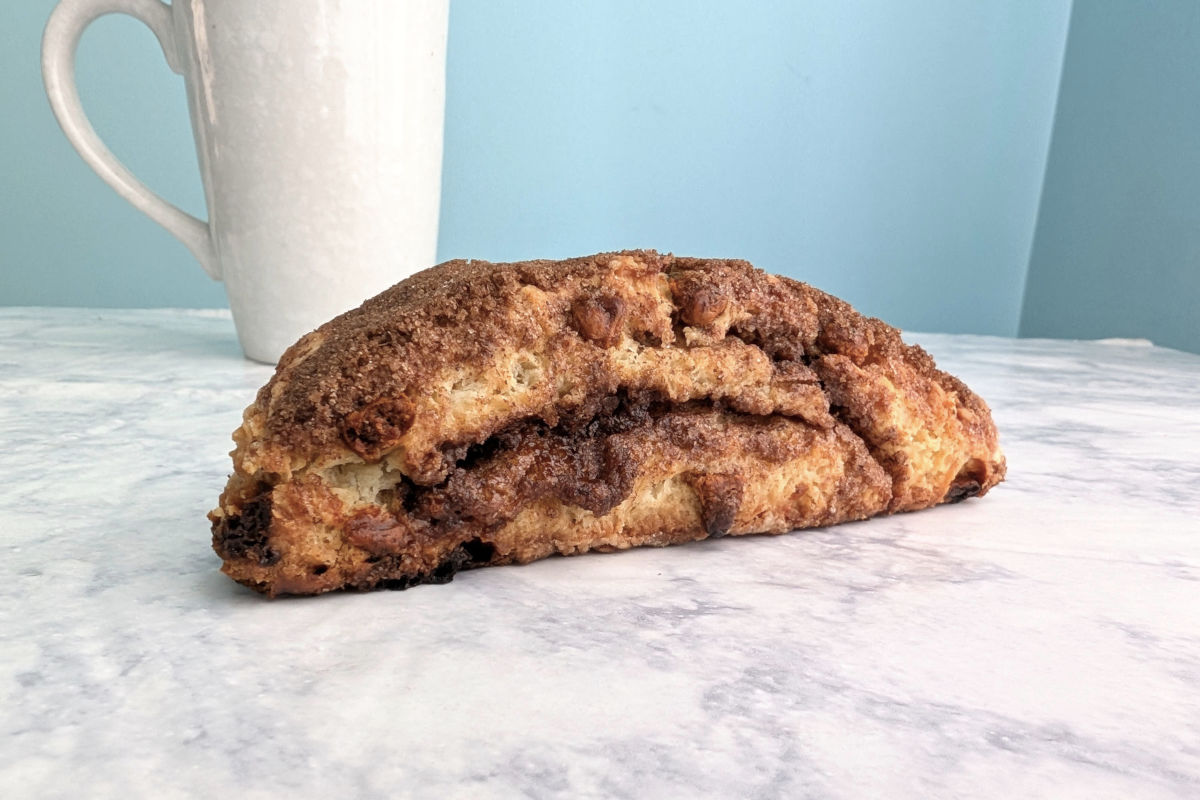
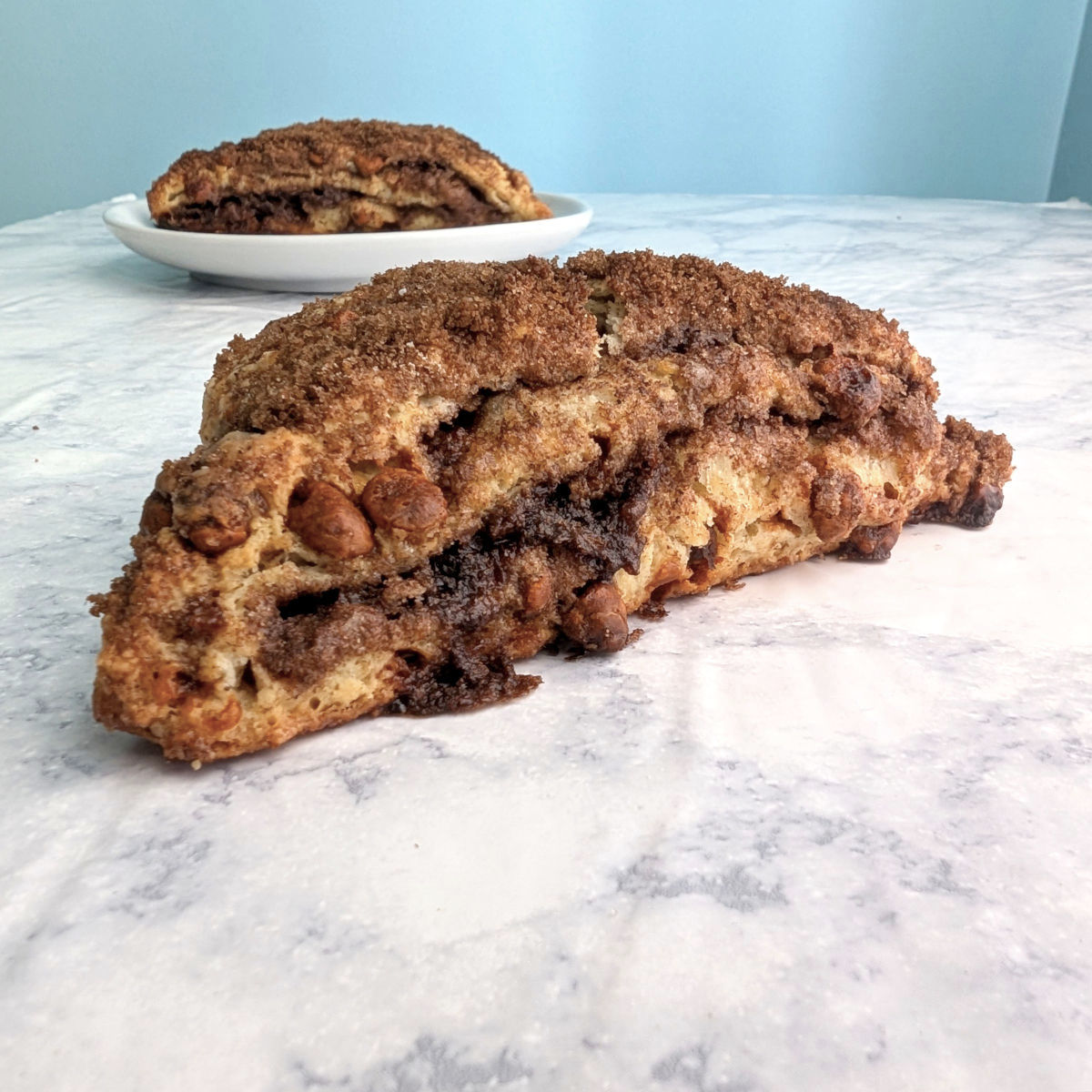
Layered Cinnamon Scones at a Glance
- ⏱ Prep Time: 30 minutes
- ❄️ Chill Time: 30 minutes (optional but recommended)
- 🔥 Bake Time: 16 minutes
- ⏳ Total Time: 1 hour 16 minutes
- 👪 Serves: 12
- 🍽️ Calories: 304
- 🌾 Main Ingredients: All-purpose flour, granulated sugar, brown sugar, cinnamon, butter, eggs, milk, cinnamon chips
- 👌 Why You'll Love It: These Layered Cinnamon Scones have a brown sugar-cinnamon filling and cinnamon chips baked into every pull-apart layer - all the flavor of cinnamon rolls, none of the yeast.
SUMMARIZE & SAVE THIS RECIPE ON
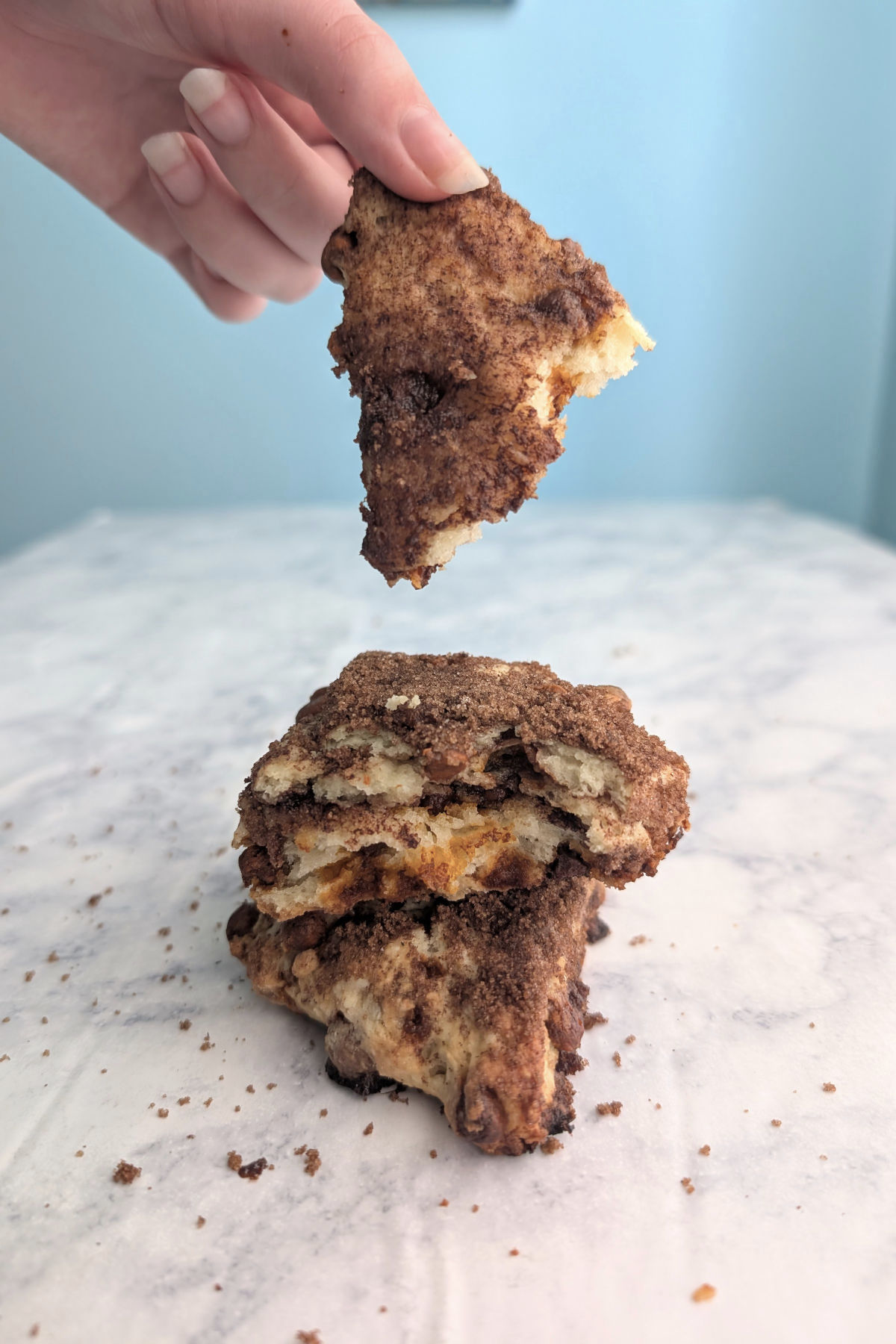
You don't need glaze since the cinnamon chips (affiliate link) inside provide bursts of sweetness - just this side of being too much. With cinnamon sugar on top, the exterior bakes up with a bit of crunch while the inside stays tender. In so many ways, these are my ideal scone.
These scones don't have the yeasted texture of my overnight cinnamon rolls, but they're so much simpler to make!
Jump to:
Why You'll Love This Recipe
- Cinnamon roll flavor: A brown sugar-cinnamon filling is folded between layers, while cinnamon chips throughout add even more sweetness.
- Crisp outside, tender inside: Cinnamon sugar on top adds crunch while layers stay soft.
- Make-ahead friendly: These bake best when the dough is cold; chill the shaped scones overnight before baking, or freeze to bake another day.
Key Ingredients
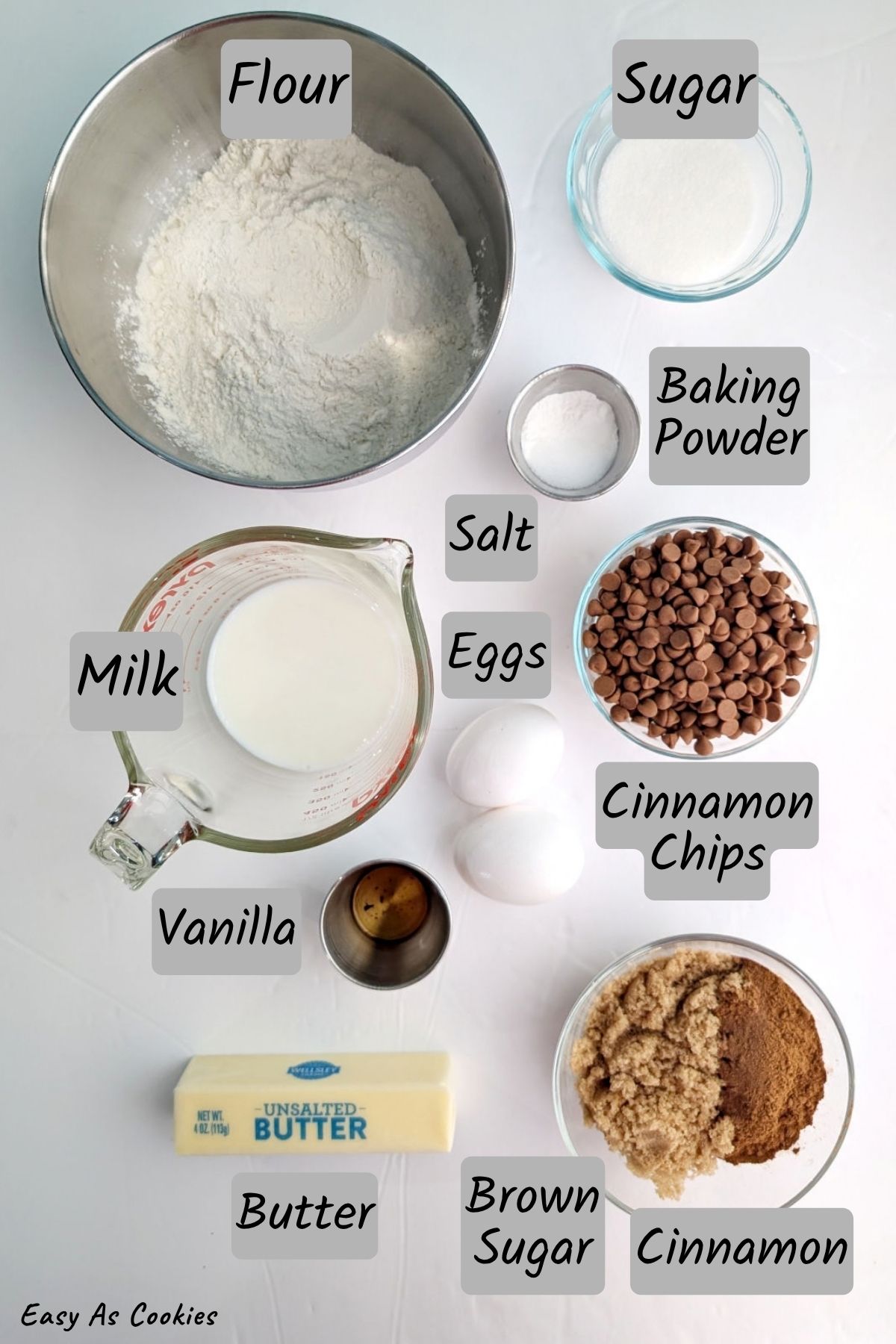
Unsalted butter: Use it cold to give the scones the best rise.
Eggs: Bind the dough together - especially important since you fold the dough to make layers.
Brown sugar: Makes the cinnamon filling a little richer. Both light and dark brown sugars are fine.
Ground cinnamon: We use plenty so that the scones are flavorful - no hint of cinnamon here! Most grocery store cinnamon is cassia cinnamon - it works better here than "true" cinnamon, which has a different, subtle flavor. I often use a mix of the two. Whichever variety you use, be sure it's fresh.
Cinnamon chips: A seasonal baking chip. In 2018 I found them at Target in the Halloween aisle, and I once found them in late summer at Shoprite; I haven't found them locally in 2026. You can also order them from Amazon, but it's easy to find and add butterscotch chips, which add just as much sweetness. Don't skip baking chips entirely - scones will be bland without them.
How to Make Layered Cinnamon Scones
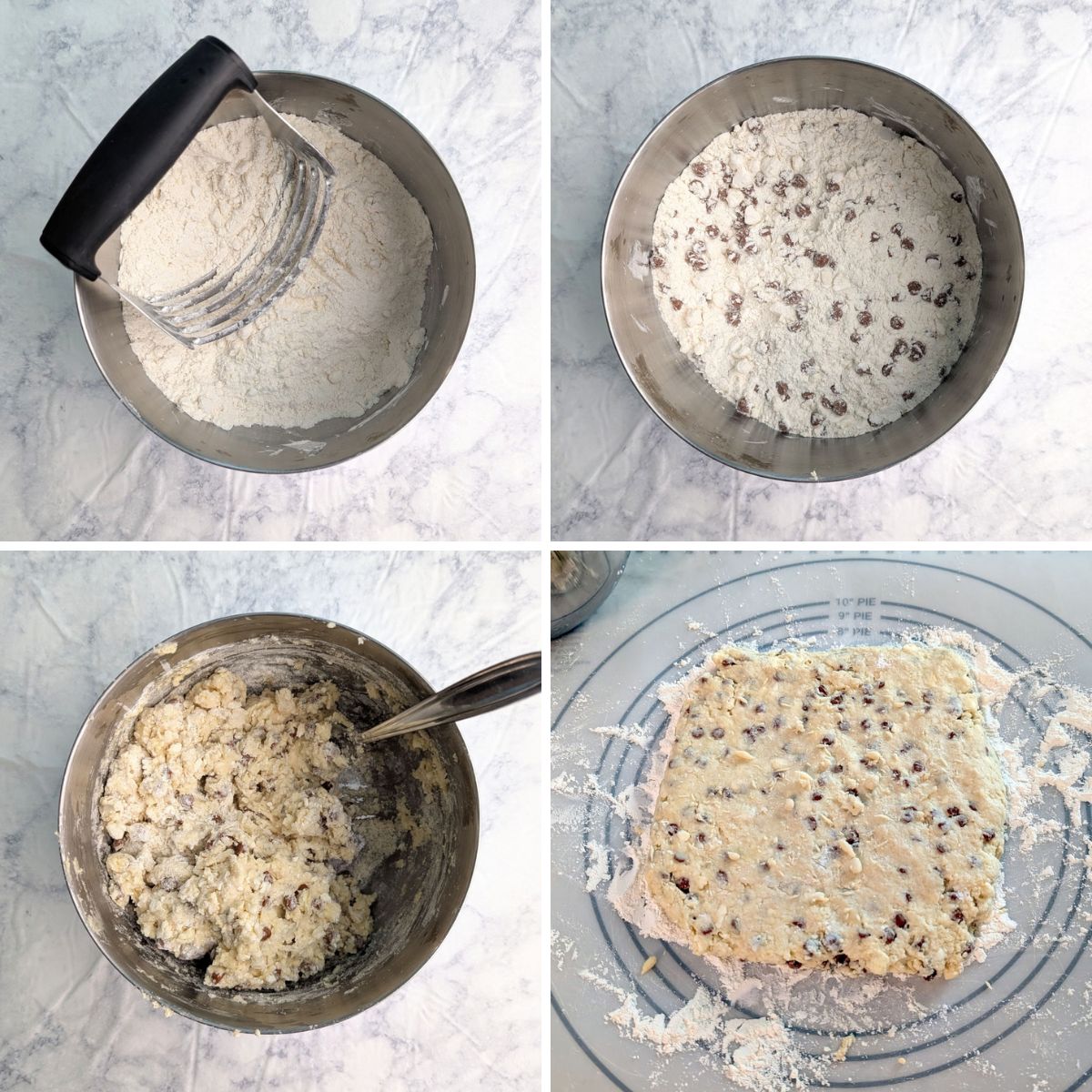
One: Mix together the flour, sugar, baking powder, and salt. Cut the cold butter into small pieces, add to the flour, and use a pastry cutter to work it into the flour mixture, cutting it until the pieces of butter are no larger than peas.
Two: Add the cinnamon chips, and toss them in the flour mixture.
Three: Mix together the eggs, milk, and vanilla in a measuring cup. Add to the flour mixture, and use a fork to push the dough together until the mixture is just combined. Some remaining flour is fine, as long as the dough sticks together. Do not overmix.
Four: Turn the dough out onto a floured surface, and pat into a 9x9 inch square.
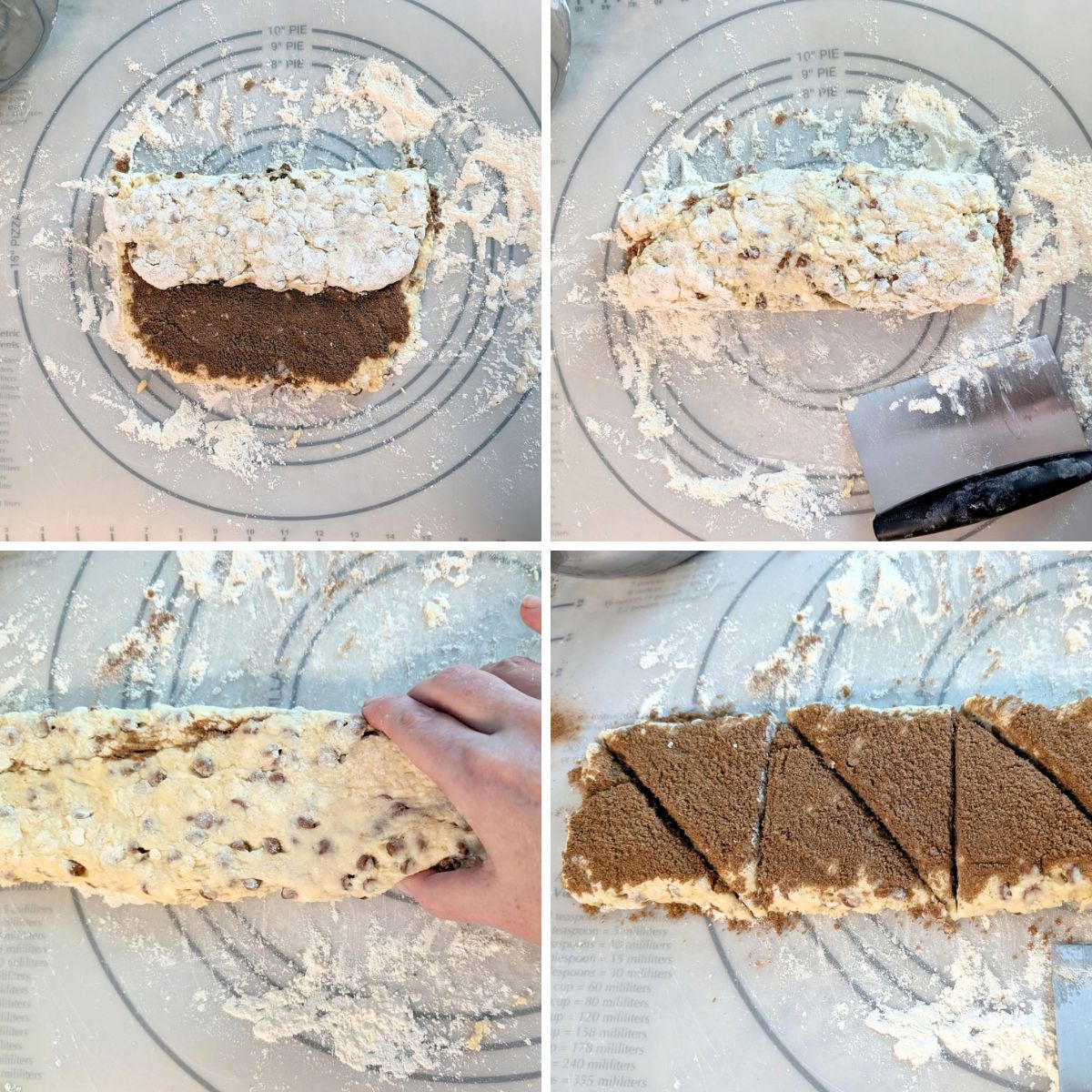
Five: Mix together the brown sugar and cinnamon. Pat two-thirds of the brown sugar-cinnamon filling over the entire surface of the dough, all the way to the edges. Fold one third of the dough over the middle third, like you would a letter.
Six: Fold the other third of the dough over, completing the trifold.
Seven: Starting in the center, pat the dough out into a 3x18 inch log. I often lift it from the surface slightly so it doesn't stick, and pinch and pull from the center, so that I squish the dough so it stays 3 inches wide.
Eight: Pat the remaining filling onto the top. Cut into 3x3 inch squares, and then cut each square into half on the diagonal. A bench scraper works well here.
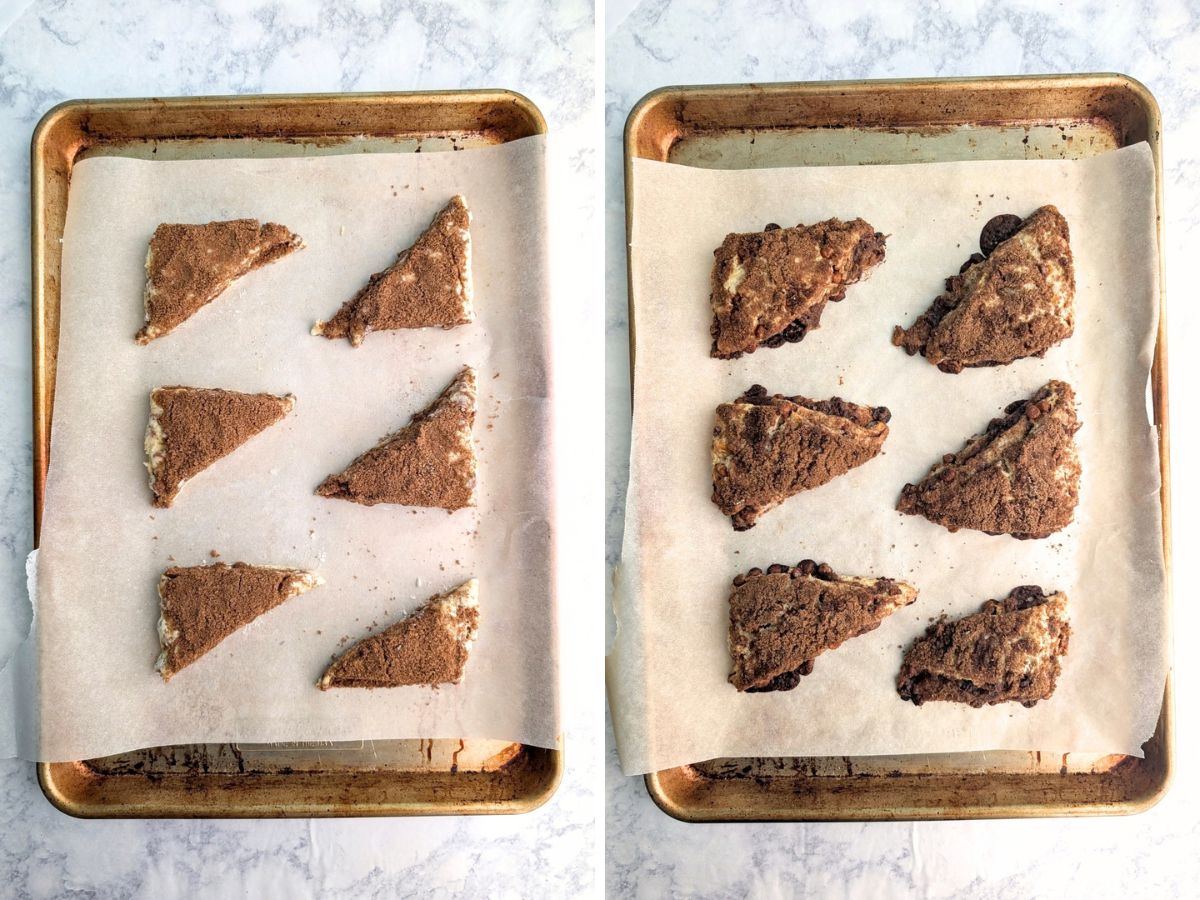
Nine: Place the scones on a parchment- or silicone mat-lined baking sheet. The dough is fragile, but the bench scraper helps me transfer them.
Chill the scones in the refrigerator for 30 minutes.
Ten: Bake at 425F for 16 minutes. They'll be golden at the edges, and a toothpick inserted into the center will come out clean. The cinnamon sugar and chips may ooze a little.
Serving and Storage
I eat these scones immediately, as soon as they are cool enough to handle, although they're also good at room temperature. I have them with coffee, and they're sweet enough that I insist my daughter have a glass of milk with hers.
Like all scones, these are best on the day they're baked. Store leftovers in an airtight container at room temperature. Leftovers are still good on the second day, though, as long as you warm it gently. I reheat mine for 8 seconds in the microwave; heating more than 10 seconds will make the scone tough.
If you love cinnamon flavor, try my fragrant Slow Cooker Apple Butter or my Apple Cider Donut Cake topped with cinnamon sugar.
Make-Ahead and Freezing
You can shape and cut the scones and chill them in the refrigerator overnight, covered. Bake the next day as usual.
You can also freeze the cut, unbaked scones. Separate and freeze the scones on a tray. Once they're frozen, place in a freezer-safe zipper bag. Cinnamon sugar may fall off of them during storage.
Bake frozen scones without thawing them first. Add loose cinnamon sugar to the top of the scones, and add 1 minute onto the baking time. Test it with a toothpick; if it's doughy, bake for another minute.
I've never had much success freezing already-baked scones.
Tips for Making Great Layered Cinnamon Scones
✨ The brown sugar-cinnamon filling may be messy and fall off the scones; just sprinkle it back on top. Filling on the baking sheet may scorch, so bake on parchment paper for easier cleanup.
🍬 Don't skip the cinnamon chips. Use white or butterscotch chips if necessary; the scones won't be sweet enough without them.
🍴 Use a fork to toss the scone dough together - it clumps less than a spoon. I do this with all scone recipes, including my Apple and Pear Scones recipe.
🌾 A little dry flour in the bowl is generally normal with scones, so don't worry if this happens. It will stick to the dough as you shape it. If it doesn't, don't struggle with it - add milk a little at a time, just until everything sticks. Slightly wet dough is always better than dry dough.
🤚 Handle scone dough gently and avoid overmixing, which develops gluten and can make the scones tough.
❄️ Use cold butter if baking scones immediately. If you plan to chill or freeze the dough, however, softer butter is fine - the refrigerator will firm it back up.
Layered Cinnamon Scones FAQ
Scones can become dry if they're overbaked; there's too much flour or not enough liquid in the dough; or if the dough is overworked and kneaded. Scones also seem dry or flat if there's not enough sweetness. If for some reason the scones seem dry, you can make a thin glaze of 1 ¾ cups powdered sugar, ½ teaspoon cinnamon, and 3 tablespoons water to drizzle over the scones.
No, I can't recommend using gluten-free flour for these scones. Since you fold the dough twice to make the layers in Layered Cinnamon Scones, you'll want the slight amount of gluten that will develop from the wheat flour. I suggest trying a different recipe if you need to eat gluten-free.
It should work. While I haven't tested Layered Cinnamon Scones with non-dairy milk, I've successfully used it in other scones and baked goods. You shouldn't notice much, if any, change in texture. I recommend soy or oat milk for neutral flavor; coconut or almond milks will add distinct tastes. Even if you use non-dairy milk, these scones will not be dairy-free since they include butter.
Other Scones You'll Love
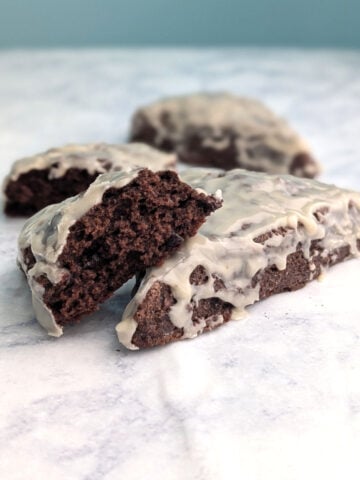
I love all kinds of scones. Cranberry Oat Pecan Scones feel warm and festive once the weather turns colder, while I like indulgent scones with chocolate any time of year.

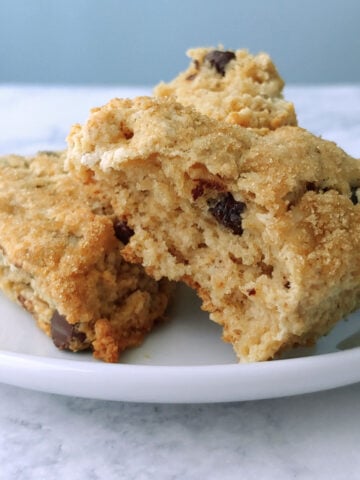

I hope this becomes a recipe you'll return to. If you try it, a star rating below helps others find it - and I'd love to hear how yours turns out in the comments! 💕 Questions or trouble? Drop a note, and I'll do my best to help.
📖 Recipe
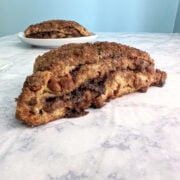
Layered Cinnamon Scones with Brown Sugar Filling
Equipment
- pastry cutter (affiliate link)
- bench scraper (affiliate link)
- Parchment paper or silicone baking mat
- baking sheet
Ingredients
- 2 ¾ cups all-purpose flour (330 grams)
- 4 tablespoons granulated sugar (50 grams)
- 1 tablespoon baking powder
- ¾ teaspoon table salt
- 8 tablespoons cold butter (113 grams)
- 1 cup cinnamon chips (affiliate link) (190 grams)
- 2 egg
- ½ cup milk, cream, or half-and-half (113 grams; I used 1% milk)
- 1 teaspoon vanilla (5 grams)
Brown Sugar-Cinnamon Filling
- 10 tablespoons brown sugar (130 grams)
- 2 tablespoons cinnamon
Instructions
- Combine flour, sugar, baking powder, and salt. Use a pastry cutter (affiliate link) or two knives to cut in the butter, until the butter is in pieces no larger than peas. Stir in cinnamon chips (affiliate link).
- Whisk together egg, milk, and vanilla in a measuring cup. Pour egg mixture into flour mixture. Use a fork to toss the flour and egg mixture together, stirring just enough to moisten the flour. A tiny bit of leftover flour in the bowl is okay, but if you have a lot, add a teaspoon or two more of milk until a dough forms.
- Use the fork or your hands to gently form a ball of dough, if necessary. (Don't handle the dough too much, or your scones will be tough.) Turn dough out onto a lightly floured surface and pat into a 9x9 inch square.
- Combine brown sugar and cinnamon. Pat about two-thirds of the brown sugar-cinnamon filling onto the dough, all the way to the edges.
- Fold the top third of the dough over the middle third of the dough, as if you're folding a tri-fold letter. Pat down the dough.
- Fold the bottom third of the dough over what you've already folded. Pat down the dough, lengthening it as you pat into a long, 3x18 inch rectangle.
- Top with the remaining filling and pat it on and out to the edges. Cut the dough into six (3x3 inch) squares, and then cut each square in half along the diagonal to create 12 triangles.
- Place scones on a lined baking sheet or plate and place in refrigerator for 30 minutes. (Chilling is optional, but the scones will bake better if you chill them.)
- Meanwhile, preheat oven to 425F. Bake your chilled scones for 16 minutes. Eat warm, at room temperature, or immediately.
- Scones are best on the day they're made, but leftovers can be stored in an airtight container at room temperature. Reheat gently, for about 8 seconds in the microwave. Do not overheat, or the scones may become tough.
Make-Ahead/Freezing
- Shape and cut the scones and chill them overnight in the refrigerator. Bake them the next day for the normal time.
- Bake only what you will eat on the day you make them; freeze the rest. Shape and cut the dough, place on a tray, and freeze.
- Store frozen scones in a freezer-safe zipper bag. Cinnamon sugar will fall off, and that's okay. Bake scones within 3 months.
- Bake from frozen, without thawing. Top with any cinnamon sugar that fell off into the bag, and add 1 minute to the baking time. Test with a toothpick; if it's doughy, bake for another minute.





Leona Konkel says
I've been making some version of these scones for the last 13 years. I love them, and I'm especially glad I have some stored in my freezer! I hope you find them as satisfying to make and eat as I do. Let me know how they turn out!