

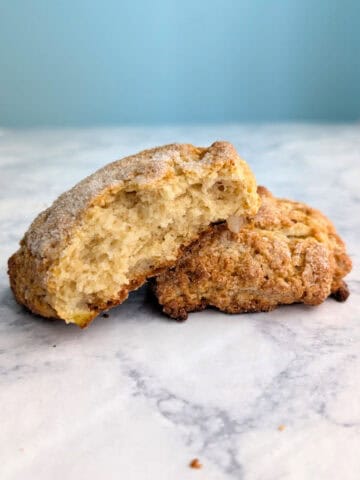
Who wouldn't want fragrant citrus in a light, tender scone finished with a bright, sweet glaze to lift a winter morning? These refreshing Grapefruit Scones make cold weekends so much cheerier.
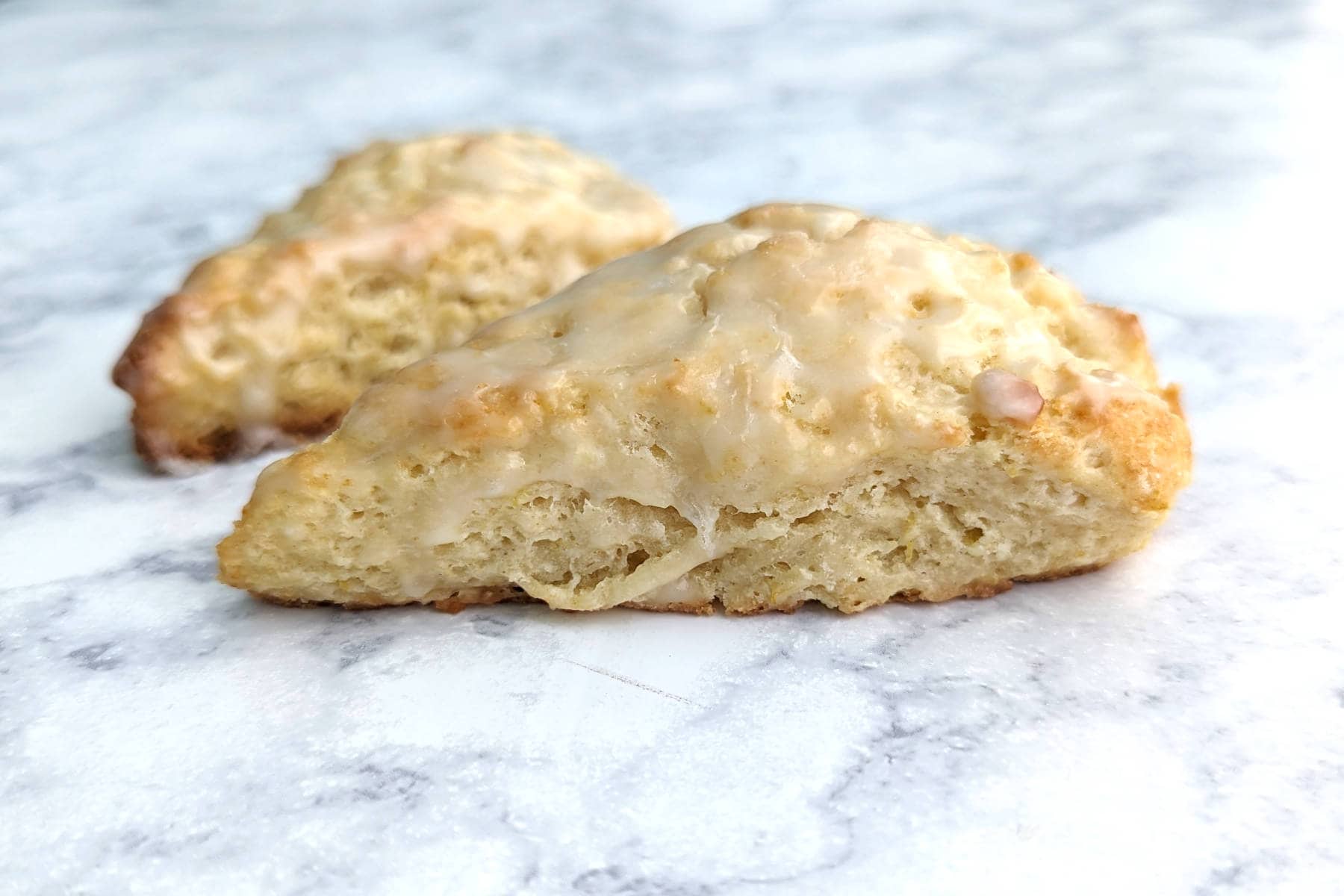
I developed these grapefruit scones back in 2012, inspired by Grapefruit Yogurt Cake and an abundance of grapefruit. At the time, it was surprisingly hard to find a recipe for scones that let the grapefruit shine on its own instead of pairing it with other flavors.
So when we received a gift of fresh grapefruit this Christmas, these scones jumped to mind. They're packed with zest and fresh juice for grapefruit flavor in the scone itself, and topped with a light grapefruit glaze. They're delightful.
If you like fruity scones, you may also like my Strawberry and Cream Scones or Chocolate Orange Scones.
Jump to:
Why I Love Grapefruit Scones
You'll love these grapefruit scones because:
- Bright citrus flavor. Fresh juice and zest give the scones a sunny flavor that really comes through.
- Tender texture. Cold butter and gentle handling keep the scones soft and light.
- Cheerful glaze. A quick grapefruit glaze adds extra punch - don't skip it!
- Perfect for slow weekends. They're a cozy, bright breakfast that makes winter mornings feel special.
SAVE AND SUMMARIZE THIS CONTENT ON:
Ingredients

All-purpose flour provides structure.
Granulated sugar provides sweetness.
Baking powder and baking soda provide lift; the baking soda in particular reacts with the extra acidity in the grapefruit juice and buttermilk. Table salt balances the flavors.
Buttermilk provides extra tang. I usually use sour milk, made by combining 1 teaspoon/5 milliliters of lemon juice or vinegar with enough milk to equal ⅓ cup/80 milliliters. Mix it when you start so the milk curdles before you add it to the flour mixture. You can also use yogurt thinned with a little milk.
Unsalted butter, cut into the flour, provides lift and moisture. Salted butter will make your scones salty. Solid coconut oil or vegan butter should work; so should shortening, but it may make your scones taste flat since it adds no flavor.
Powdered sugar is necessary for the glaze, as it includes cornstarch which helps it to thicken.
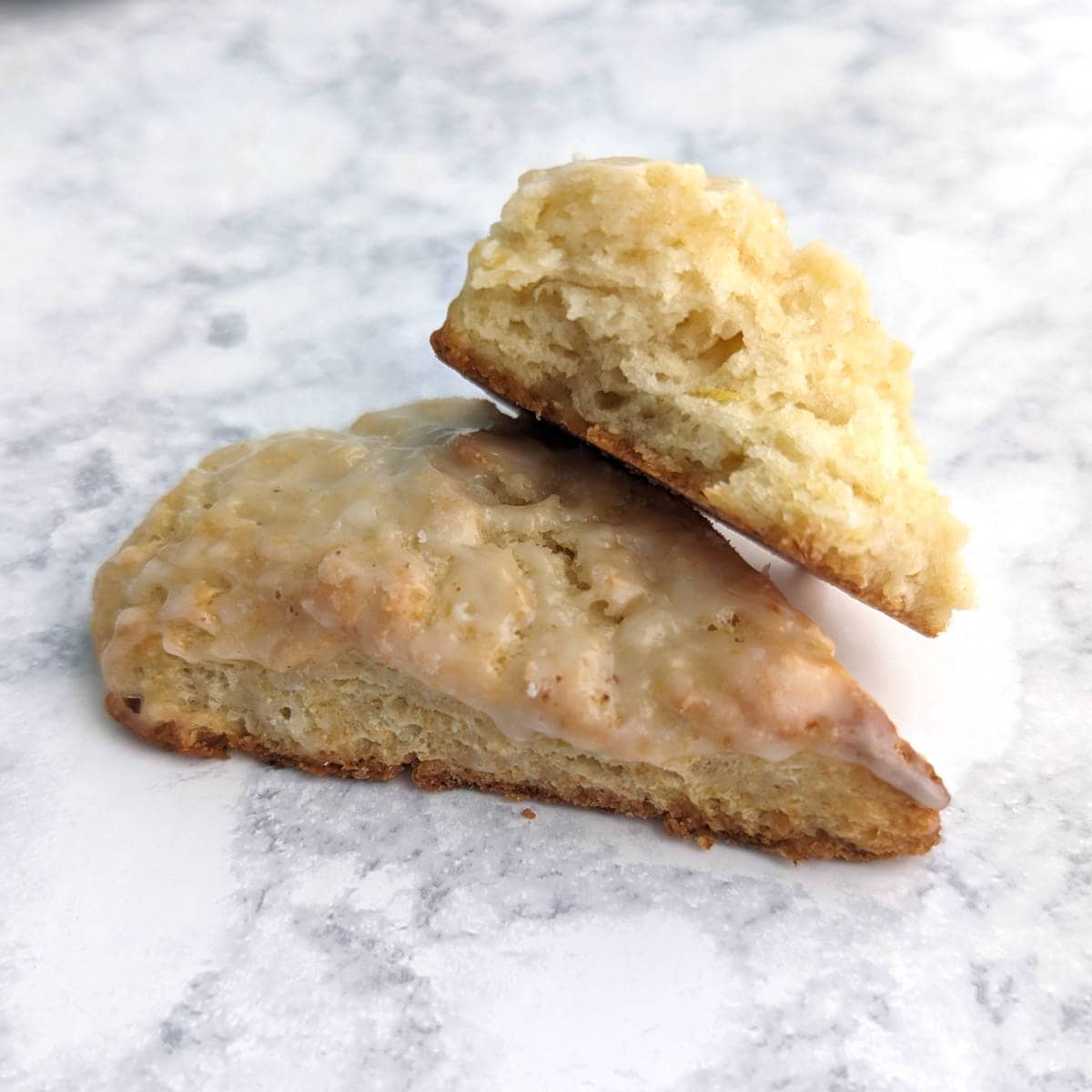
Grapefruit: It's the star! I prefer to use the red grapefruit, as they're a little sweeter. However, white grapefruit also works. You need the whole fruit, since zest goes into the dough, and fresh grapefruit juice is in the dough and glaze. Canned or bottled grapefruit juice often has a metal taste, which will add an off taste to your scones.
How to Make Grapefruit Scones
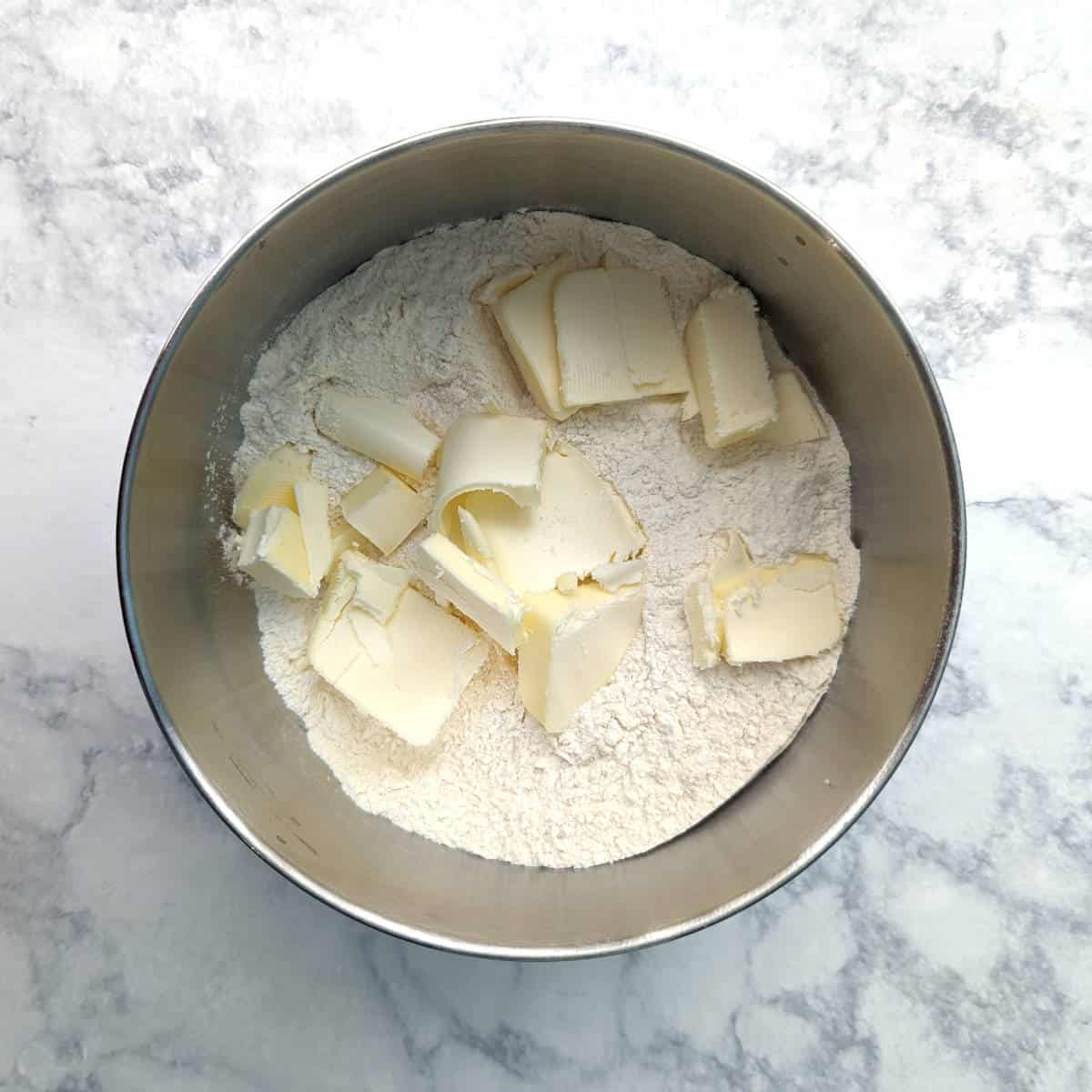
One: Mix together your flour, sugar, and leavenings. Add your diced butter. Smaller pieces of butter are easier to mix in.
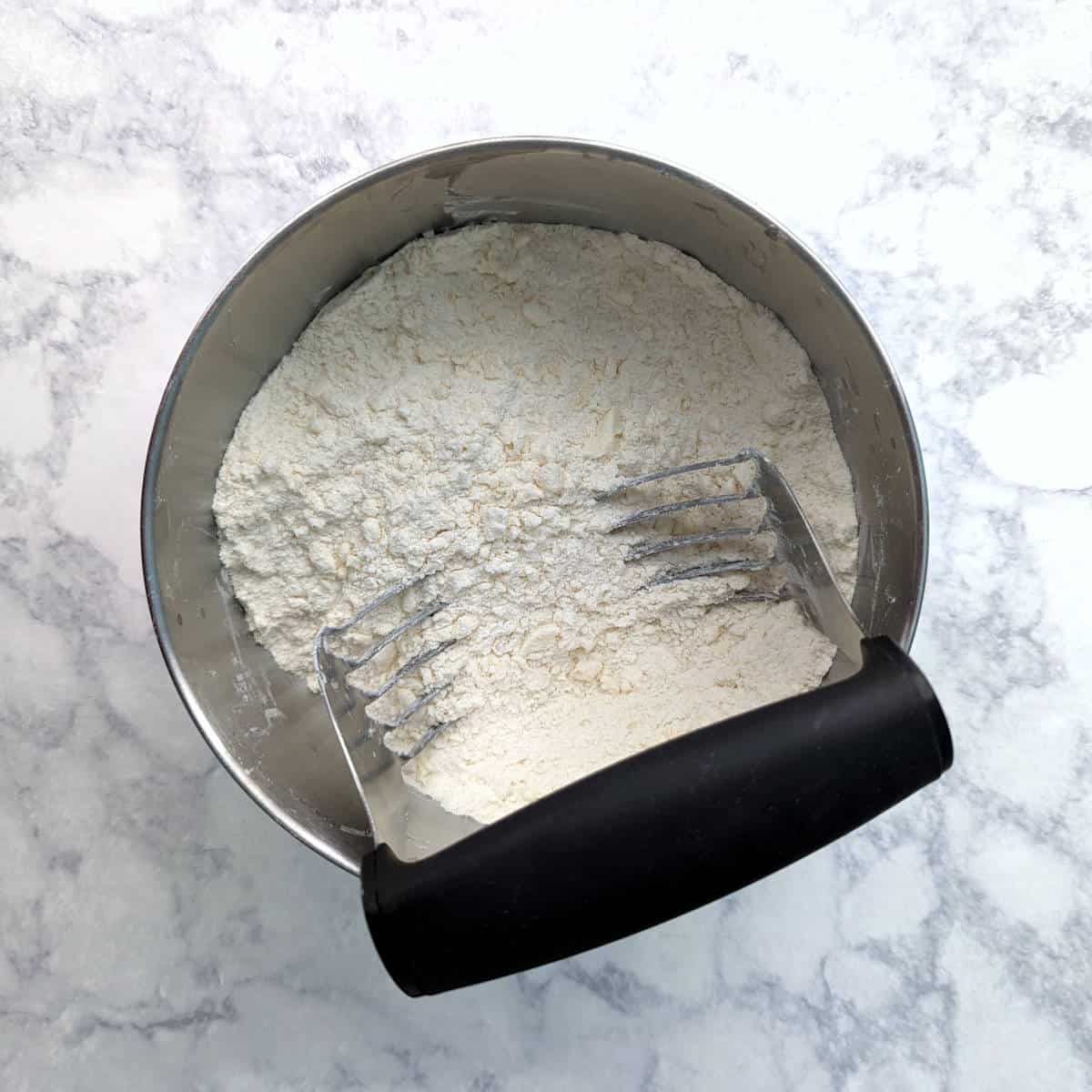
Two: Use a pastry cutter, or two knives, to cut the butter into the flour. There should be no pieces larger than peas.
Add your grapefruit zest to the flour mixture. I usually do this by grating the zest directly into the bowl. Toss it all together with a fork.
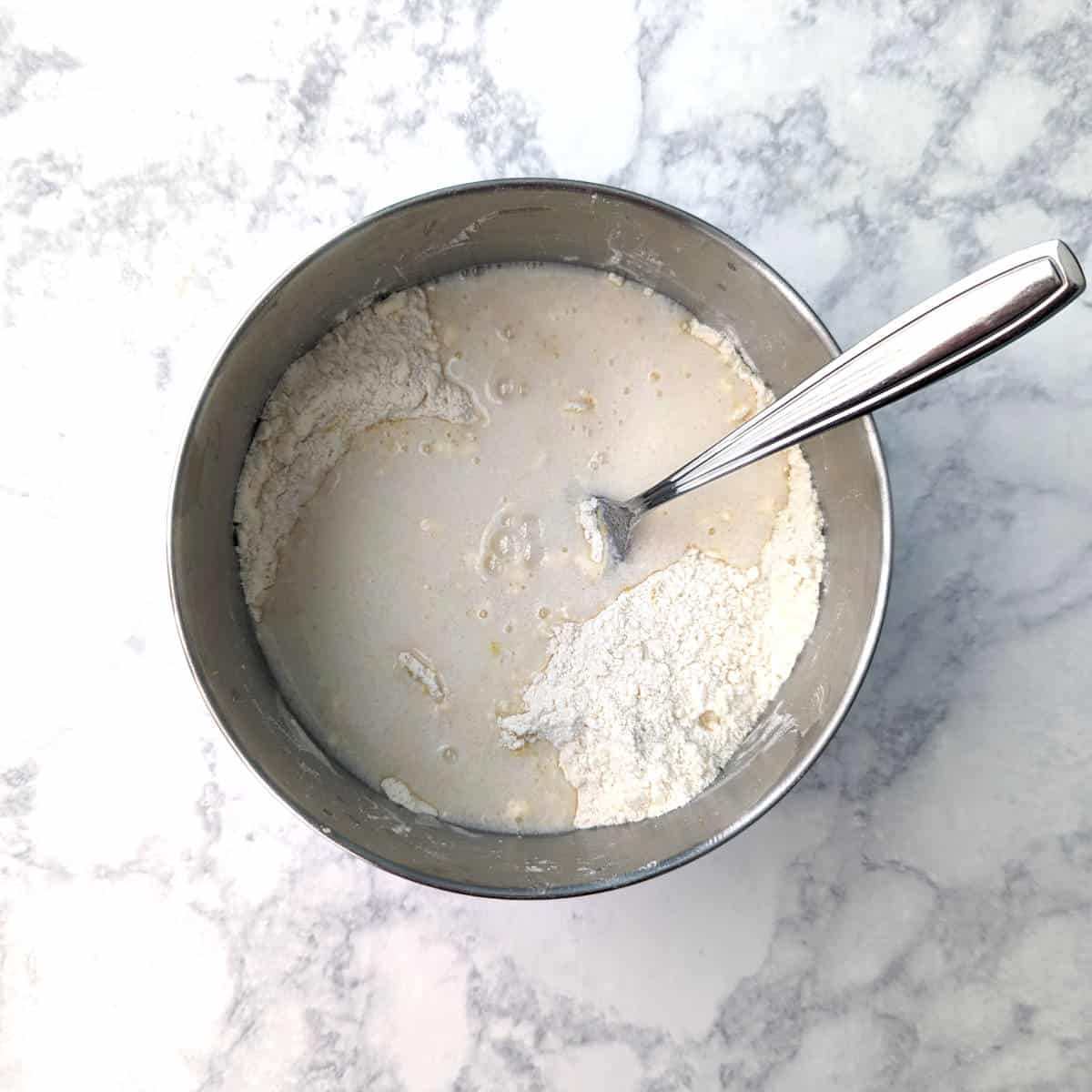
Three: Mix together the grapefruit juice and buttermilk, then pour into the dry ingredients.
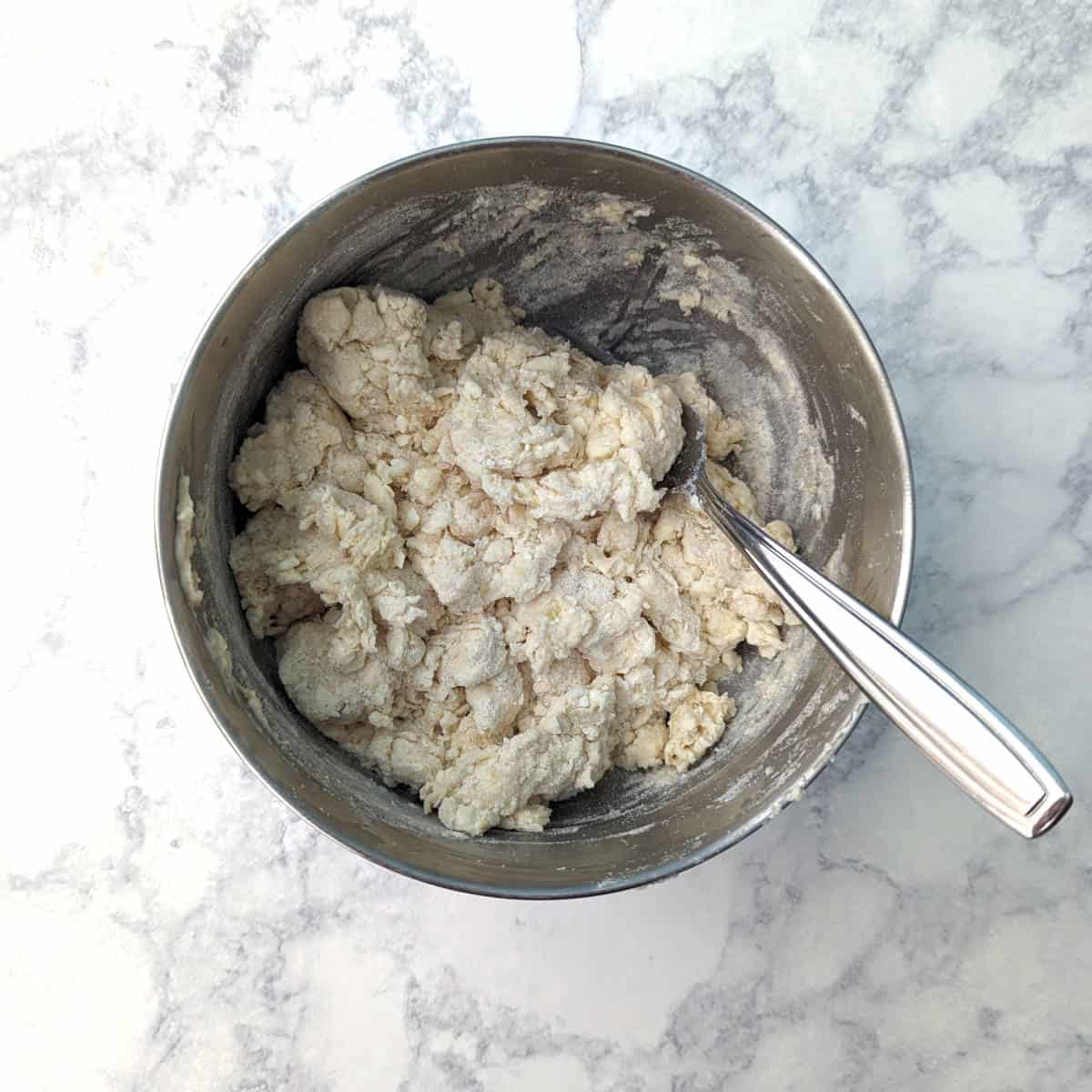
Four: Use a fork to gently toss or mix everything together until it forms a clumpy dough.
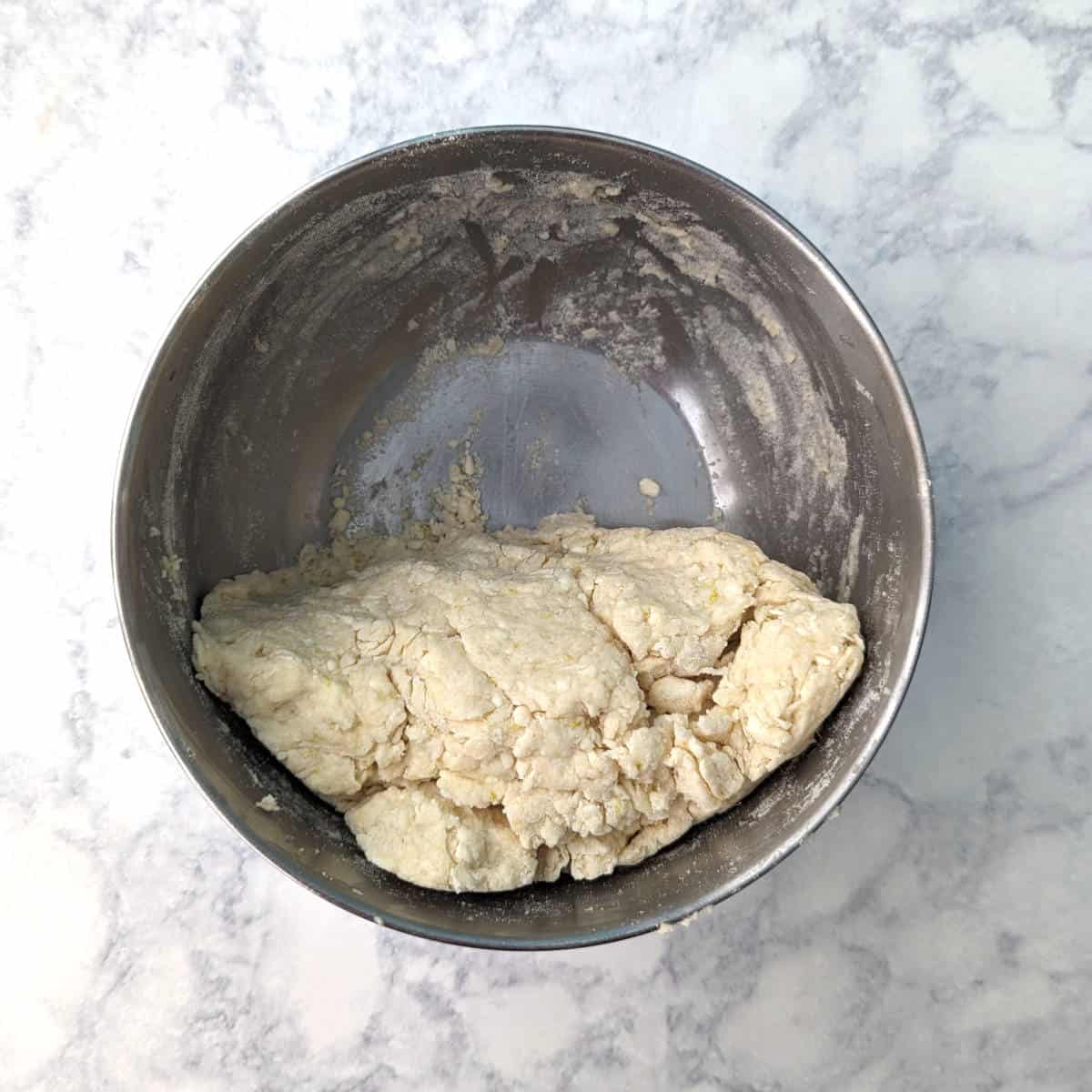
Five: Press the dough together into one ball or mass.
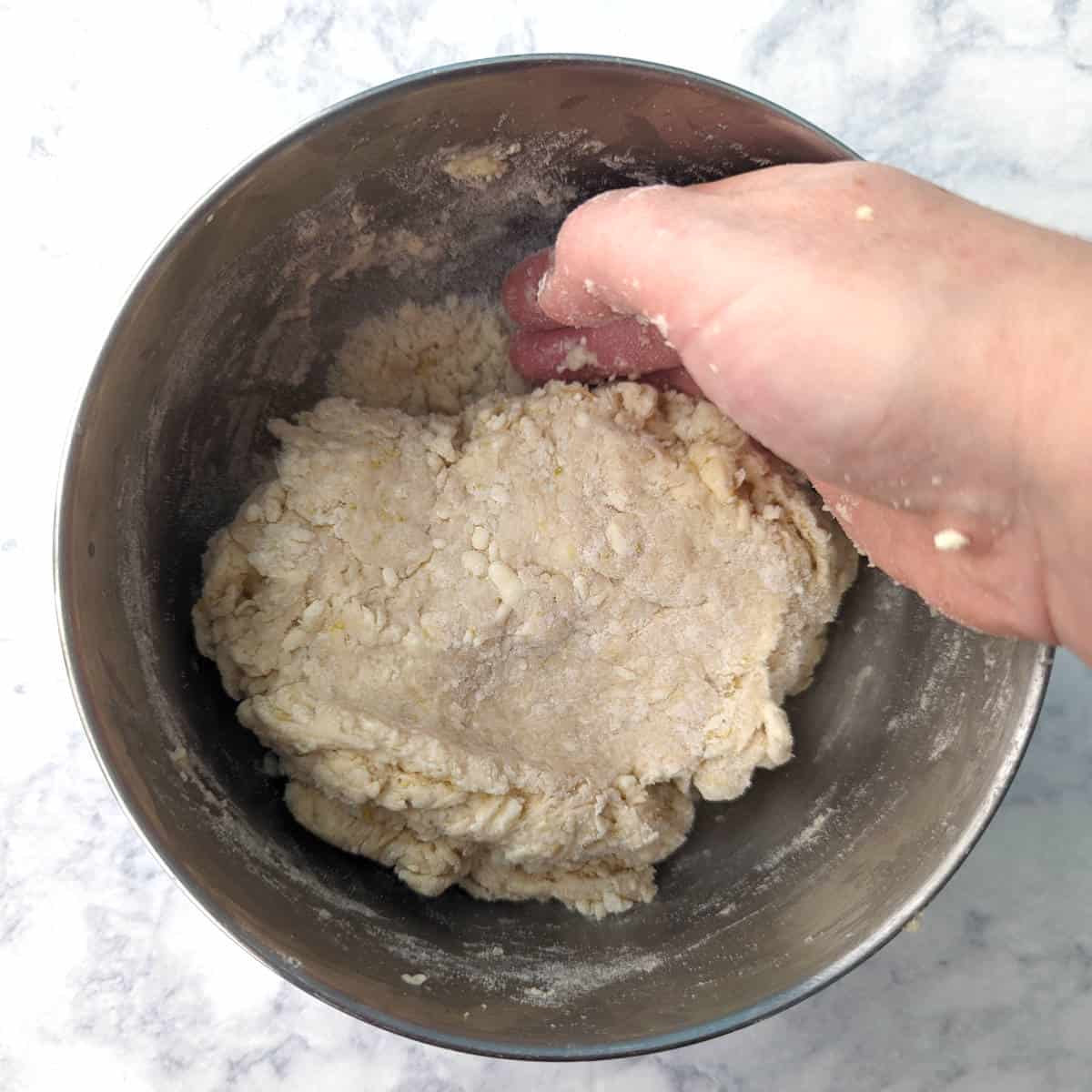
Six: Gently knead or fold the dough over itself no more than 5 times.
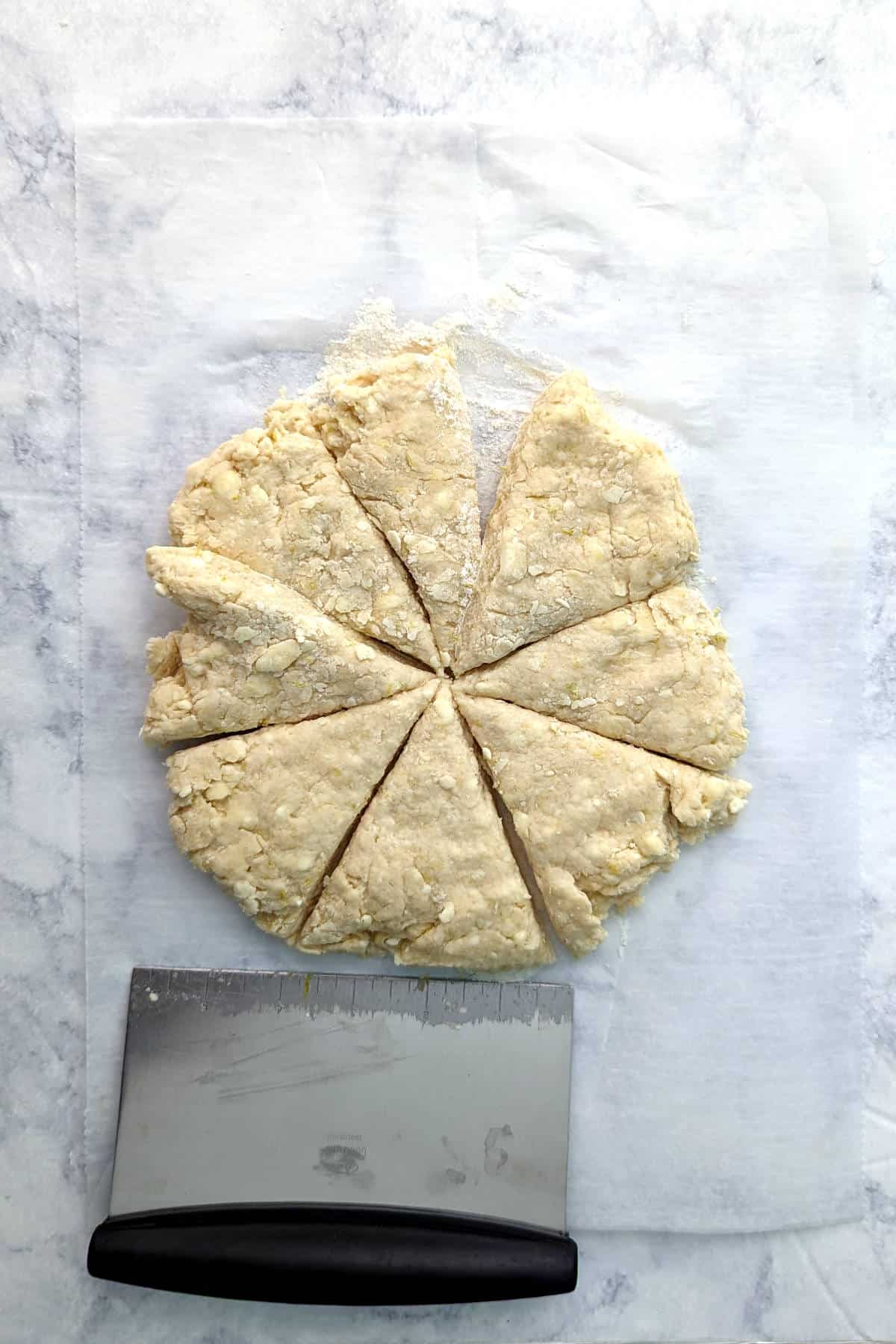
Seven: Pat your dough into a 7 inch circle, then use a bench scraper to cut into 8 wedges.
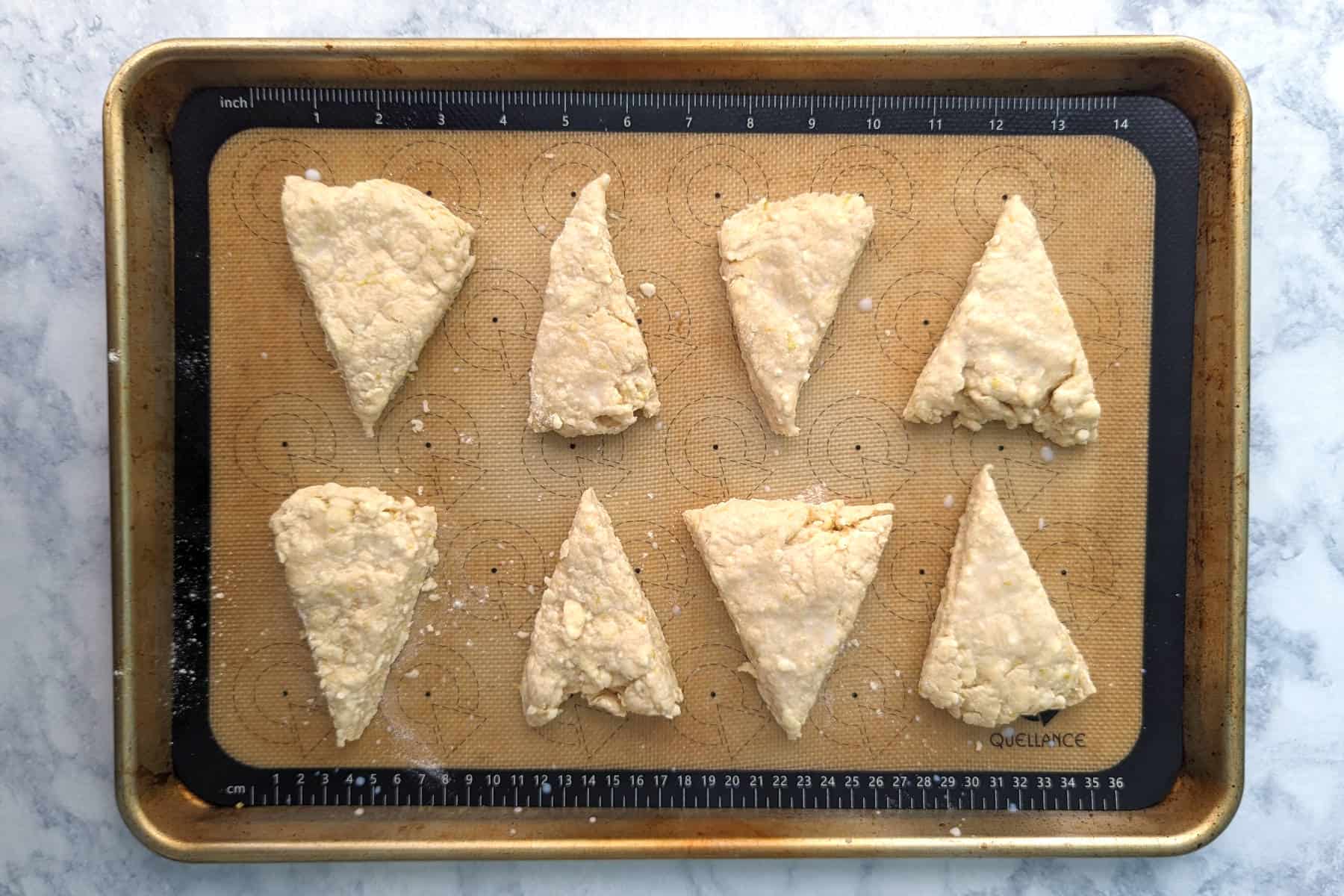
Eight: Separate the scones and place on a parchment-lined baking sheet. Brush with milk (although I sometimes forget to).
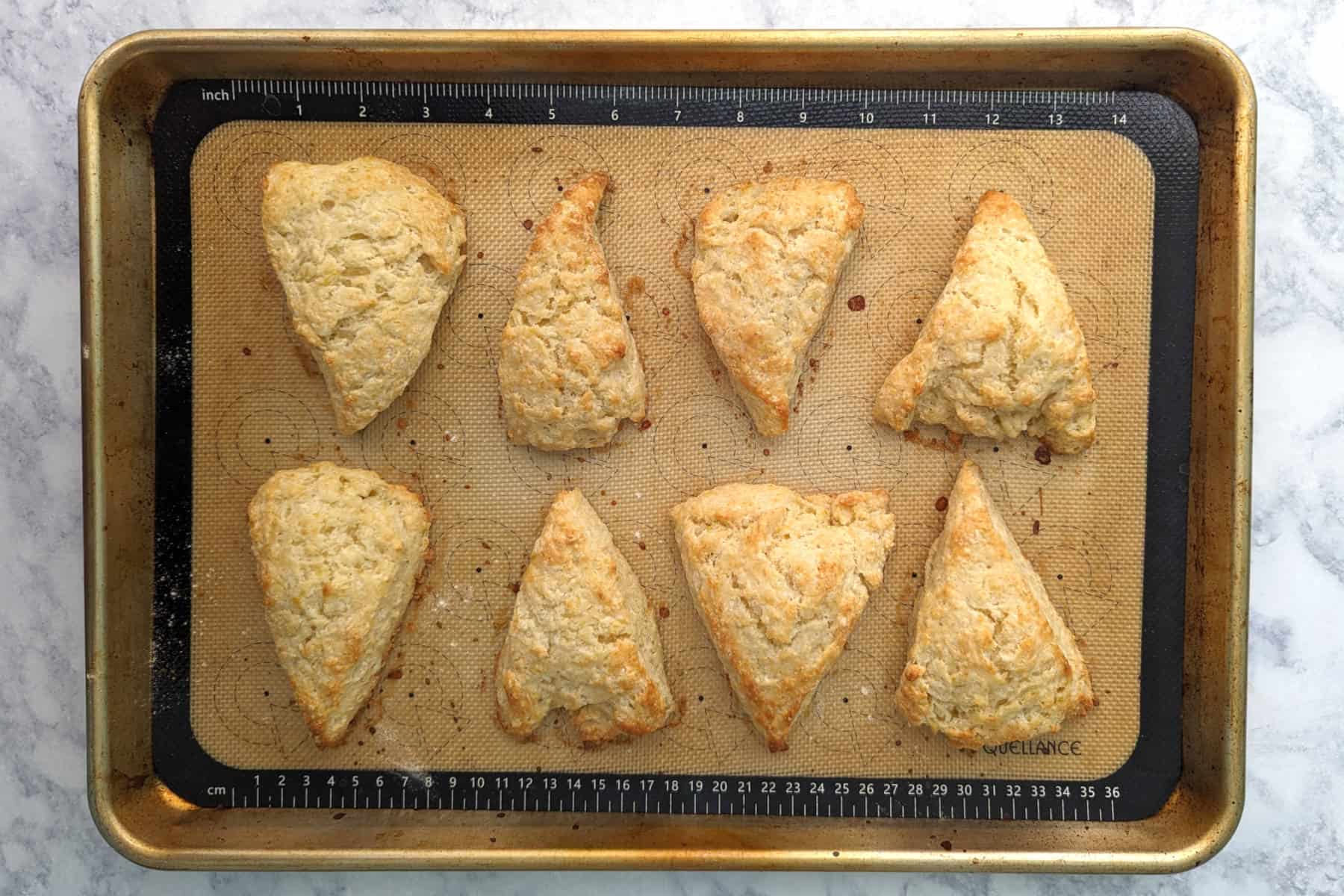
Nine: Bake until the edges are golden brown.
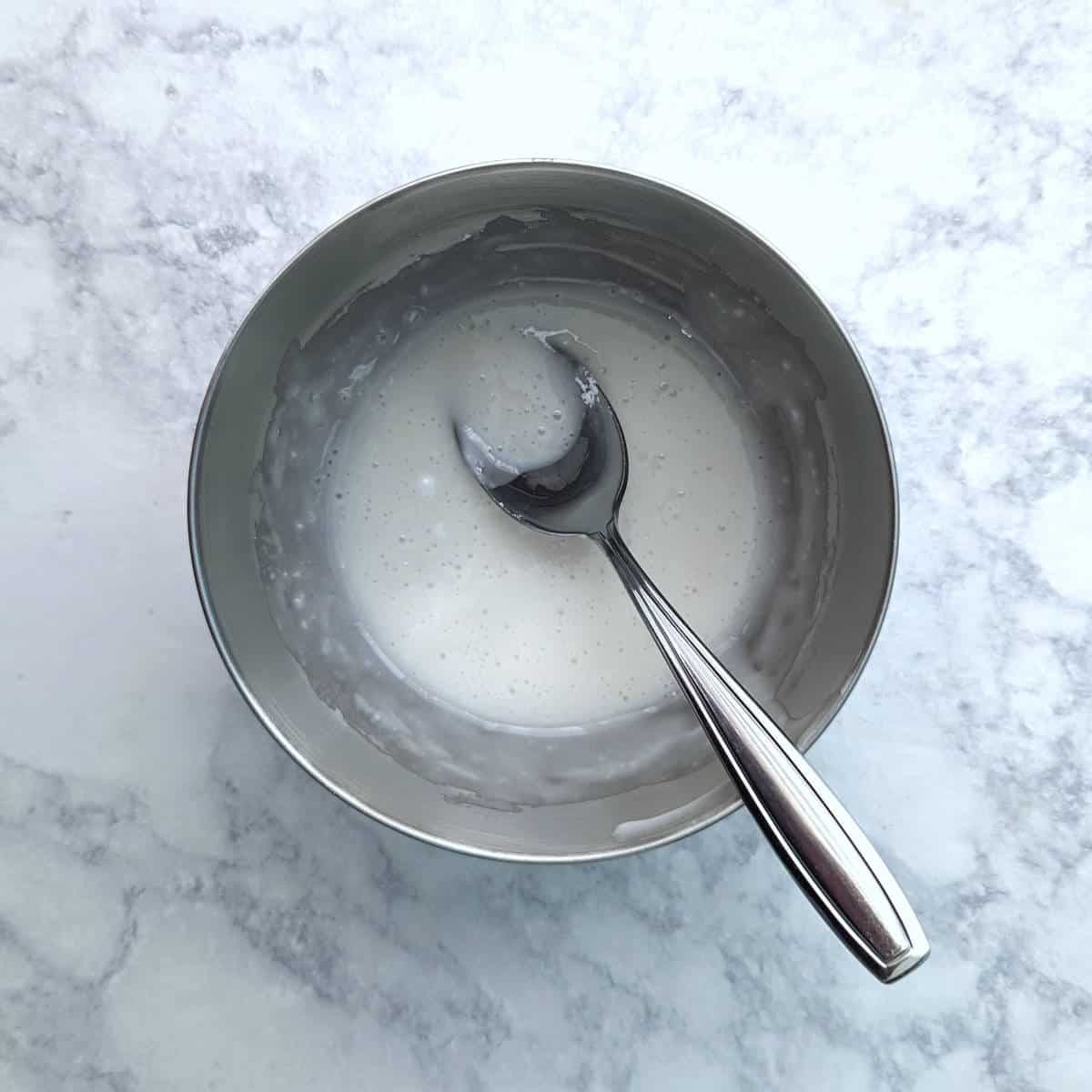
Ten: While your scones bake, mix together the powdered sugar and grapefruit juice for your glaze.
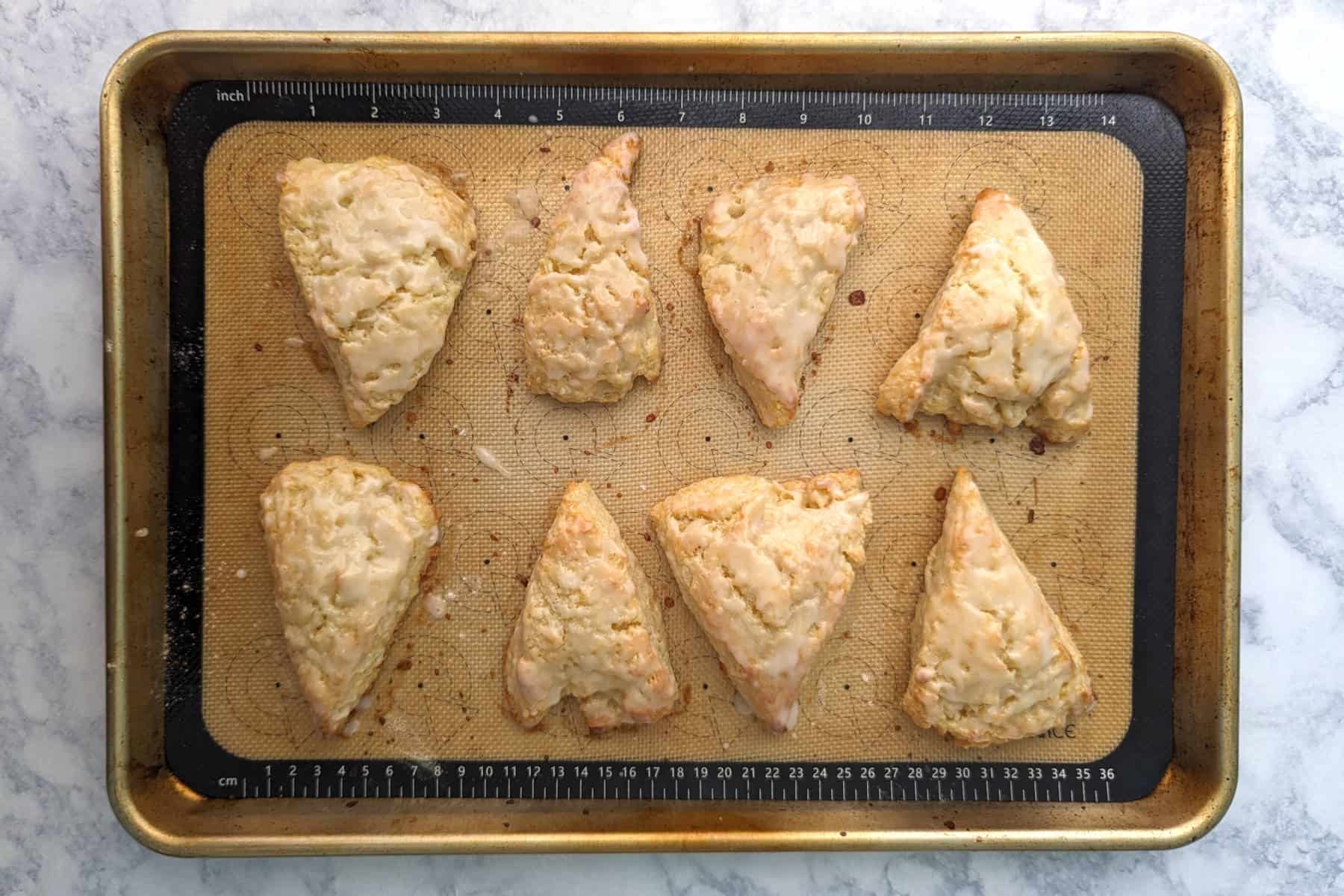
Eleven: Brush the glaze on the scones immediately after taking them from the oven, and the glaze will seep into the scones. If you let the scones cool a few minutes, you'll have a more opaque glaze.
Serve immediately!
Serving and Storage
Scones are best served warm. Since they're egg-free, they're best on the day that they're made.
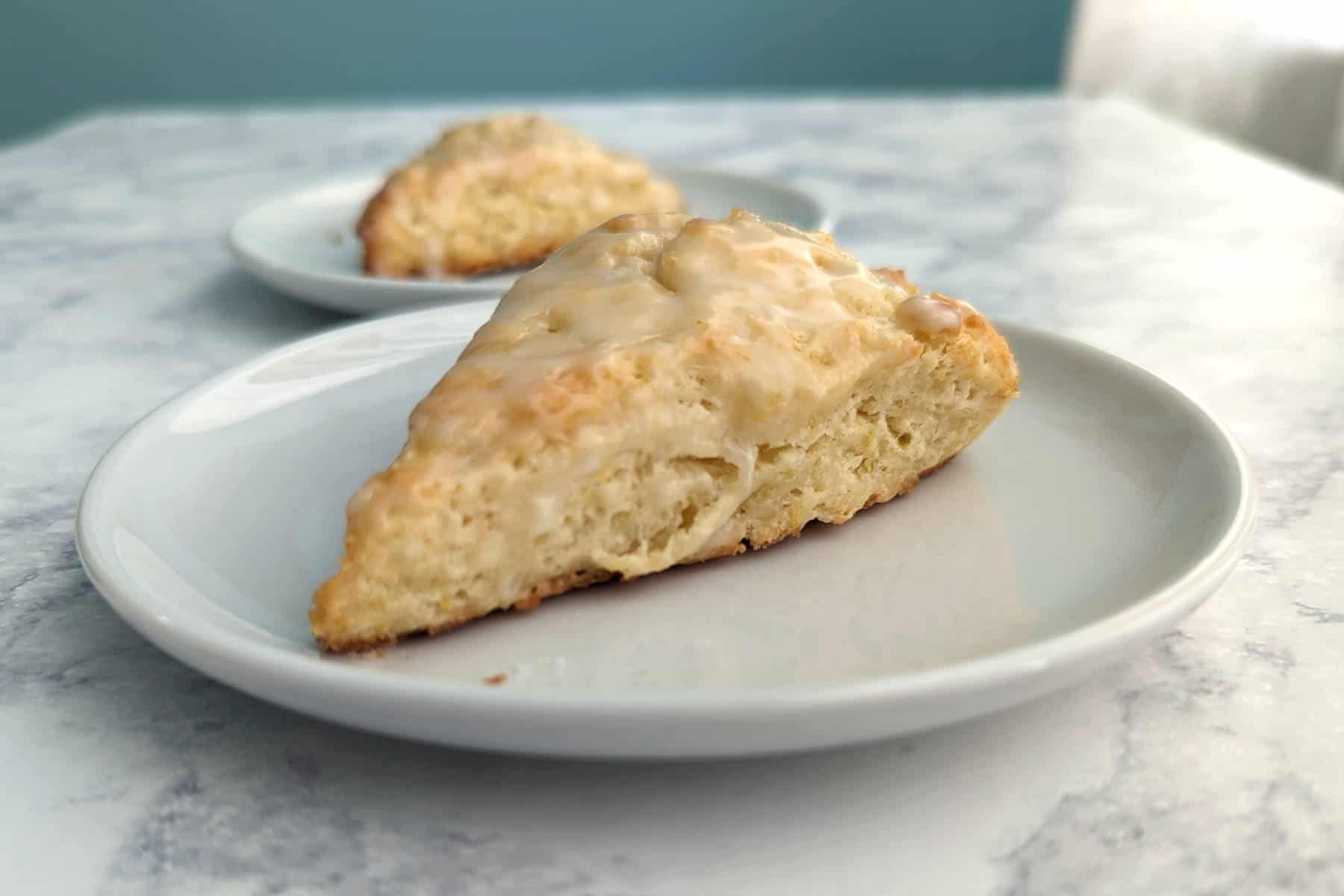
Store any leftovers in an airtight container until the next day. Reheat a scone in the microwave for about 8-10 seconds to freshen it up. Still tasty - just not as tender.
Truly, these scones are delightful. I hope you love them as much as we do. Sit back and relax with a scone in one hand and a cup of tea or coffee in the other!
Tips for Making Great Scones
🍴 Use a fork to toss the dough together - it clumps less than a spoon.
🌾 A bit of dry flour in the bowl is normal. The dough should stick together when you shape it.
💧 If the remaining flour doesn't stick to the dough by halfway through kneading, add a teaspoon of plain milk, repeating until everything sticks. Slightly wet dough is always better than dry dough.
🤚 Handle scone dough gently and avoid overmixing; too much gluten development makes scones tough.
❄️ Keep butter cold for better rise and less spread when the scones bake. If you plan to chill the dough before you bake it, though, you can soften the butter a little to make mixing easier.
✨ Don't skip the glaze for these grapefruit scones. The juice in the dough mellows during baking, so the fresh grapefruit juice glazes adds extra oomph! Double the glaze if you're an icing lover.
More Citrus Recipes



I hope this becomes a recipe you'll return to. If you try it, a star rating below helps others find it - and I'd love to hear how yours turns out in the comments! 💕 Questions or trouble? Drop a note, and I'll do my best to help.
📖 Recipe
Grapefruit Scones
Equipment
- pastry cutter (affiliate link)
- handheld juicer
Ingredients
Scones
- 2 cups all-purpose flour 245 grams
- ¼ cup sugar 50 grams
- 1 teaspoon baking powder
- ¼ teaspoon baking soda
- ¼ teaspoon table salt
- 8 tablespoons butter 227 grams; cut into small pieces
- zest of 1 large grapefruit
- ⅓ cup grapefruit juice 80 grams
- ⅓ cup buttermilk or yogurt 80 grams; see notes for substitutes
Glaze
- ~½ cup powdered sugar 60 grams
- ~1 tablespoon grapefruit juice 15 grams
Instructions
- In a large mixing bowl, combine flour, sugar, baking powder, baking soda, and salt.
- Use a microplane zester (affiliate link), or other grater, to zest the grapefruit right over the bowl. Toss the zest with the flour with a fork.
- Cut in butter with a pastry cutter (affiliate link) or 2 knives, until the flour mixture resembles crumbs. You don't want anything larger than a pea.
- Combine grapefruit juice and buttermilk in a measuring cup, and then pour it into the flour mixture. Use a fork to toss the crumbs together until everything is just combined. (A small amount of dry flour is okay.) Do not overmix.
- If mixture does not come together easily or if there's a lot of dry flour, add a little more milk (no more than 1 tablespoon at a time); use your fork to toss the crumbs together. For a small amount of flour, gently use your hands to work in the rest of the flour mixture. If you have to do this, do not knead.
- If dough comes together easily, knead gently, about 5 times, by folding the dough in half over itself. This can be done on a very lightly floured surface, or as I do it, in the mixing bowl by dusting the dough with just enough flour that the outside surface doesn't stick to the sides.
- Gently pat into a 7-inch circle and cut into 8 wedges. Separate wedges on lined baking sheet and brush with milk.
- Bake at 425F for 16 minutes, rotating pan once halfway through, until tops begin to brown and toothpick inserted in center of scone comes out clean.
- While the scones bake, mix the glaze. Use a few extra drops of juice for a thinner glaze to give the scones a sheen. Keep the glaze thicker if you want an opaque glaze.
- For a light sheen, brush the glaze over the tops of the scones immediately. The glaze will melt and seep into the scones this way. For an opaque glaze, let the scones cool for a few minutes before spooning the glaze on them.
- Serve warm. Store cooled scones in an airtight container. They are best on the day they are baked, but are still pretty good the next day if microwaved for about 8-10 seconds.
Notes
Nutrition
Originally published January 2012. Completely rewritten, with new instructions and photos, in February 2024. Post restructured January 29, 2026.



Leona Konkel says
I'm proud of this recipe - it's one of the first ones I ever developed, and it still turns out great. Still tender and flavorful, a ray of sunshine on a cold day. I hope you try it and enjoy it. Let me know how yours turns out!