

I first made Fennel-Crusted Pork with Potatoes and Pears 15 years ago, and it's still the first recipe I consider for making a pork loin. It's largely hands-off, and takes me no longer than 20 minutes to get dinner into the oven.
I love the flavors. The pork is delicious from garlic and fennel. Roasted pears are a little sweet, but not too much. The caramelized onions are delicious eaten with everything. I get jealous when I let Alex take the leftovers to work.

Jump to:
I first tried this recipe when I started this website, as #362 of my 365 recipes that I made in 2010. Alex had gotten our friends to give me recipes for a birthday several years prior (best present ever!). When he did, our friend Allison gave me the recipe for it from Real Simple. I made a lot of recipes for my 365 recipe challenge in 2010, but this is one that has stuck with me. It's a straightforward recipe, and the flavors are a little different from what I grew up with.
If you love complete, one-pan dinners, also check out my Salmon with Baked Couscous.
Ingredients
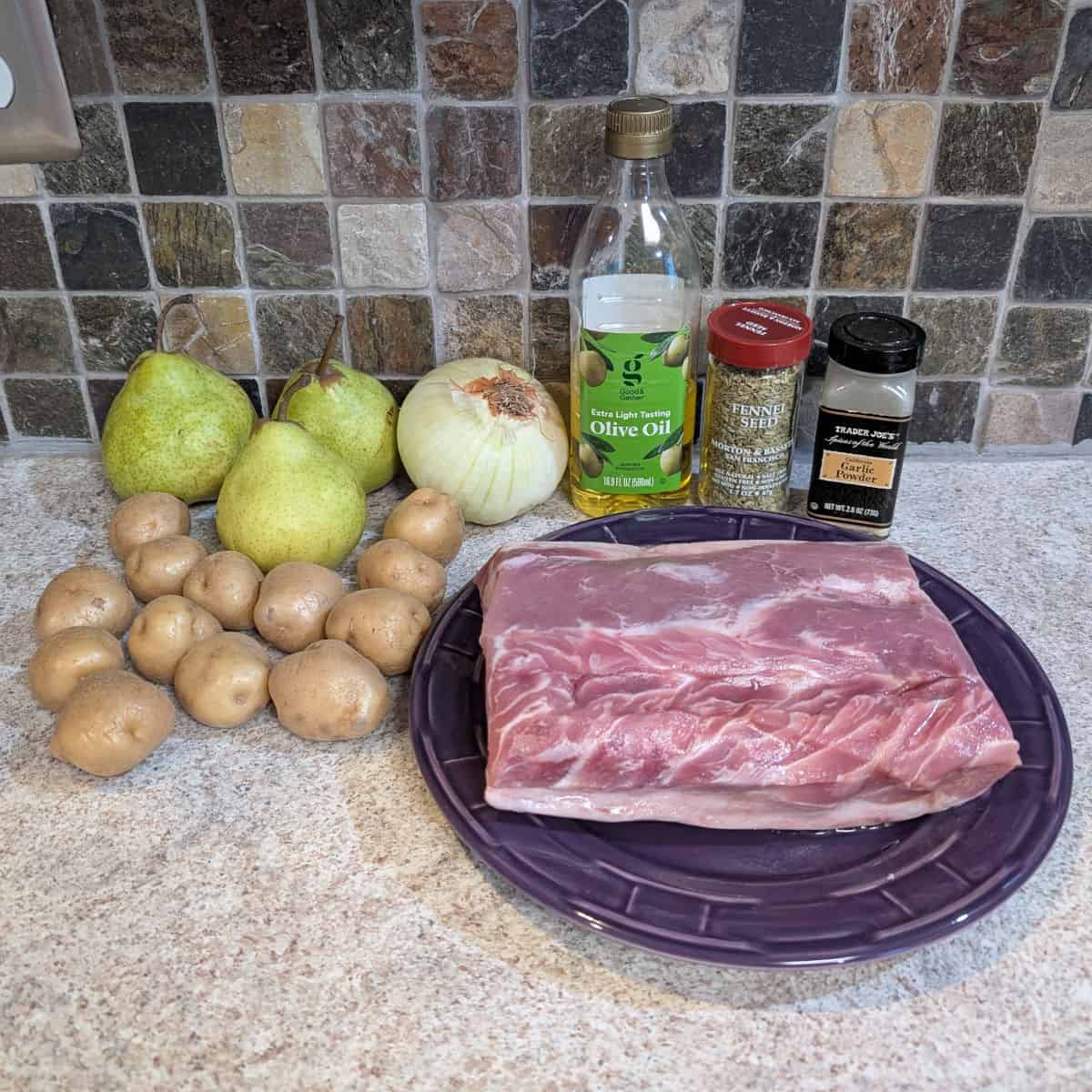
You'll want a 2-3 pound pork loin. Nothing too small; nothing too fatty.
I almost always use yellow potatoes as I feel they're the most versatile, but white potatoes work too. It's easiest if you buy small fingerling style potatoes, but larger potatoes are okay; just cut them into 1 inch pieces for uniform cooking.
I prefer Bartlett pears for this recipe. I've heard they don't hold their shape when cooked, but somehow I never have a problem with this, perhaps because grocery stores sell them so underripe. I never enjoy eating Bartletts raw, but like them here. If I couldn't find Bartletts, I would likely go for Bosc pears next, and then Anjou.
Cut your onion as thin as possible so it roasts well and caramelizes; go for smaller pieces than I have in these photos.
Fennel seed is from the same plant as the fennel bulb; however, the seeds are not interchangeable with the bulb or fennel fronds. Fennel seeds have a faint licorice flavor that I really like, despite not liking licorice. It's the flavor I notice most in Italian sausage and pizza sauce.
You can find fennel seed at most grocery stores, and once you have it, you can also make my Fennel Spice Rub! I usually use my bullet blender to grind fennel seeds.
Instructions
Start off with cutting up your produce, if you haven't already.
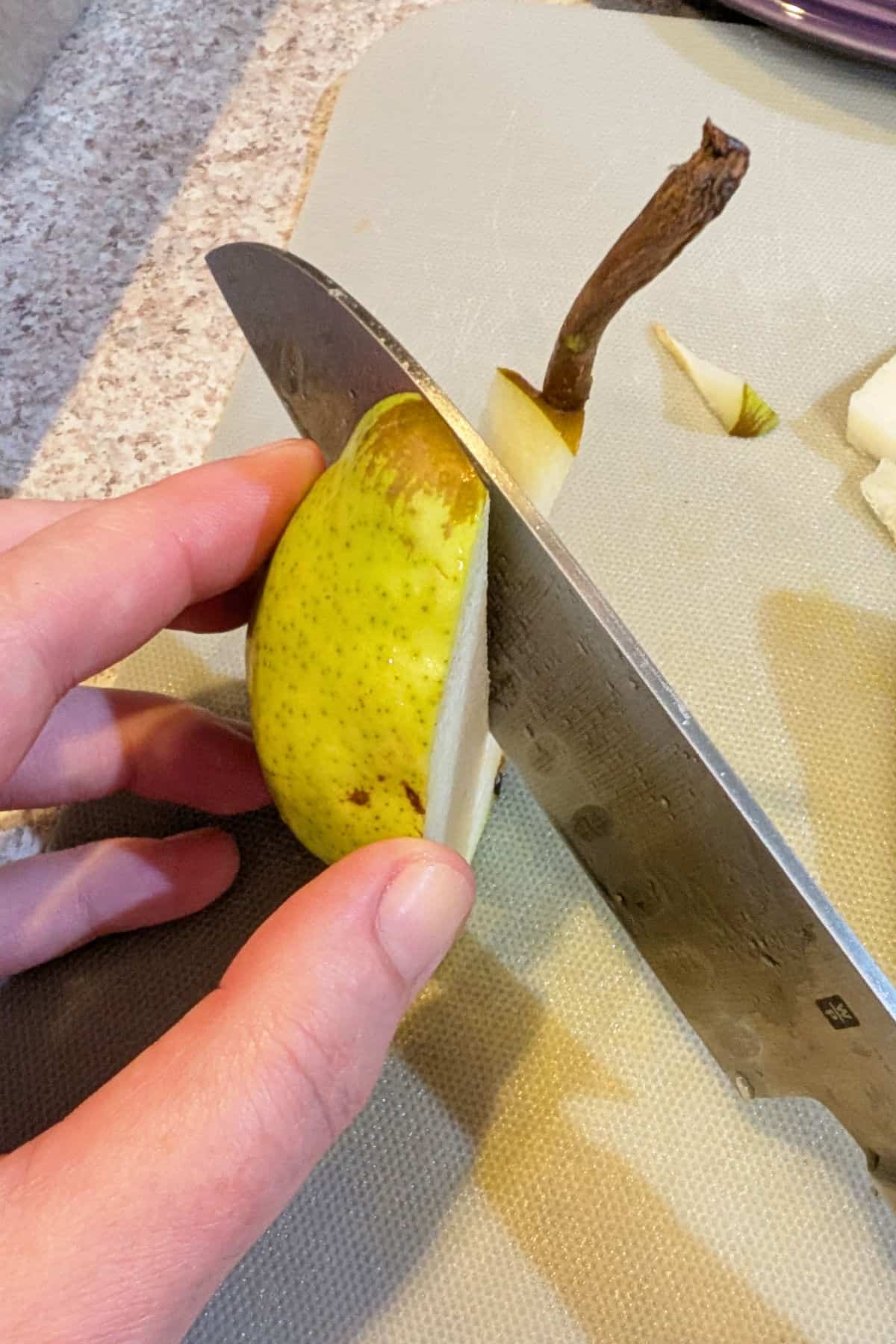
One: Instead of using an apple corer to core the pears, I find it easier to cut them into quarters and then cut out the middle part with the seeds.
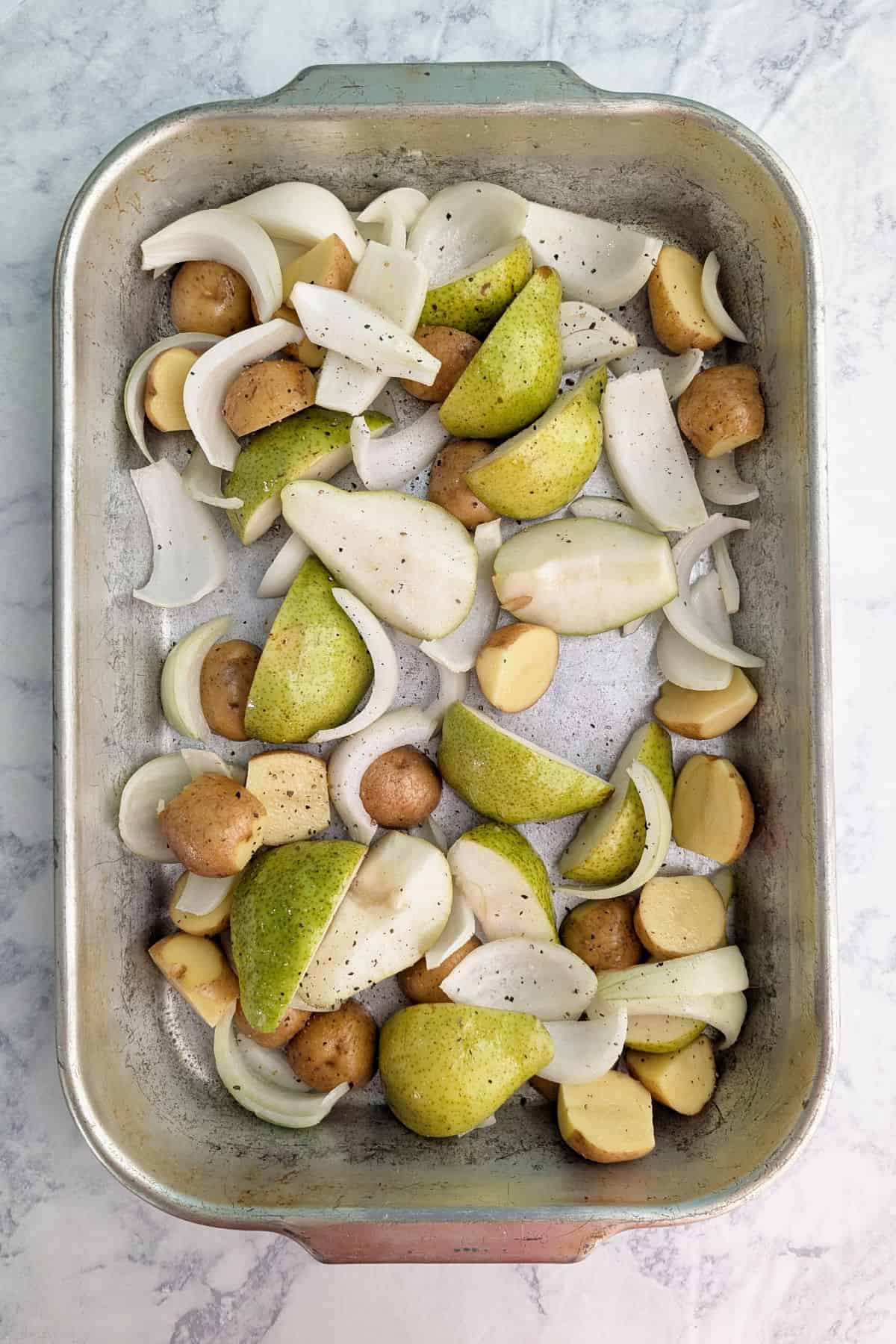
Two: Once your produce is cut, place it in a roasting pan with 2 inch sides. Drizzle 1 tablespoon of olive oil on the produce, and use your hands to coat each piece. Sprinkle with salt and pepper.
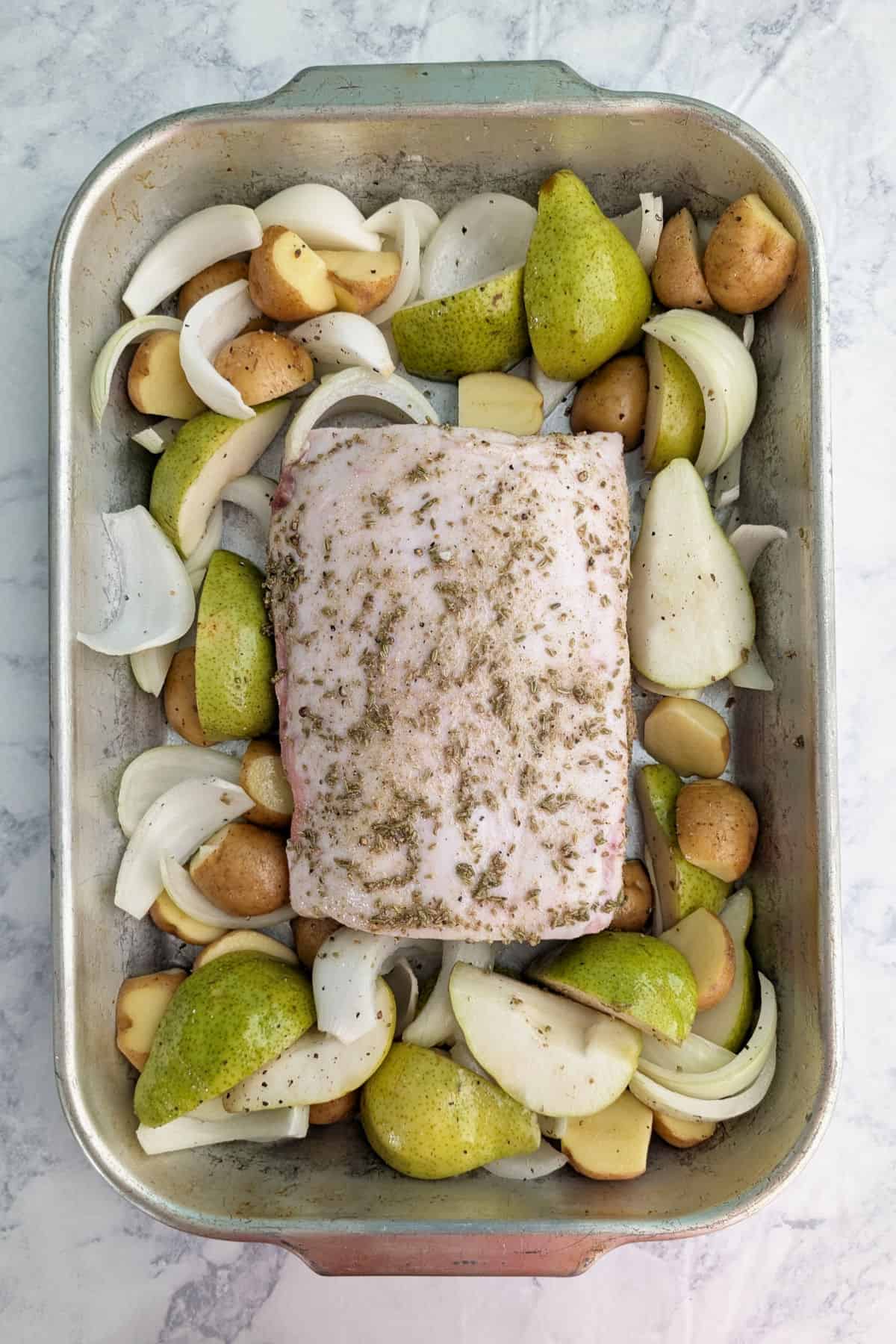
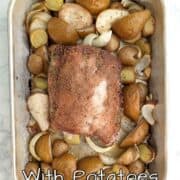
Three: Grind the fennel seed and mix it with garlic powder, ½ teaspoon salt, and ¼ teaspoon black pepper. Stir in the olive oil, and rub the mixture over the entire surface of the pork. Make space in the roasting pan and place the pork fat-side up.
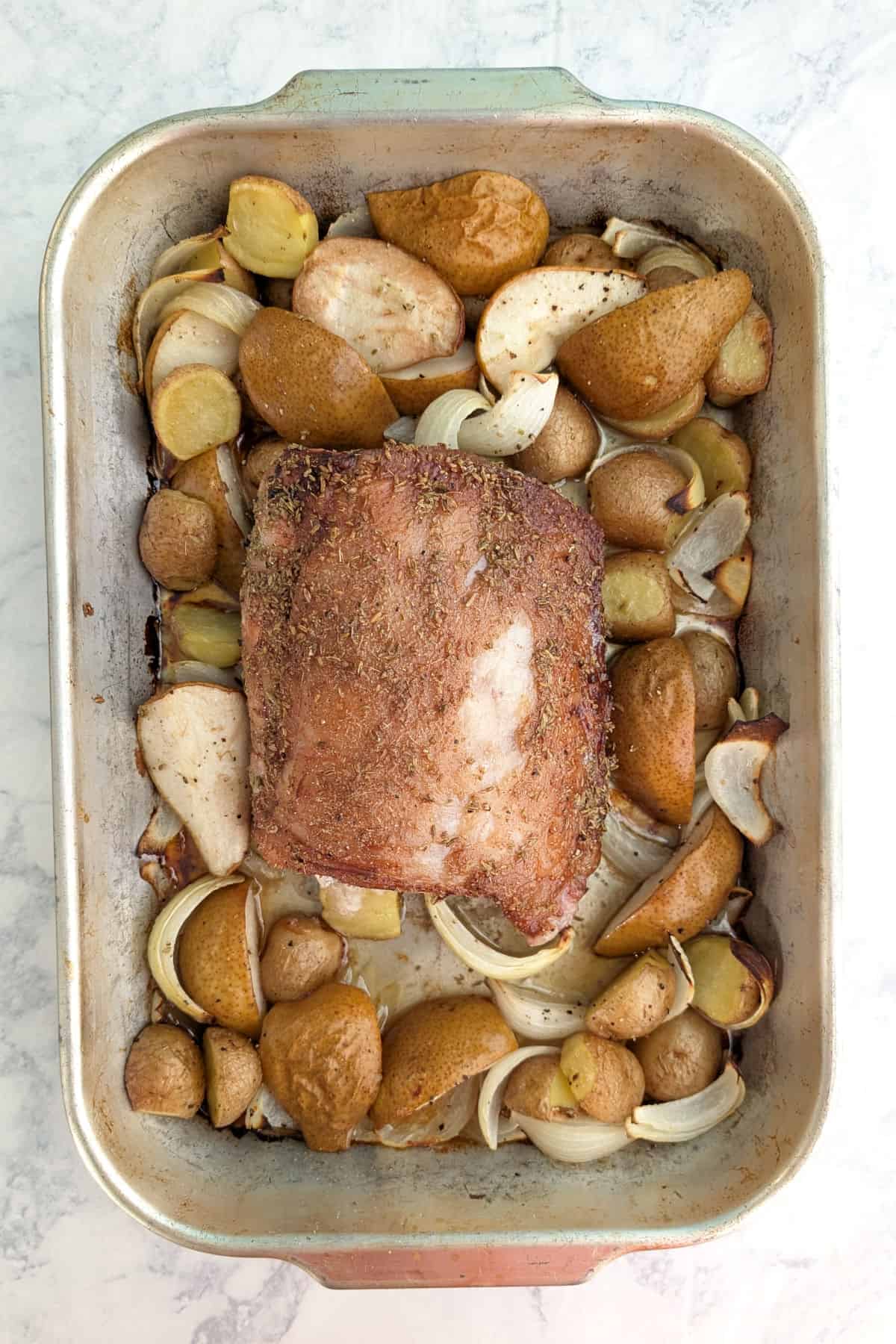
Four: Bake in a 400F oven for 50-60 minutes, until the pork reaches an internal temperature of 145F.
Hint: The cooking time is an estimate; I always take the temperature of meat because it's the most accurate way to test for doneness. I prefer to use an oven-safe probe thermometer to get the pork to 145F. The roast in these photos was done at 60 minutes.
Serving and Storage
Let the pork rest for 5-10 minutes before cutting; it'll warm up by a few more degrees, and will leak less when you cut it.
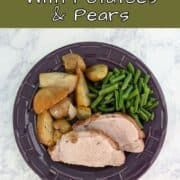
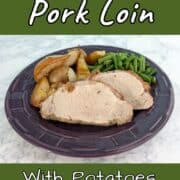
Cut into thin slices and serve alongside the roasted pears and potatoes. There won't be much juice in the roasting pan, but drizzle what is there over the pork and vegetables.
I like to serve a green vegetable, like green beans, alongside this. If I were feeding more than the 3 of us, I would also likely roast more potatoes or make an additional side to round out the meal.
Leftovers will be good in the refrigerator for a few days. Reheat slices of pork gently; I find leftover pork tastes weird if overheated.
Top Tip
Be sure that you've coated all of the produce well with olive oil so that it roasts properly and doesn't dry out.
Fennel-Crusted Pork Loin FAQs
Pork roasts and chops only need to be cooked to 145F (per the revised 2024 USDA food safety guidelines), and using a thermometer is the most effective way to prevent overcooking. I simply set the alarm of my probe thermometer (affiliate link) to go off when the pork reaches 145F, put the probe in the pork and the pork in the oven, and wait until the alarm goes off.
There's not a great way to know when a pork loin is done without taking its temperature. How long it takes to cook depends on how hot your oven runs, as well as how cold a temperature the pork was stored at. I buy pork in bulk from a local farm, which means that mine is frozen before I thaw it to cook it; there's always the chance that it starts out still frozen in the center.
I highly recommend using an oven-safe probe thermometer (affiliate link) when you roast any large piece of meat. Don't let the cord from the probe touch the heating element, or be too close to the flame when you broil, as that will ruin the probe. (Ask me how I know!) Once I got a probe thermometer (affiliate link), I started roasting chickens and all kinds of other meats. I actually use it to test bread as well.
Other Meaty Main Dishes
Here's some of my other favorite meals!

I hope this becomes a recipe you'll return to. If you try it, a star rating below helps others find it - and I'd love to hear how yours turns out in the comments! 💕 Questions or trouble? Drop a note, and I'll do my best to help.
📖 Recipe
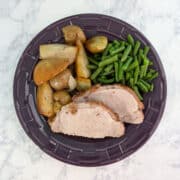
Fennel-Crusted Pork Loin with Potatoes and Pears
Equipment
- bullet blender (affiliate link) or spice grinder
- large roasting pan with 2 inch sides
Ingredients
Vegetables
- 1 pound small or fingerling potatoes (cut into 1-inch pieces)
- 3 pears (cored and quartered)
- 2 small onions (Halved and sliced)
- 1 tablespoon olive oil
- salt and pepper
Pork
- 2-3 pounds pork loin
- 1 tablespoon fennel seeds (affiliate link) (crushed or ground)
- ½ teaspoon garlic powder (or 2 cloves minced garlic)
- ½ teaspoon table salt
- ¼ teaspoon black pepper
- 1 tablespoon olive oil
Instructions
- In a large roasting pan with 2 inch sides, combine potatoes, pears, onion segments, and 1 tablespoon of olive oil. Mix together, coating everything well. Sprinkle with salt and pepper.
- Coarsely crush or grind fennel seeds (affiliate link), and combine with garlic powder, ½ teaspoon table salt, ¼ teaspoon ground pepper, and 1 tablespoon olive oil. Rub mixture over pork loin and place fat-side up in the roasting pan, pushing the vegetables to the side.
- Bake at 400℉ for 50-60 minutes, until the internal temperature of the pork is 145℉. I always use a thermometer to test this. Let pork rest for 5 minutes before cutting and serving.
- Serve pork alongside vegetables. Spoon what liquid there is over the pork and vegetables. Serve with an extra side and a green vegetable.
Notes
Nutrition
[Originally published December 2010 and rewritten February 2018. Revised and restructured July 2025.]



Leona Konkel says
I still love this pork loin. It's one of the few roasts that I remake! I hope you enjoy it too. Let me know if you have any questions about it!