

I finally landed on this Easy Homemade Chocolate Fudge recipe after making at least six batches of chocolate fudge in fall 2020. It consistently turns out creamy, chocolatey, and deeply satisfying.
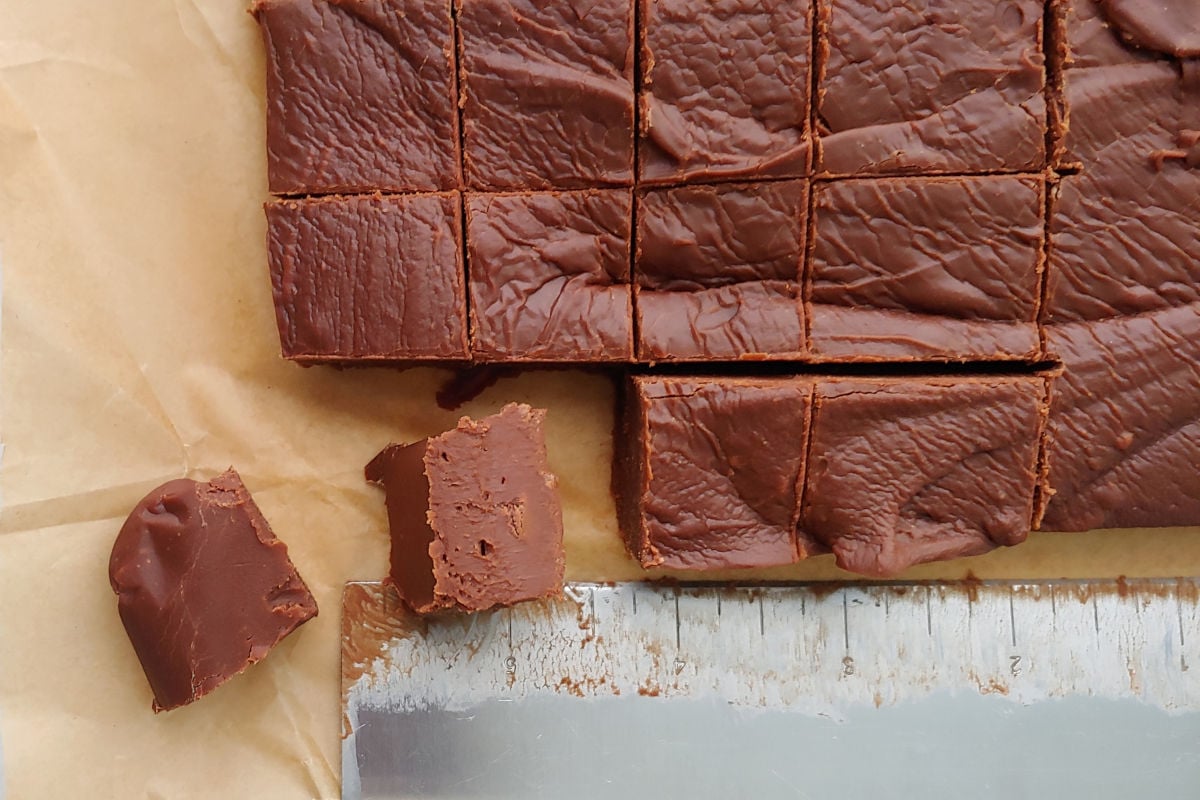
Chocolate Fudge with Evaporated Milk, at a Glance
- ⏱ Prep Time: 10 minutes
- 🔥 Cook Time: 25 minutes
- ⏳ Total Time: 35 minutes
- 👪 Serves: 48
- 🍽️ Calories: 159
- 🍫 Main Ingredients: Evaporated milk, sugar, butter, milk chocolate, dark chocolate, marshmallows.
- 👌 Why You'll Love It: This easy homemade chocolate fudge includes evaporated milk, chocolate, and marshmallows melted into it, and uses no candy thermometer.
SUMMARIZE & SAVE THIS RECIPE ON
The fudge is rich and smooth, with just the right amount of resistance when you bite into it. The recipe takes no candy thermometer, and has fewer pain points than traditional fudge. One batch makes a lot, keeps beautifully for weeks, and ships well.
I found this recipe while going through old recipe booklets I'd stashed away. I gave up quickly but did find a comb-bound cookbook of chocolate recipes compiled by a 6th grade class who had read Charlie and the Chocolate Factory. Of the two fudge recipes I tried, this was the one that turned out consistently that year - and it's continued to be successful ever since.
Jump to:
Why You'll Love This Recipe
Here's why this is the only Chocolate Fudge I make.
✅ Every batch comes out reliably creamy.
🌡️ No candy thermometer? No problem! You don't need one.
💪 It's easier to mix than traditional fudge, and visual cues tell you when you're done.
🍫 You can include leftover Halloween chocolate, and it still tastes amazing.
🎁 It keeps beautifully for weeks - great for gifting or mailing.
Why I Skip Traditional Fudge
Making traditional fudge can be temperamental. If you stir while the syrup boils, your fudge turns grainy. Undercook it and it won't set. Overcook it, and it will be hard. Even the weather can mess it up.
You're supposed to beat traditional fudge by hand, which is a serious workout. Beat it too long and it'll become stiff, not creamy. Beat it too little, and it won't stick together. I know from experience. I made traditional fudge a few times as a teenager; I broke a few wooden spoons beating the syrup, and once the fudge didn't set properly.
I love fudge but not the frustration, so I haven't tried making traditional fudge in over 20 years. Instead, I make this reliable recipe. Using evaporated milk instead of refrigerated milk means less cooking time. Stirring chocolate and marshmallows into the syrup is less effort to mix than the traditional version, and stirring until they're melted gives a reliable sign to aim for before pouring into the pan to cool.
Key Ingredients
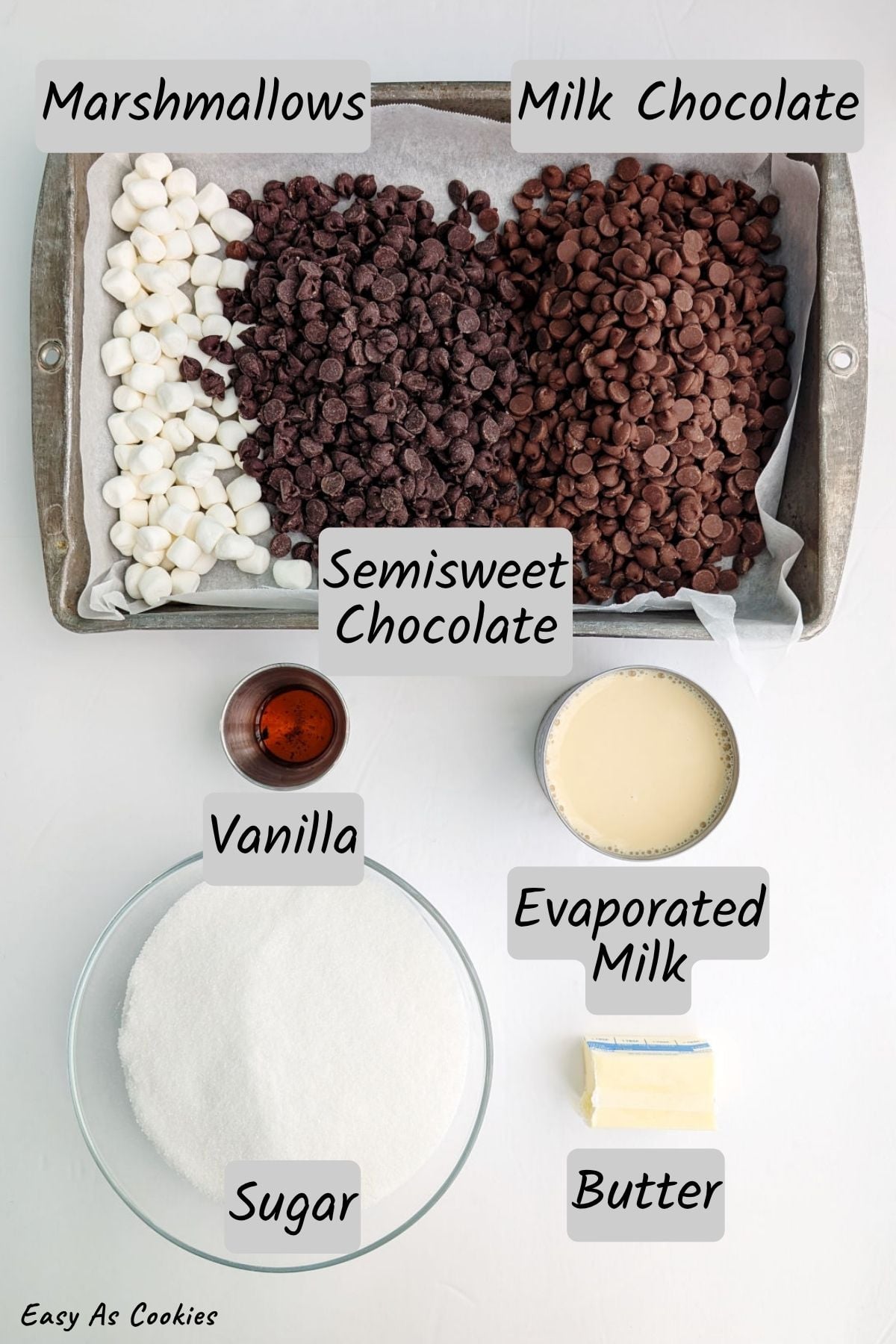
Evaporated milk: Canned milk with some water cooked out, which makes it a useful shortcut ingredient for candy-making. You'll need an entire 12-ounce can, just as you do for Peanut Butter Fudge. Evaporated milk is not the same as sweetened condensed milk, which contains sugar and will not work in this recipe.
While you can make fudge using sweetened condensed milk - like I do as a layer in my Chocolate Oat Bars and my Fudgy Butterscotch Bars - it ultimately tastes like sweetened condensed milk. While that's delicious, I prefer making this recipe instead.
Miniature marshmallows: Another shortcut ingredient, they melt into the fudge as you stir. The gelatin in the marshmallows helps stabilize the fudge, giving it a toothsome texture. Regular sized marshmallows work, but need to be cut into small pieces so they melt properly.
Milk and semisweet chocolate: The fudge isn't as delicious if you use only one. I use chocolate chips since I don't like chopping chocolate; you'll need more than two bags. It always works, although most milk chocolate chip brands melt more slowly than semisweet and take more effort to mix in. I sometimes use a small amount of leftover Halloween chocolate that I won't eat otherwise. Brand doesn't matter overall, but you should use something you like to eat out-of-hand.
Equipment
Use a sturdy-bottomed, 3-quart pot to make this. Pots made with thin metal often have hot spots, which heat irregularly and can cause scorching. Watch the 3-quart pot to ensure it doesn't boil over; use a 4-quart pot if you're concerned.
You'll need 2 silicone spatulas. The first you'll use on the mixture before it boils, and you'll want a second clean one to mix in the chocolate and marshmallows. Reusing the first spatula, which has uncooked sugar on it, can lead to grittiness.
I pour my fudge into a 9x13-inch pan. You can go bigger, or a little smaller. Rather than butter the pan, I prefer to line it with parchment paper. This allows you to pull the fudge neatly from the pan so that you can cut it into squares or bricks on a flat surface.
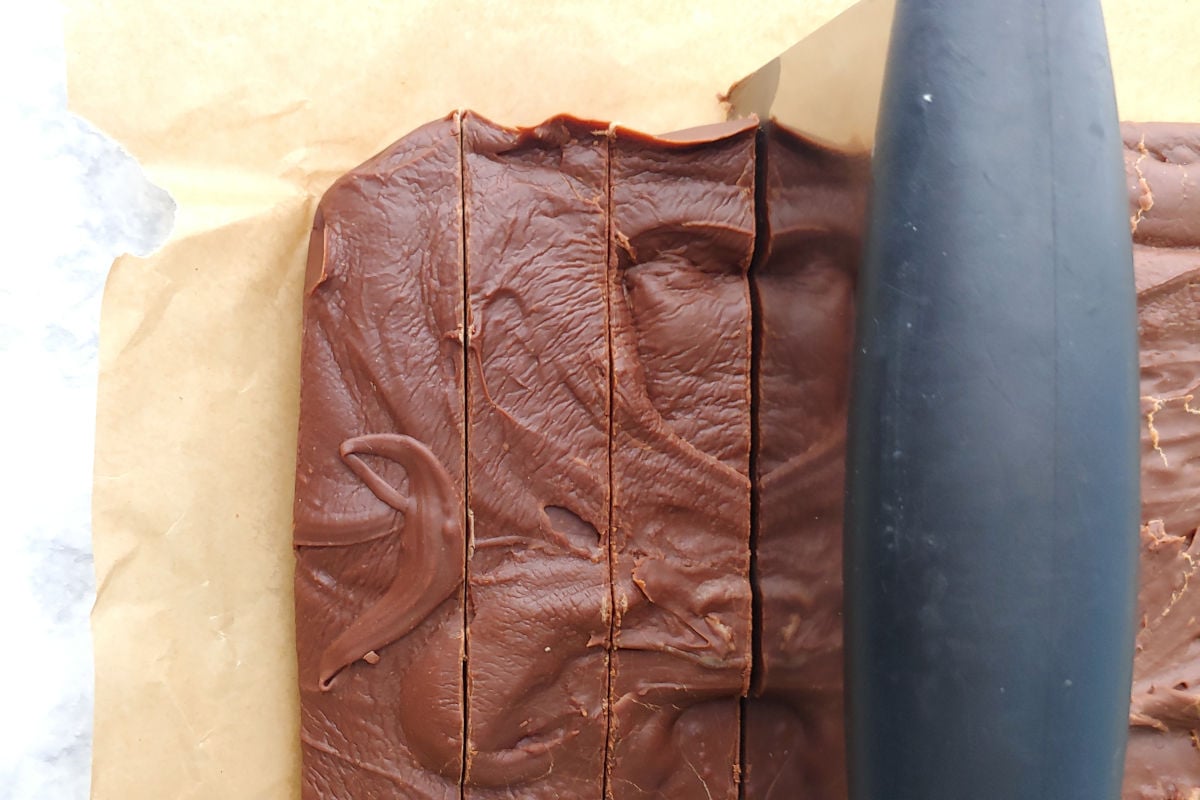
I recommend using a bench scraper to cut because it cuts cleaner lines than a knife. The bench scraper also helps lift and transfer the fudge from the parchment.
How to Make Chocolate Fudge with Evaporated Milk
One: Butter a 9x13-inch pan, or line it with parchment paper - binder clips work well to hold it in place. Measure out chocolate and marshmallows.
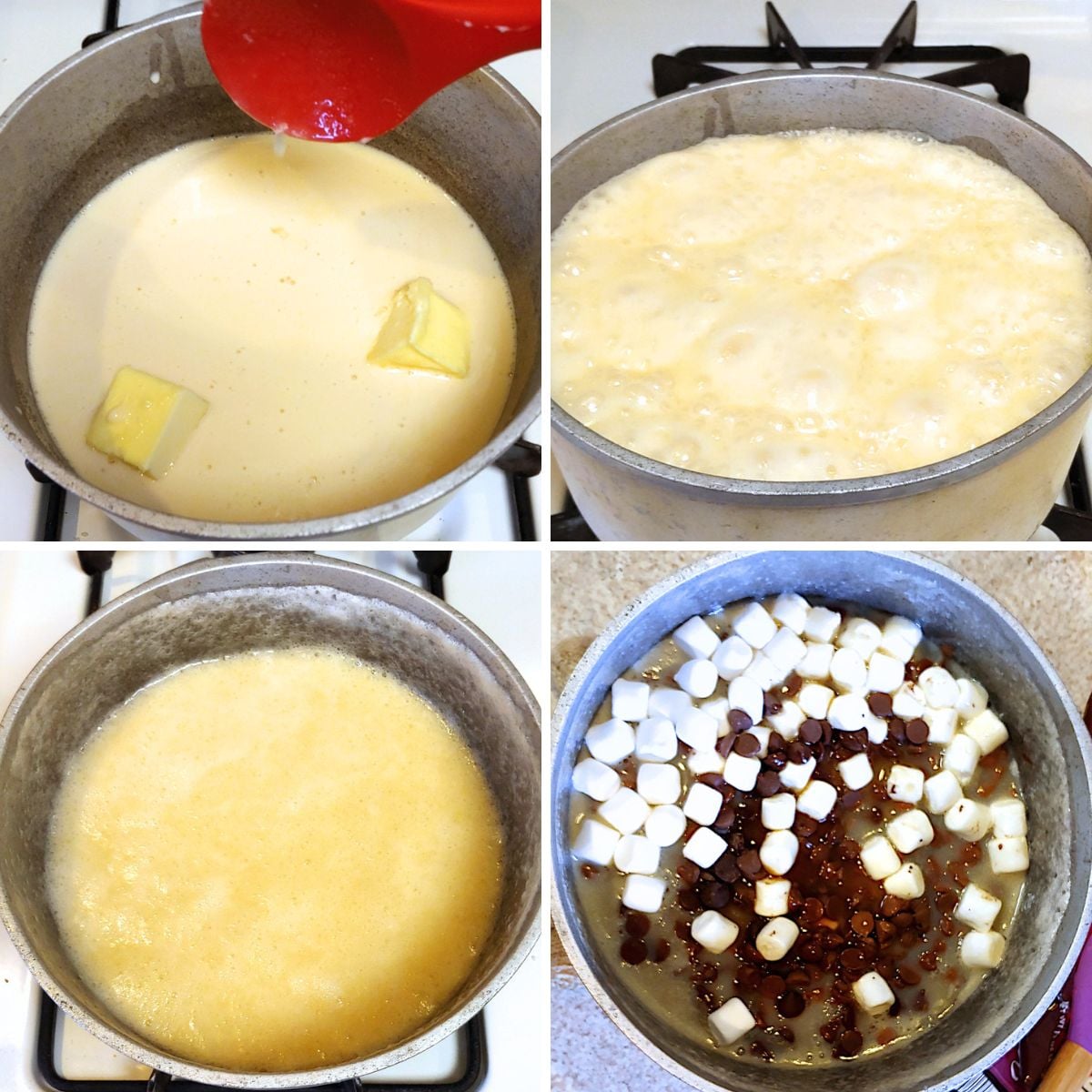
Two: Combine sugar, evaporated milk, and butter in a sturdy, 3-quart pot. Over medium-high heat, stir everything together while the butter melts and the sugar dissolves; stirring also keeps the bottom from scorching. Continue to stir while the mixture comes to a full, rolling boil.
Three: At a full, rolling boil, medium or large bubbles will cover the entire surface; it sometimes spreads from one side to the other like a wave or rising tide. Stop stirring and start a timer for 5 minutes. The syrup will expand and double in size. Reduce the heat slightly if necessary to keep the pot from overflowing.
Four: When the 5-minute timer is up, immediately remove your pot from the heat. The syrup will begin to deflate.
Five: Immediately add all the chocolate, marshmallows, nuts (if you're using), and a little vanilla. Use a clean silicone spatula to submerge the ingredients, which will start to melt.
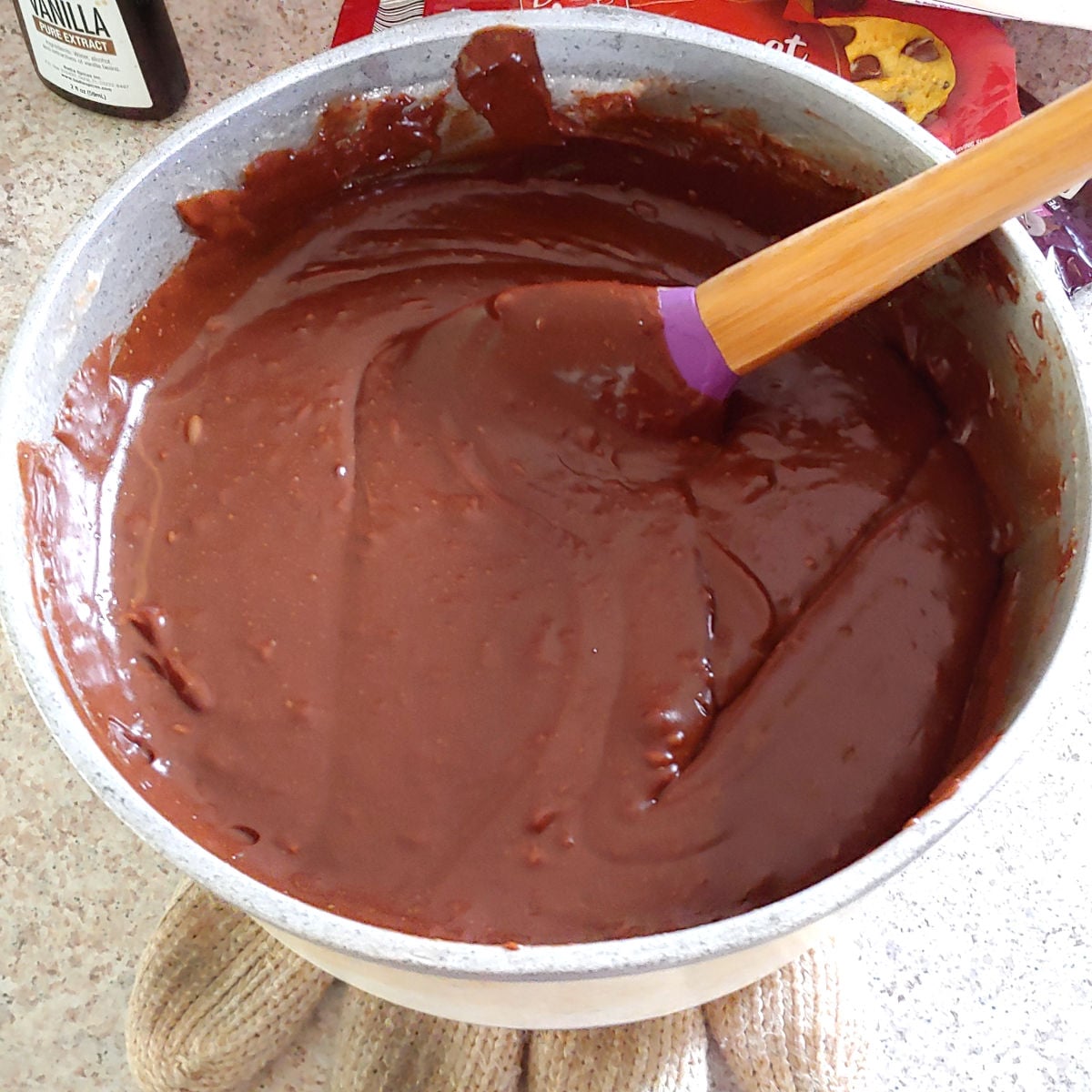
Six: Mix constantly until the fudge is smooth, being sure to scrape up the bottom. If there are small lumps of chocolate, smooth them out between the spatula and side of the pan. Seeing if your fudge is smooth can be difficult if you add nuts. This process can take 5 minutes. (The fudge in the photo above needs slightly more stirring.)
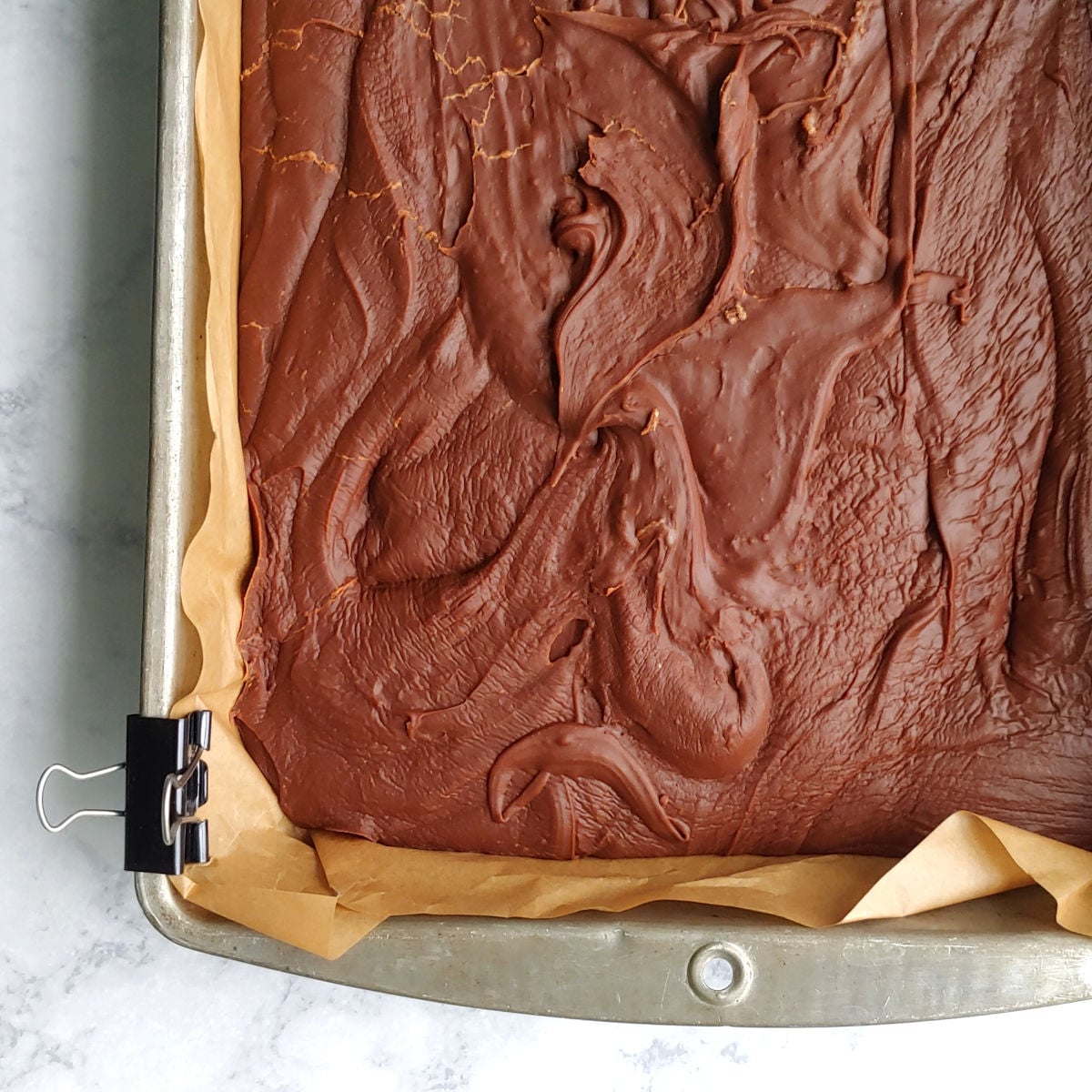
Seven: Immediately pour into the parchment-lined pan, and smooth out slightly. Fudge in this photo has already cooled and set.
Cool at least 2 hours, although fudge cuts best if left to firm up for 4 hours or overnight. Honestly, I usually can't wait and basically dig a spoon in for a bite after an hour.
Serving and Storage
After the fudge has set, use the parchment paper to lift the fudge from the pan; it's easier to cut that way. I use a bench scraper to cut nice, even lines.
Store fudge in an airtight container at room temperature. You can store it alongside other types of fudge, but don't store it with other candies; fudge will trade moisture with other candy, affecting texture.
At home, I usually cut fudge into small, bite-sized pieces and store them in festive metal tins, separated by waxed or parchment paper between layers. Small squares start to dry out at the edges after 1-2 weeks if you dig in often, so sometimes I store bricks of fudge and slice as we go.
If the fudge is too soft to cut cleanly even after a day, flip it out onto a cutting board after the top is dry to the touch. Peel back the parchment, and let the surface dry out or "cure." Once it's set, you can cut it into pieces. The surfaces will set just enough for you to handle.
Gifting and Shipping
Fudge keeps beautifully in cool, dry conditions; it's excellent for mailing or gifting in the winter, but I wouldn't ship it during warm weather. I cut the fudge into bars (usually 1-inch bricks around 4-5 inches long), wrap them in parchment paper, then place that in a layer or two of plastic wrap to keep air out. If you're gifting multiple kinds of fudge, like my Peanut Butter Fudge, be sure you label each bar when you wrap it.
When shipping, protect the bars of fudge in a sturdy box or metal tin so they don't get squished out of shape. One of my food gift boxes was delayed by a full month, but my friends said the fudge was still delicious when it arrived.
Tips for Fudge-Making Success
This chocolate fudge recipe is very reliable, but you'll still have the most success by following these tips:
- Gather ingredients and prepare your pan before starting. Although I often skip it when cooking, I always do mise en place for candy-making; you can't interrupt making fudge once it starts.
- Chop bar chocolate, even leftover Halloween candy, into small pieces so they melt evenly.
- Bring the syrup to a full, rolling boil (bubbles across the entire surface), and don't stir while it boils.
- Set a timer to measure the boiling time; precision matters, so don't estimate it. Undercooking will lead to fudge that doesn't set; overcooking can make the fudge dry.
- Use a clean silicone spatula to stir the chocolate and marshmallows into the sugar syrup. Reusing the spatula you used when heating the syrup will introduce uncooked sugar crystals, which can lead to grittiness.
- Constant stirring while mixing in the chocolate and marshmallows helps the fudge set; don't be tempted to let them soften in the hot liquid before you start.
- Fudge on the spatula will sometimes start to crinkle if you take a break from stirring. This is how you know it's almost done!
Fudge-Making FAQ
No! This recipe specifically does not require a candy thermometer. Bring the mixture to a full, rolling boil, then cook for 5 minutes. Afterward, chocolate and marshmallows are stirred and melted into the boiled syrup to set it and give it a creamy texture.
Traditional chocolate fudge can be hard to stir; this recipe with evaporated milk and marshmallows is much less so. After adding chocolate and marshmallows, you stir the fudge constantly (but not vigorously) until the fudge is smooth - around 5 minutes. The fudge may also start to crinkle at the end of stirring, in which case it's ready to pour. It's not difficult, but stirring for that long can be tiring.
Fudge usually doesn't set for one of two reasons. First, the syrup wasn't cooked long enough at a full boil. Second, the syrup wasn't stirred enough with the chocolate and marshmallows to get the sugars to set.
Store fudge in an airtight container at room temperature in a cool, dry place. Properly stored, homemade chocolate fudge stays good for up to 4 weeks, although small squares can dry at the edges after 1-2 weeks if you dig in to the container often. At home, I store it in airtight metal tins lined with waxed or parchment paper, with paper between layers. I keep bricks of fudge for longer storage and slice it as we go.
You can't "fix" fudge that doesn't turn out, in that you can't recook it. However, you can repurpose it. If the flavor is ok, you can chop it up and mix it into things like Hershey's Best Brownies or my Brownie Cheesecake in place of brownies. It's fine to freeze and thaw it to use like this as well.
Other Favorite DIY Food Gifts
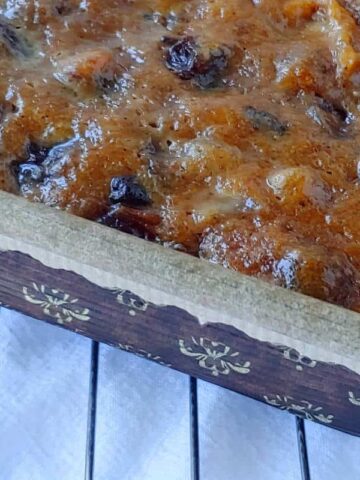
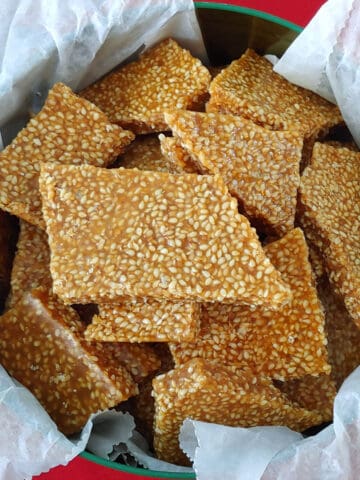
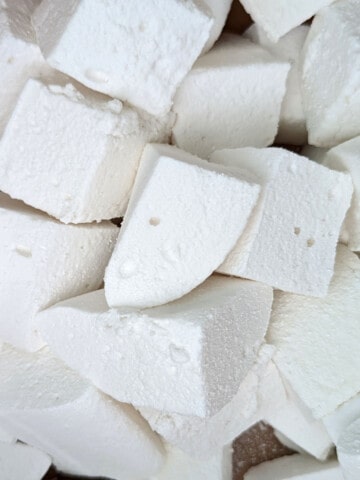
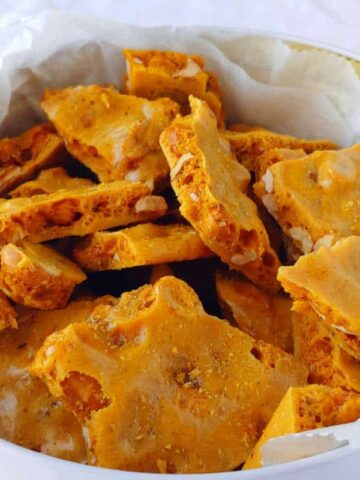
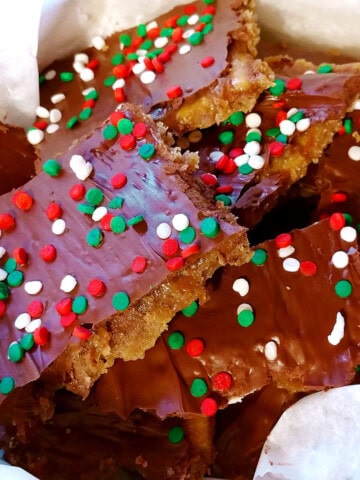
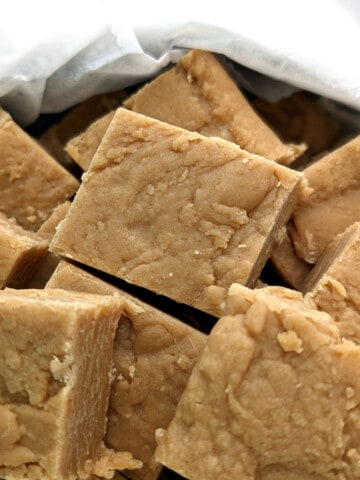
Here's some of the other recipes I make to give as gifts, year after year. I make one batch of fruitcake, as it yields plenty of small loaves. I usually make two-three batches of candy each year.
I hope this becomes a recipe you'll return to. If you try it, a star rating below helps others find it - and I'd love to hear how yours turns out in the comments! 💕 Questions or trouble? Drop a note, and I'll do my best to help.
📖 Recipe

Easy Homemade Chocolate Fudge with Evaporated Milk
Equipment
- sturdy 3-quart pot
- 2 silicone spatulas
- 9x13 inch pan
- parchment paper
Ingredients
- 3 cups sugar (600 grams)
- 1 can evaporated milk (12 ounces/354 grams)
- 4 tablespoons butter (56 grams)
- 16 ounces milk chocolate (2 ⅔ cups, chopped) (454 grams)
- 12 ounces semisweet chocolate (2 cups, chopped) (340 grams)
- 64 miniature marshmallows (or 16 regular marshmallows; 45 grams)
- 1 teaspoon vanilla (5 grams)
- 1 cup nuts (optional)
Instructions
- Butter or line a 9x13-inch pan (affiliate link) with parchment paper. Set pan aside.
- Combine sugar, evaporated milk, and butter in a heavy 3-quart pot. Heat over medium-high heat. Stir to help the butter melt and the sugar dissolve, and scrape the bottom so that the milk doesn't scorch.
- Prepare your other ingredients if you haven't already. Chop chocolate into small pieces. Cut regular-sized marshmallows into quarters. Gather nuts and vanilla.
- Bring sugar-milk mixture to a full rolling boil. The entire surface will be bubbles. Set aside your stirring spoon and start a timer for 5 minutes. Cooking for less or more time will make the fudge too soft or too chalky or stiff.
- Boil for 5 minutes, with no stirring. The liquid will double in volume and may come close to the top of the pan. If the mixture looks like it will boil over, edge down the heat slightly, just enough to keep it from making a mess.
- After 5 minutes are up, remove the pot from the heat. Immediately add the chocolate, marshmallows, vanilla, and nuts (if using).
- Using a clean silicone spatula, mix until the chocolate and marshmallows are completely melted. Without nuts, the mixture will be relatively smooth; if you have lumps of chocolate, smooth them out between the spatula and the side of the pot. Fudge on the spoon will start to crinkle if you take a break from stirring. This whole process takes me about 5 minutes.
- Pour into your prepared pan, trying to get it into all the corners in one go. Smooth it slightly.
- Let cool for at least 2 hours before removing the fudge from the pan. However, the fudge is cut more neatly if it sets for 4.
- Store fudge in an airtight container at room temperature. Avoid heat and humidity. If packing to ship, cut fudge into slices and wrap in a layer of parchment paper, followed by a layer of plastic wrap.
- Eat cut fudge within 1-2 weeks. Wrapped fudge will keep about a month.




Leona Konkel says
I make 2 or 3 batches of this fudge each December, and I still love it as much as I did the first time I made it. If you try it, let me know if you have any questions. I'd love to hear how it turns out!