

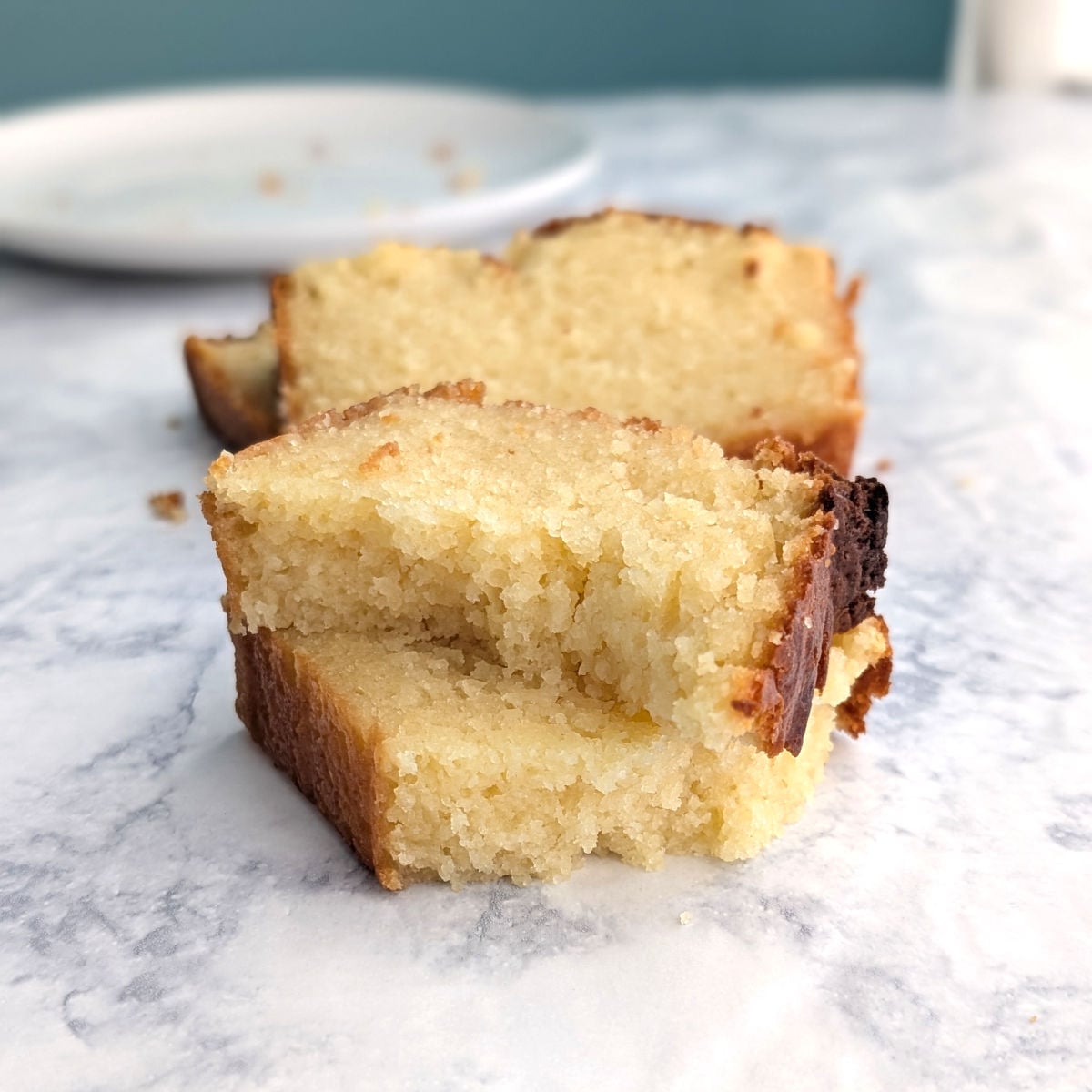
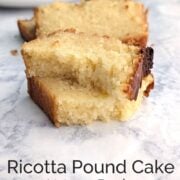
I've adored pound cakes all my life, but this Ricotta Pound Cake may be my favorite. It's tender and moist, with a rich flavor and a springy texture that stays that way for days. My favorite part is the top crust which browns beautifully, making a buttery, caramelized contrast to the soft, pure dairy flavor underneath.
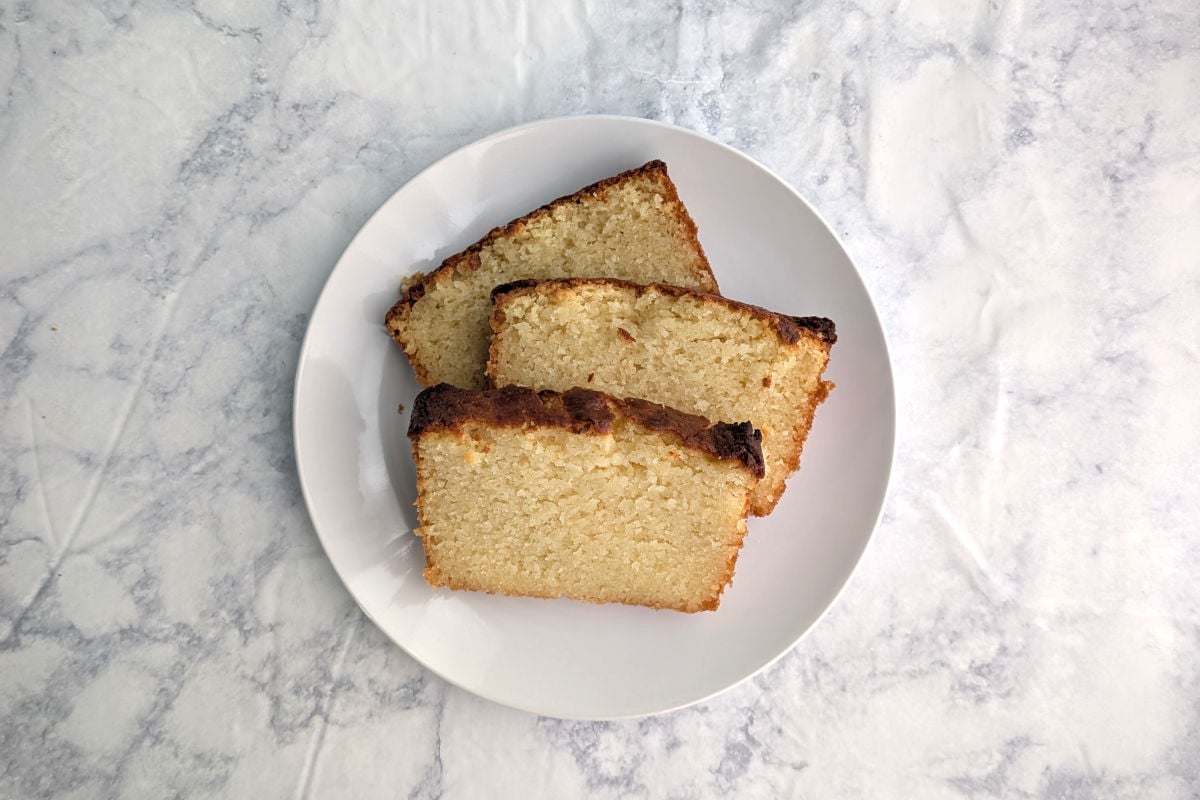
I originally tried this recipe simply to use up some ricotta, but my friends - even my friend Jenn, who doesn't usually like pound cake - urged me to write about it because a cake this soft and moist deserves to be shared with everyone.
Dense but not heavy, the cake gets extra moisture from the ricotta, which keeps the crumb from turning dry or crumbly. You don't taste cheese; you still get the sweet, buttery taste of traditional pound cake, only richer and more tender.
Jump to:
Why I Love This Pound Cake
I adore this ricotta pound cake because it's everything I want in a cake, with:
- An easy-to-make batter using a handful of simple ingredients.
- An incredibly moist, springy texture that lasts for days.
- A rich, buttery flavor beneath a delicious golden crust (my favorite part).
- Clear, reliable doneness cues that take the guesswork out of baking.
- Slices that fit any moment, from morning brunch to late-night get-together.
SUMMARIZE AND SAVE THIS CONTENT ON:
Ingredients You'll Need
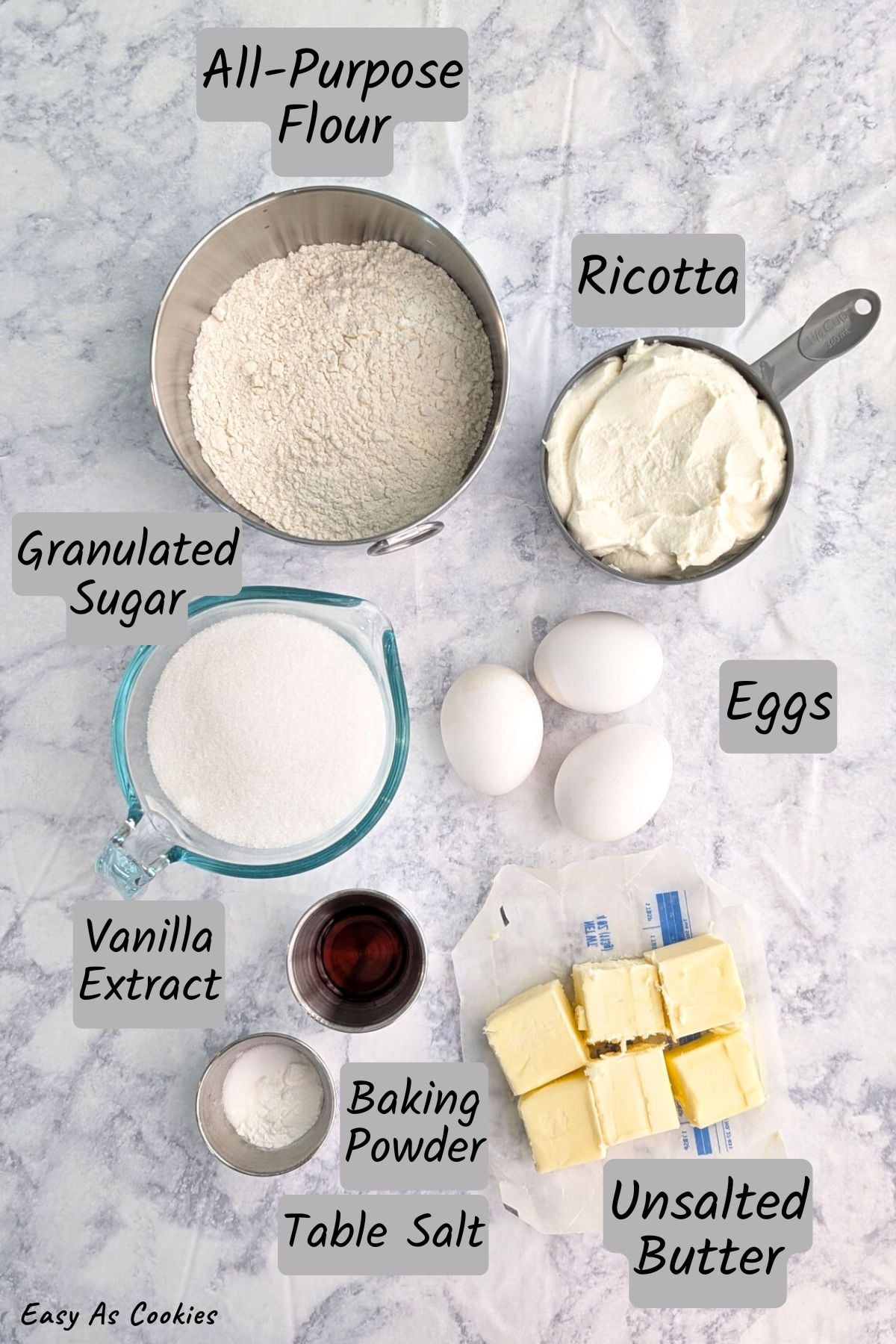
Ricotta cheese: This mild, creamy cheese is what makes this cake so moist and springy. It blends into the batter and gives the cake a rich dairy flavor - not a cheesy one. I've tested whole milk ricotta from Galbani (with stabilizers like guar gum) and Shoprite store brand (without stabilizers); you can drain it or not. If you're a little short on ricotta, top it off with milk.
Unsalted butter: Adds richness and structure. Salted butter would make the cake too salty.
Sugar: Provides moisture and neutral sweetness. Stick with granulated sugar so the flavor stays dairy-forward.
Eggs: Give richness and bind the cake together. Because the cake is already delicate in the pan when turning it out, I don't recommend substituting for the eggs.
Vanilla extract: Enhances the dairy flavor and rounds out the sweetness.
All-purpose flour: Gives the cake structure. Cake flour should also work. Gluten-free flour blends may make the cake too fragile; if trying one, choose a blend with a neutral flavor.
Baking powder and table salt: Baking powder provides the lift as the cake bakes, and salt balances the flavor.
Pan Size, Filling, and Doneness Cues
I've tested this cake multiple times after hearing feedback that it can overflow or doesn't turn out. Here's what you should know before you get started.
Pan Size Options
Use a lightly colored metal loaf pan. If using dark metal or glass, reduce the oven temperature to 325F, and check the cake for doneness early.
In larger 9-inch loaf pans - like a 1.5-pound Nordic Ware loaf pan (affiliate link) (slightly bigger than 9x5-inch) and an old 9x5-inch aluminum loaf pan - the batter bakes cleanly with no overflow issues.
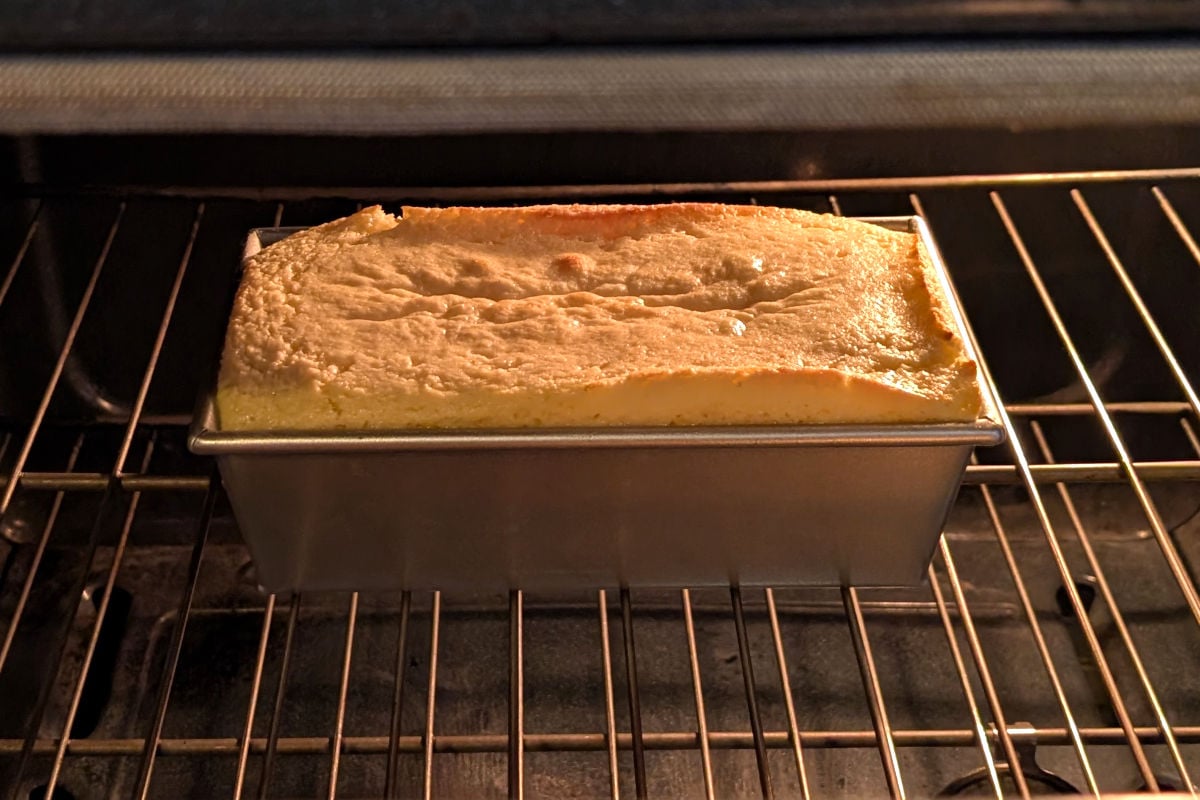
In a 8.5-inch loaf pan (1-pound capacity from Chicago Metallic (affiliate link), 8.5x4.5x2.7 inches), the batter rises much higher. With 180 g flour (weighed on a digital kitchen scale (affiliate link)), it came close to the top but stayed contained (as seen in the photo below). With 210 g flour (measured by cups), I had a few butter drips from the pan onto my oven floor. Flour weight makes a big difference in a pan this size, and the 180-gram version had the better texture.
Preparation
Grease and flour the pan well. When I skipped flouring once, the cake broke apart. Parchment paper also works, but the edges turn out a little greasier than in a greased-and-floured pan.
How High to Fill the Pan
Aim for ⅔ to ¾ full. The batter rises over the top of the 8.5-inch pan, so stay closer to ⅔ full if your oven isn't perfectly level. If you need to remove a little batter, bake it in a greased and floured muffin cup and start checking it for doneness at around 15 minutes.
Checking Doneness
Pound cakes are tricky to check for doneness, and this one is no exception. The top browns well before the cake is baked through, so tent it with aluminum foil if it's getting too dark. Here's how I check for doneness.
- Give the cake a gentle shake. If it jiggles, it's not ready - don't bother testing yet.
- Look at the center crack. It should look set, not wet.
- Test in a few spots. Stick a toothpick both through the crust and directly in the crack. If the toothpick comes out wet or gooey, keep baking.
How to Make Ricotta Pound Cake - Step-by-Step
Be sure the butter is at room temperature before you start. The ricotta and eggs also mix better if you pull the them out ahead of time, but I often forget and it still works.
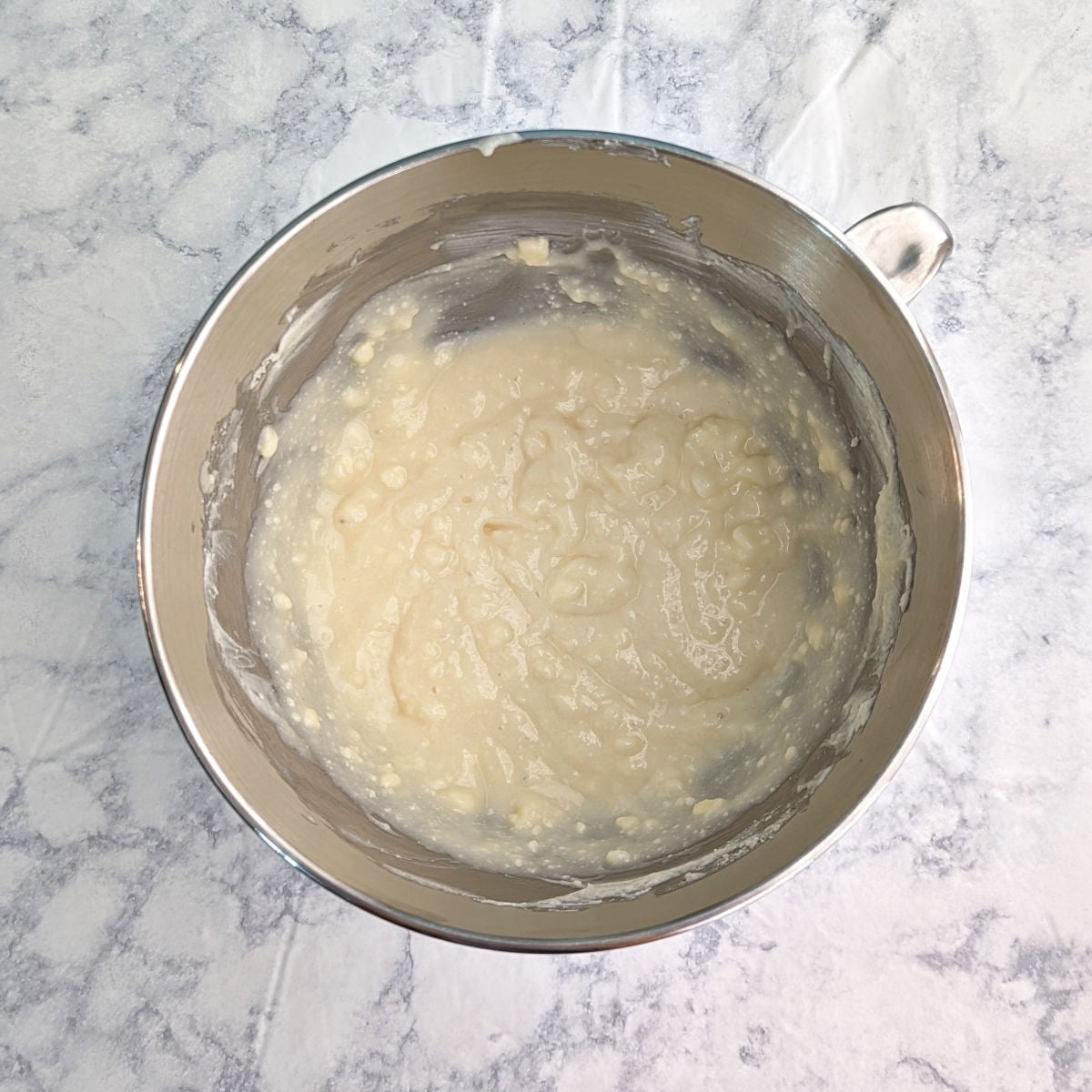
One: Cream the butter, ricotta, and sugar on medium speed until relatively smooth - small ricotta lumps are normal, as seen above. Then, mix in the eggs and vanilla, one at a time, on low speed.
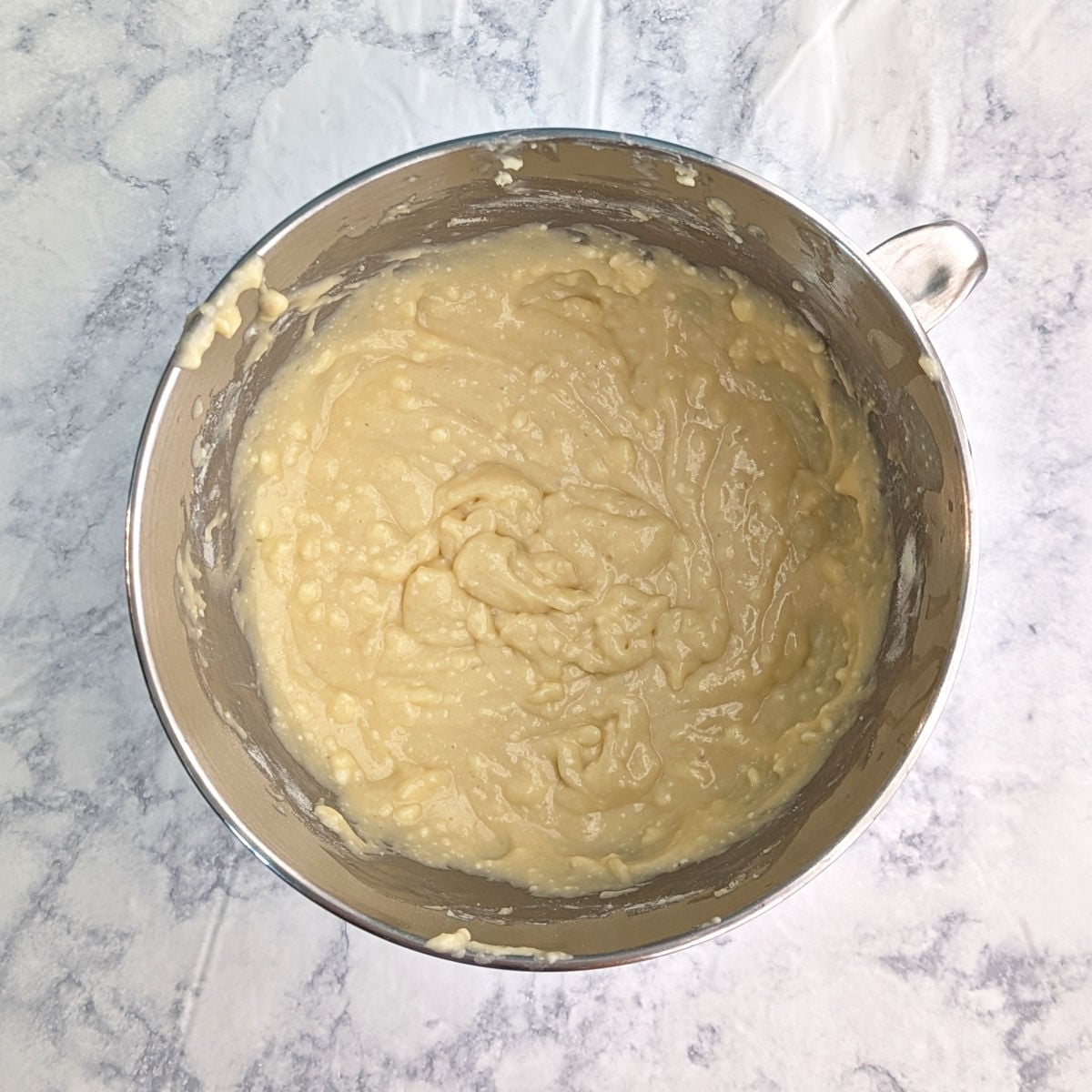
Two: Mix in the flour, baking powder, and salt on low speed until just combined. Scrape down the bowl, then beat on medium speed for 30 seconds.
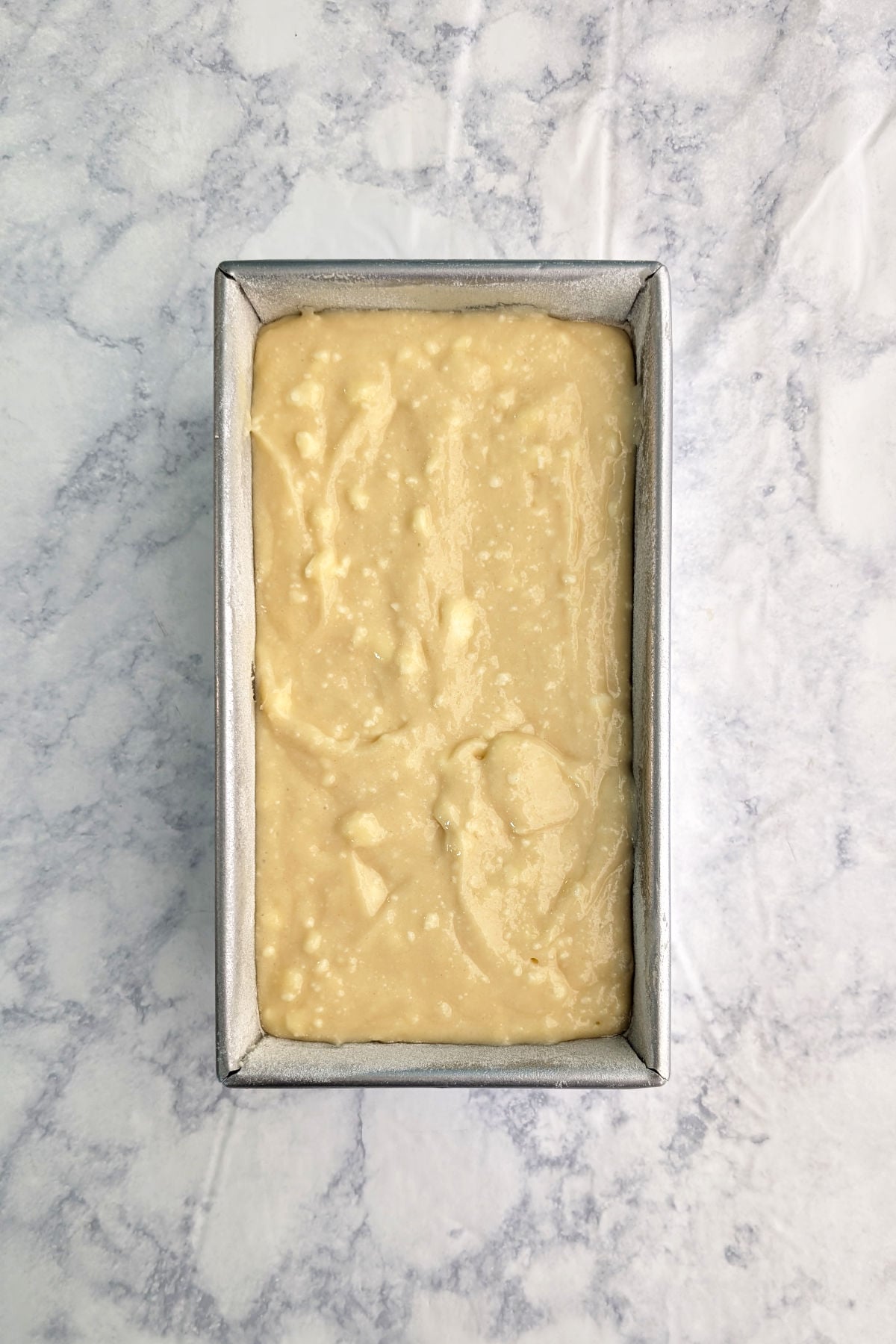
Three: Scrape the batter into the prepared pan, filling it ⅔ to ¾ full. Level it out, and tap it on the counter a few times to release trapped air bubbles.
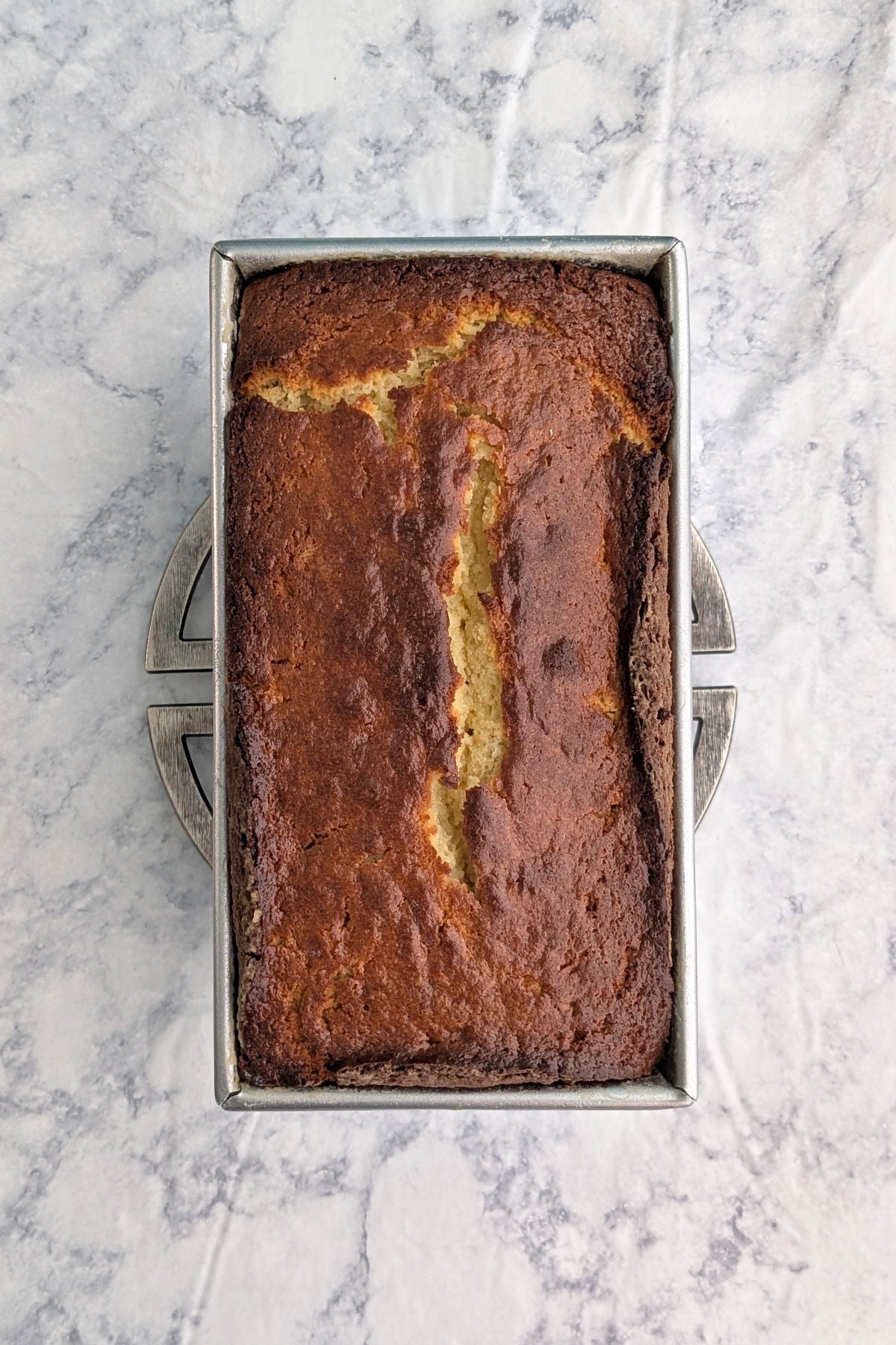
Four: Bake until a toothpick inserted into the center comes out clean, around 75 minutes. (See the notes above for more doneness cues.)
Cool in the pan for about an hour before turning the cake out onto a wire cooling rack.
Serving and Storage
Cool the cake completely before slicing. A sharp kitchen knife or serrated bread knife (affiliate link) cuts more cleanly than a butter knife.
Store slices in an airtight container at room temperature. The cake is wonderful on the day it's baked, and even better the day after. It stays springy and delicious for 3-5 days.
Pound cakes are excellent for sharing. I don't think this one needs any adornment, but it would be lovely with berries on the side. With such a pure dairy flavor, I think it's perfect with a cup of coffee or strong tea - and it pairs incredibly well with wine at my book club.
Quick Tips for Pound Cake Success
🧈 Choose the right pan, and prepare it well.
Use a light-colored metal loaf pan, and grease and flour it thoroughly. Skipping or skimping on the flour can cause sticking.
🫗 Don't overfill the pan.
Aim for ⅔ to ¾, and stay closer to ⅔ if your oven isn't level.
⏳ Be patient with the baking time.
This cake has a wide doneness window. It's done when a toothpick stuck into the crack comes out clean - not gooey.
⚖️ Weigh your ingredients if you can.
A digital kitchen scale (affiliate link) gives the most accurate way to measure and helps prevent an overly dense cake.
🌬️ Cool it in the pan.
Cooling the cake in the pan allows the structure to set so it doesn't break when you remove it. Turning it out after an hour releases the extra steam that would otherwise make the cake soggy.
Cozy, Classic Treats to Try Next

I hope this becomes a recipe you'll return to. If you try it, a star rating below helps others find it - and I'd love to hear how yours turns out in the comments! 💕 Questions or trouble? Drop a note, and I'll do my best to help.
📖 Recipe

Ricotta Pound Cake
Equipment
- 9x5 inch loaf pan (affiliate link)
- electric mixer
Ingredients
- 12 tablespoons unsalted butter (168 grams; softened)
- 1 ½ cups ricotta cheese (372 grams)
- 1 ½ cups sugar (300 grams)
- 3 eggs
- 2 teaspoons vanilla extract
- 1 ½ cups all-purpose flour (180 grams)
- 2 ½ teaspoons baking powder
- ½ teaspoon table salt
Instructions
- Grease and flour a 9x5-inch loaf pan very well, or line it with parchment paper. Set aside, and preheat oven to 350F.
- With a stand or electric mixer, cream together butter, ricotta, and sugar on medium speed for about 2 minutes, until lighter and mostly smooth - small lumps of ricotta are normal.
- Add eggs and vanilla one at a time, mixing on low until combined.
- Add flour, baking powder, and salt. Mix on low until just combined, scrape down the bowl, and beat on medium for 30 seconds.
- Scrape the batter into the prepared pan, filling it between ⅔ and ¾ full (see Notes). Smooth out the batter and tap the pan against the counter a few times to release air bubbles.
- Bake in the center of the oven at 350F, for 45-75 minutes (see Notes), until a toothpick inserted into the center - including the crack - comes out clean. The cake should not jiggle if you gently shake the pan. The center crack should look set, not gooey, and the top will be a deep golden brown. Tent with foil if it begins to brown too quickly.
- Cool in the pan for 1 hour, then turn out onto a cooling rack.
- Cool completely before slicing. A serrated bread knife (affiliate link) works well for clean cuts. Store in an airtight container at room temperature. Best within 3 days; good for up to 5.
Notes
- 1.5-lb NordicWare (~9.5-inch) - no overflow
- Standard old aluminum 9x5-inch pan - no overflow
- 1-lb Chicago Metallic (8.5x4.5x2.7 inch) - safe, but barely, when using 180g flour (weighed); a few drips when using 210g flour (measured by cups)
Nutrition
[Updated 2/3/2020. Revised and restructured, with lots of tips, on 2/8/2026.]



Leona Konkel says
I've made this cake several times, and it's just as delicious as the first time. The golden crust is my favorite part! The baking can be a little finicky, so just let me know if you have any questions. It's absolutely worth making, and I want yours to turn out!
Lottaine says
Followed the directions for the ricotta poundcake. It smell delicious while cooking. When it was done I put a toothpick in and it came out clean. While it was cooling it started to sink in the middle. Once cooled The middle was totally, hollow. It came out of the pan perfectly & Then just fell apart. The ends tasted delicious but was a waste of many ingredients because I was supposed to bring it to a friends house. Something is not right with this recipe
Leona Konkel says
I'm sorry the cake didn't work out for you. Since this cake does have such a moist texture, it is a little delicate after it's cut, but it shouldn't just fall apart when cut. I'd like to troubleshoot it because I've made it a few times and it turned out for me. Did you measure your ingredients with measuring cups, or did you weigh them? How long did you bake it? Was the cake jiggly, or not jiggly, when you took it from the oven? I'm also wondering if you mixed your batter more or less than mine, or used skim ricotta.