

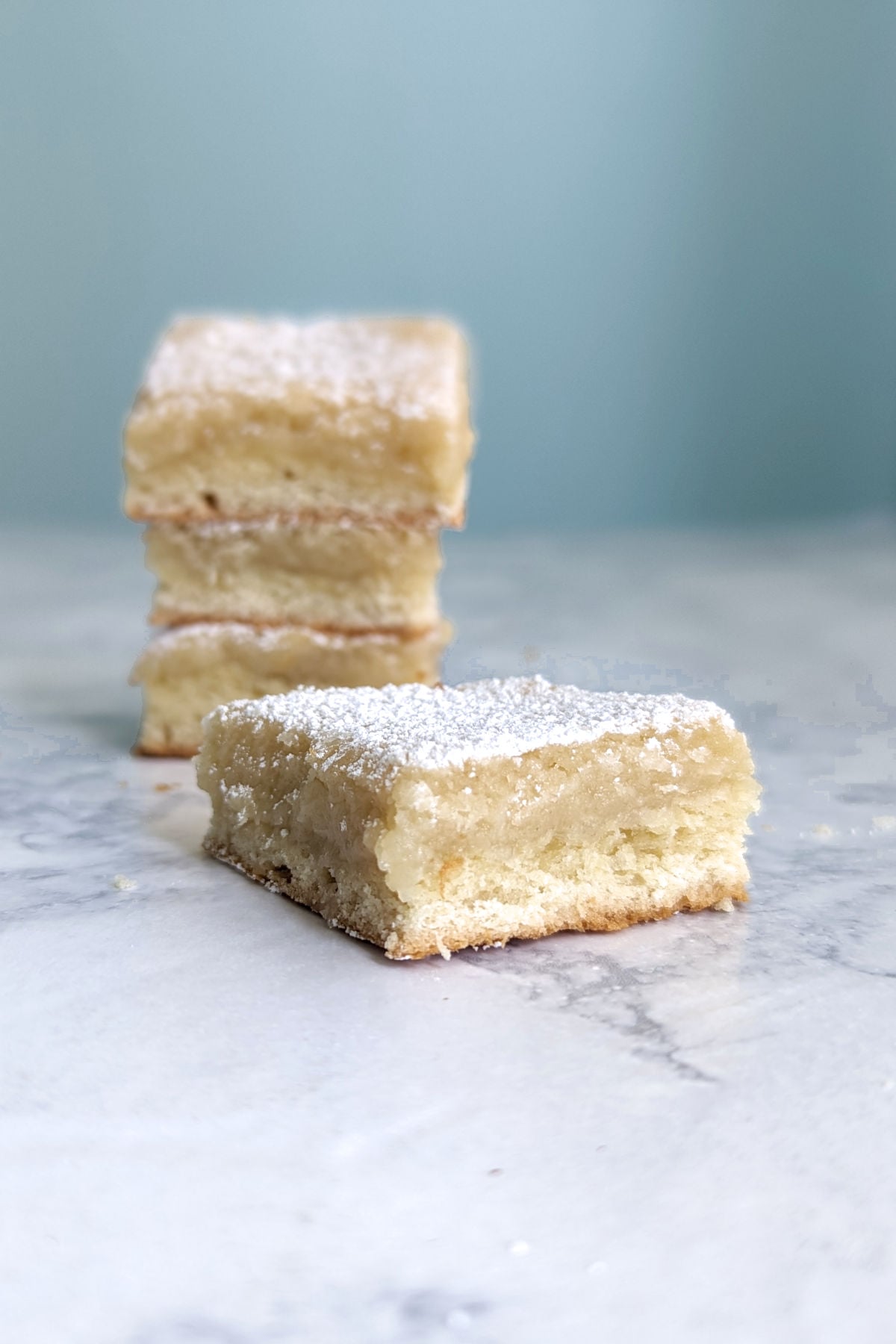
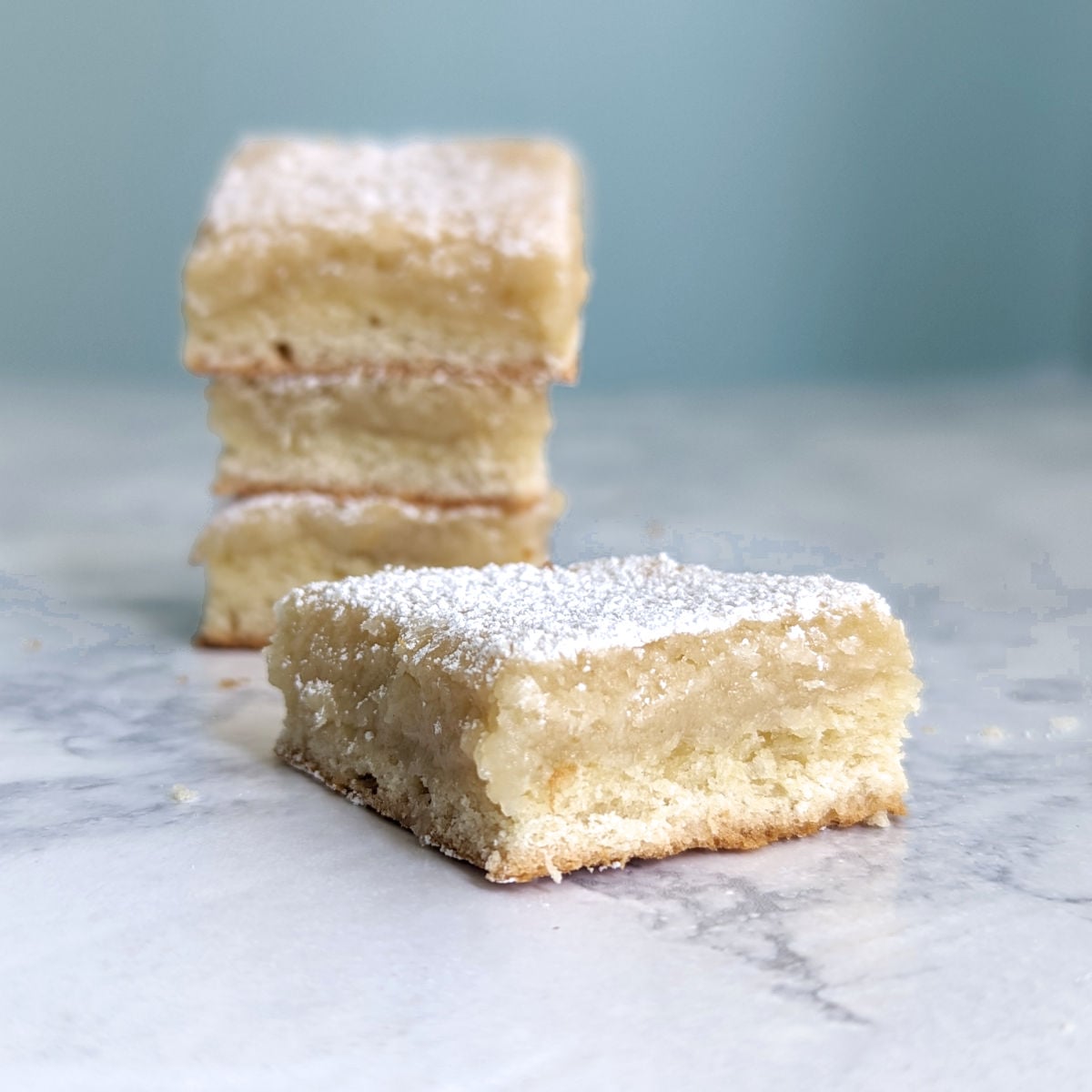
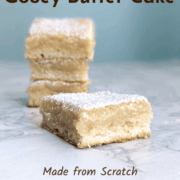
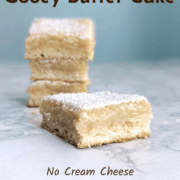
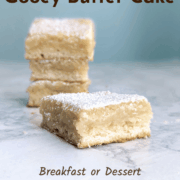
St. Louis Gooey Butter Cake is a tender, yeasted cake topped with vanilla-y, buttery goo - an unexpected alternative to a traditional coffee cake. No cake mixes here - this is a bakery-style, from-scratch cake that's perfect for breakfast, dessert, and any time in between.
St. Louis Gooey Butter Cake from Scratch - at a Glance
- ⏱ Prep Time: 45 minutes
- 🔥 Cook Time: 30 minutes
- ⏳ Rising Time: 2 hours 10 minutes
- ⌛ Total Time: 3 hours 25 minutes
- 👪 Serves: 24
- 🍽️ Calories: 206
- 🌾 Main Ingredients: Flour, sugar, butter, yeast, vanilla, eggs, corn syrup
- 👌 Why You'll Love It: Bakery-style St. Louis Gooey Butter Cake made from scratch, with a low-stress yeasted cake base and gooey topping with no cream cheese or box mix.
SUMMARIZE & SAVE THIS RECIPE ON
I've made several versions, but this is the best one. Others I've tried include a NY Times recipe that severely overbaked and the original Old St. Louis Bakery recipe published in the St. Louis Post-Dispatch newspaper. My version is adapted from King Arthur Baking, which is also close to the original.
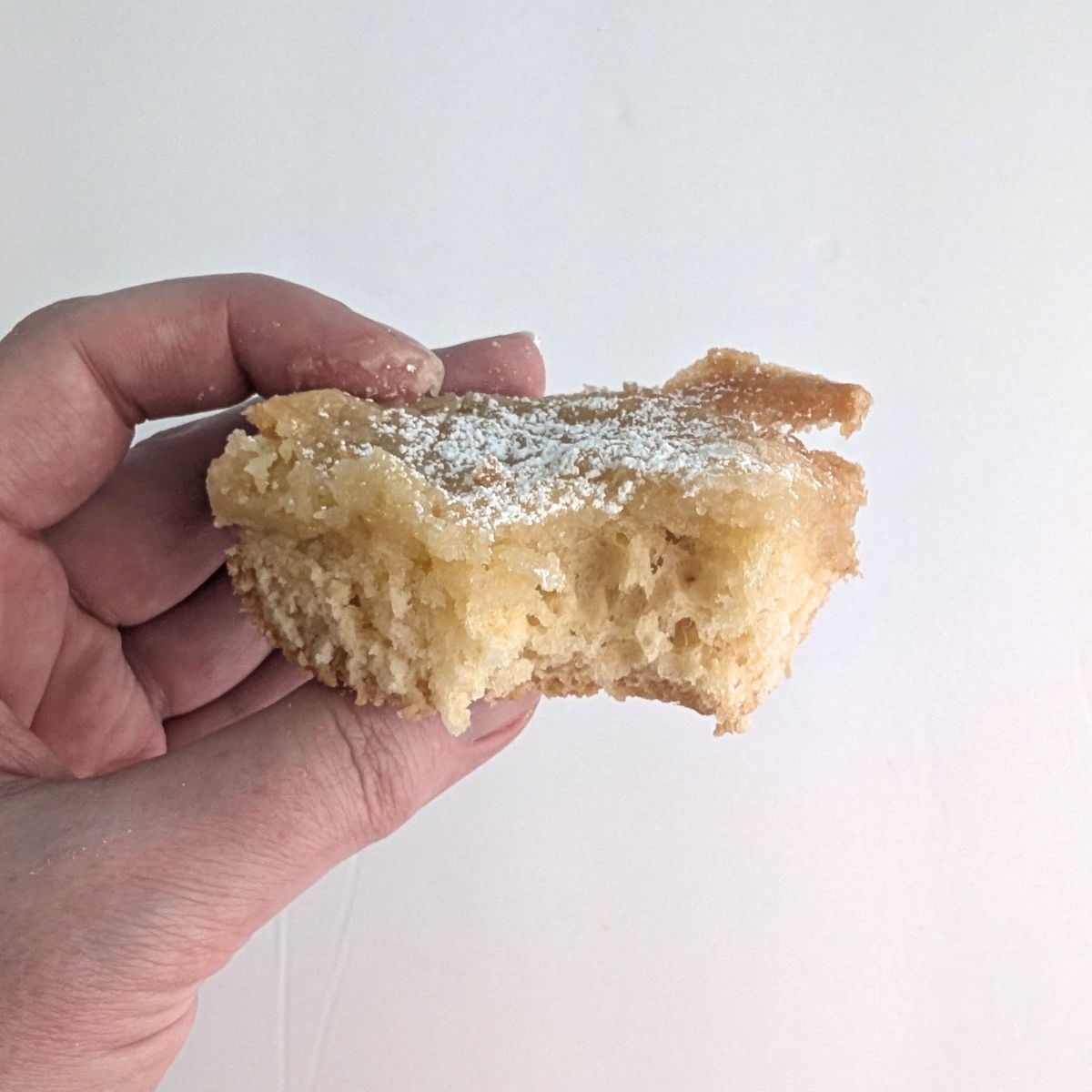
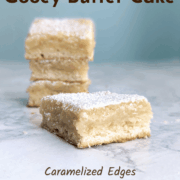
All pieces of gooey butter cake are wonderful; I love the caramelization and chewiness on the edge pieces, but the center pieces have the most goo. Whichever piece you eat, you can't go wrong.
Jump to:
- St. Louis Gooey Butter Cake from Scratch - at a Glance
- Why You'll Love St. Louis Gooey Butter Cake
- What is Gooey Butter Cake?
- Key Ingredients
- How to Make St. Louis Gooey Butter Cake from Scratch
- Serving and Storage
- Tips for Great Gooey Butter Cake
- St. Louis Gooey Butter Cake from Scratch FAQs
- Other From-Scratch Favorites
- 📖 Recipe
Why You'll Love St. Louis Gooey Butter Cake
I pull out this from-scratch gooey butter cake regularly because it's:
- 🧈 A forgiving cake base - the dough can rise a little or not at all and the cake still turns out perfectly.
- 🍮 Sweet, vanilla-y gooey layer - no cream cheese required, unlike many recipes.
- ✨ Caramelized edge pieces for chew-lovers, gooey center pieces for everyone else.
- 🕰️ Perfect any time of day, for any occasion.
What is Gooey Butter Cake?
Gooey Butter Cake is a delicious dessert that originated in St. Louis, Missouri. It's a layer of soft, sweet, buttery goo on top of a tender yeasted cake - the result of a happy 1930s mix-up where someone switched the amounts of butter and flour in a cake recipe. Waste not, want not, as the axiom says, so they sold the cakes, and they became popular.
I've seen butter cakes locally here in New Jersey and also in Philadelphia. Let me tell you, though, they're not as good as what you get in St. Louis, and definitely not as good as this recipe.
Gooey butter cake is a bit similar in concept to Lemon Bars with a Shortbread Crust - which are also soft goo on top of a buttery crust. However, the goo on the gooey butter cake is more batter or cake-like, and its base is a lightly sweetened yeasted cake, not shortbread. It's much like a coffee cake - but definitely sweeter than a Sour Cream Coffee Cake, making it equally welcome as dessert.
I didn't actually discover this dessert when I lived in St. Louis the first time. I was introduced to it by a coworker in Illinois who made the Paula Deen cake mix version for every potluck - which although delicious, aren't at all like the traditional-style yeasted version. And though I didn't eat much gooey butter cake when I lived in St. Louis a second time, I lived for their cousin, Gooey Butter Cookies, loving them so much I have my own version on this site.
Key Ingredients
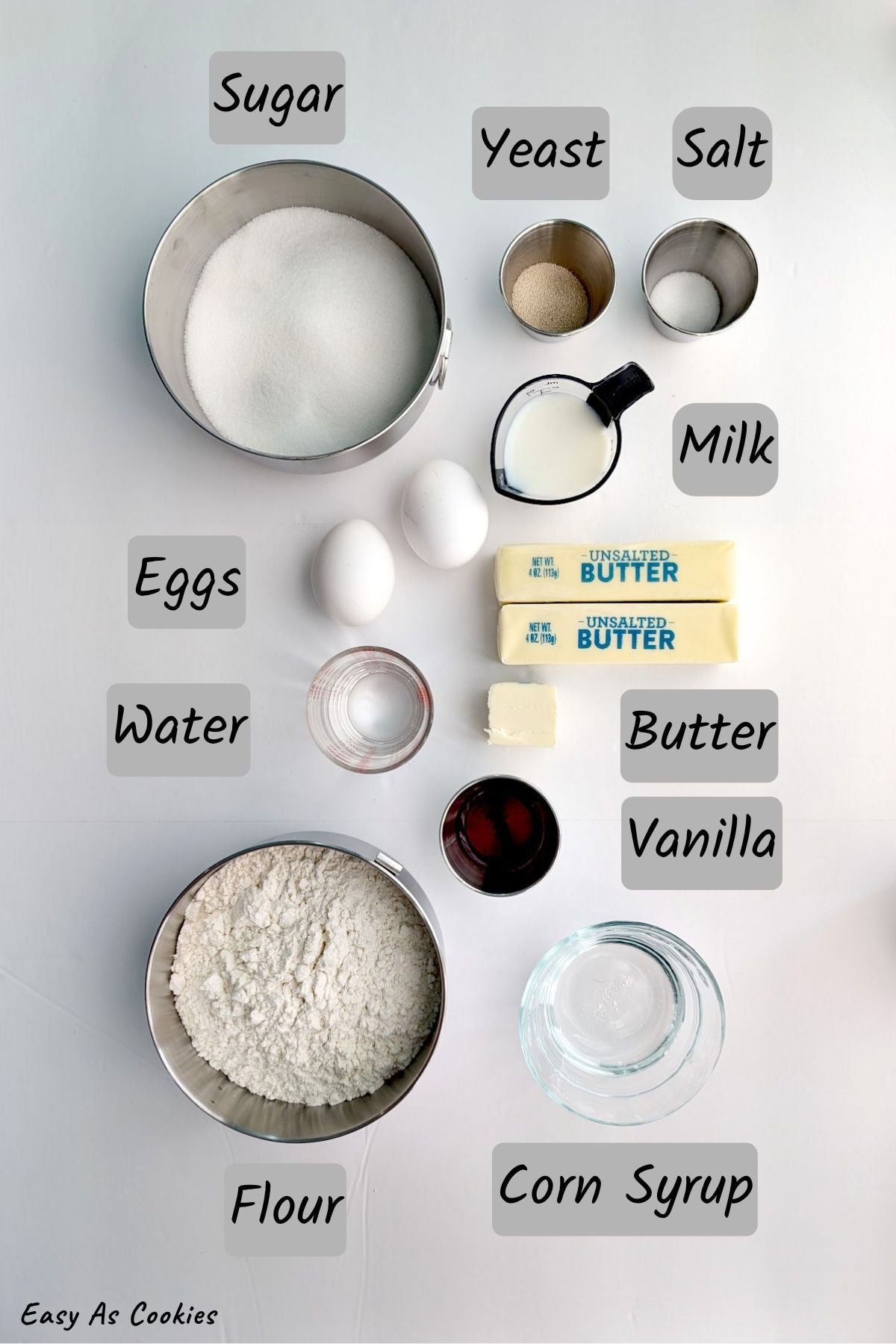
Butter: Clearly the star. Use unsalted butter; salted varieties would be overwhelming. Be sure yours is fresh; old butter in the fridge can pick up off flavors, which you'll notice in this cake.
Yeast: Makes the cake rise a little, ensuring the base isn't dense. Yeast is what's used in traditional-style St. Louis gooey butter cakes. Both active dry and instant yeast are fine; you'll dissolve active dry yeast in liquid, while you'll add instant yeast with the flour. Either way, you'll use slightly less than one packet.
Corn syrup: This invert sugar keeps the gooey layer gooey - don't skip it. It improves the texture of the goo and keeps the cake tastier and softer for longer (just like in my Flourless Monster Cookies). Its neutral flavor doesn't interfere with the butter or vanilla. Remember, light corn syrup IS NOT the same as high-fructose corn syrup. Honey or agave can be substituted, but I have not tested them; they will impact both the flavor and how the cake sets.
Vanilla: The major flavor aside from butter and sugar, the cake would taste flat without it. Use good, real vanilla extract for best results.
How to Make St. Louis Gooey Butter Cake from Scratch
Make the Cake Base
One: If using active dry yeast, mix it with milk and water. If it doesn't dissolve, let it soak for a few minutes, then stir again. The liquid should smell fragrant and yeasty. If using instant yeast, you'll add it at the beginning of Step 3 with the flour.
Two: Beat the softened butter, sugar, and salt until combined and smooth. Scrape down the bowl, then add the egg and mix until combined. If your egg is cold, the mixture may curdle, and that's okay.
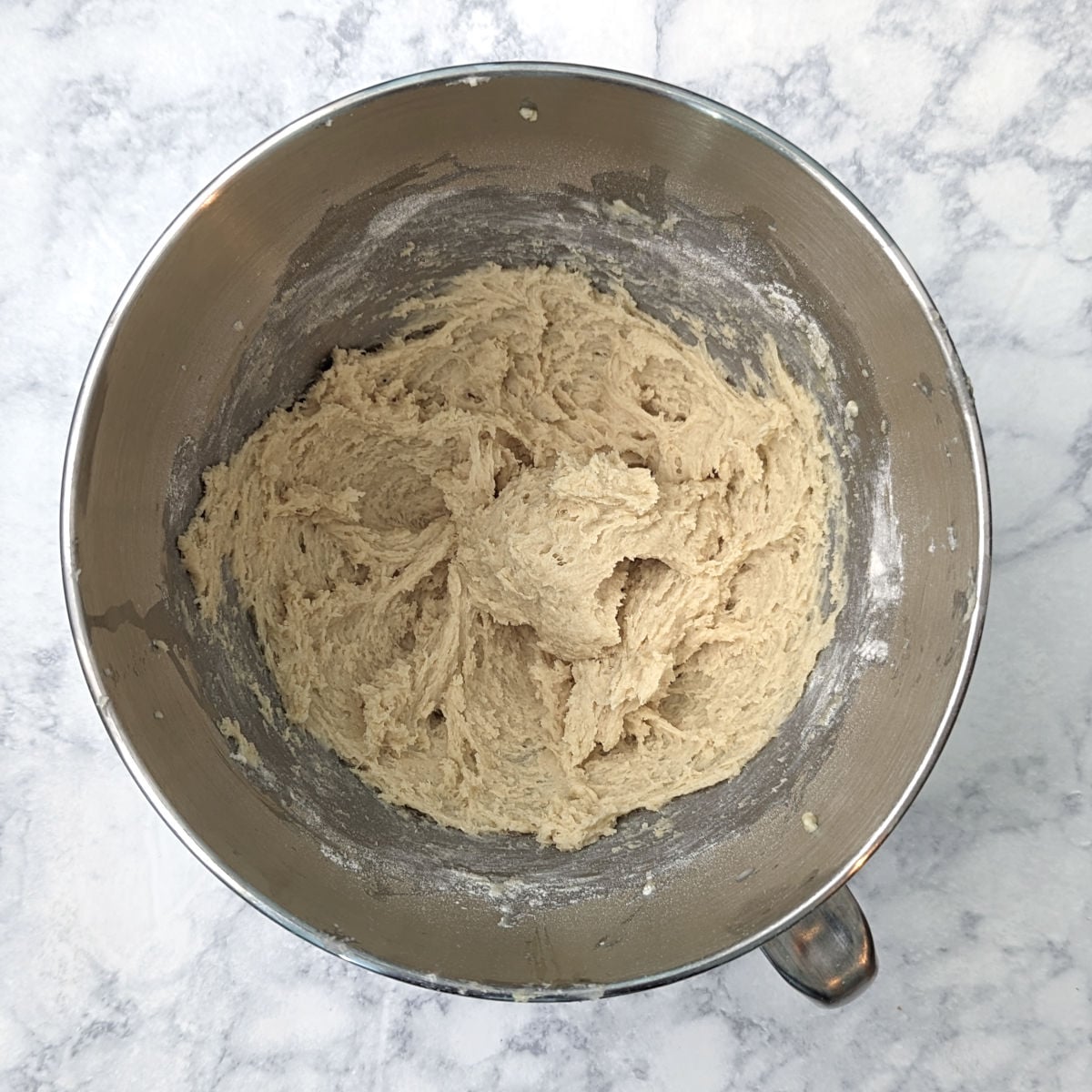
Three: Still using the paddle attachment, stir in half the flour and all of the instant yeast (if using). Mix in the liquid, then add the remaining flour.
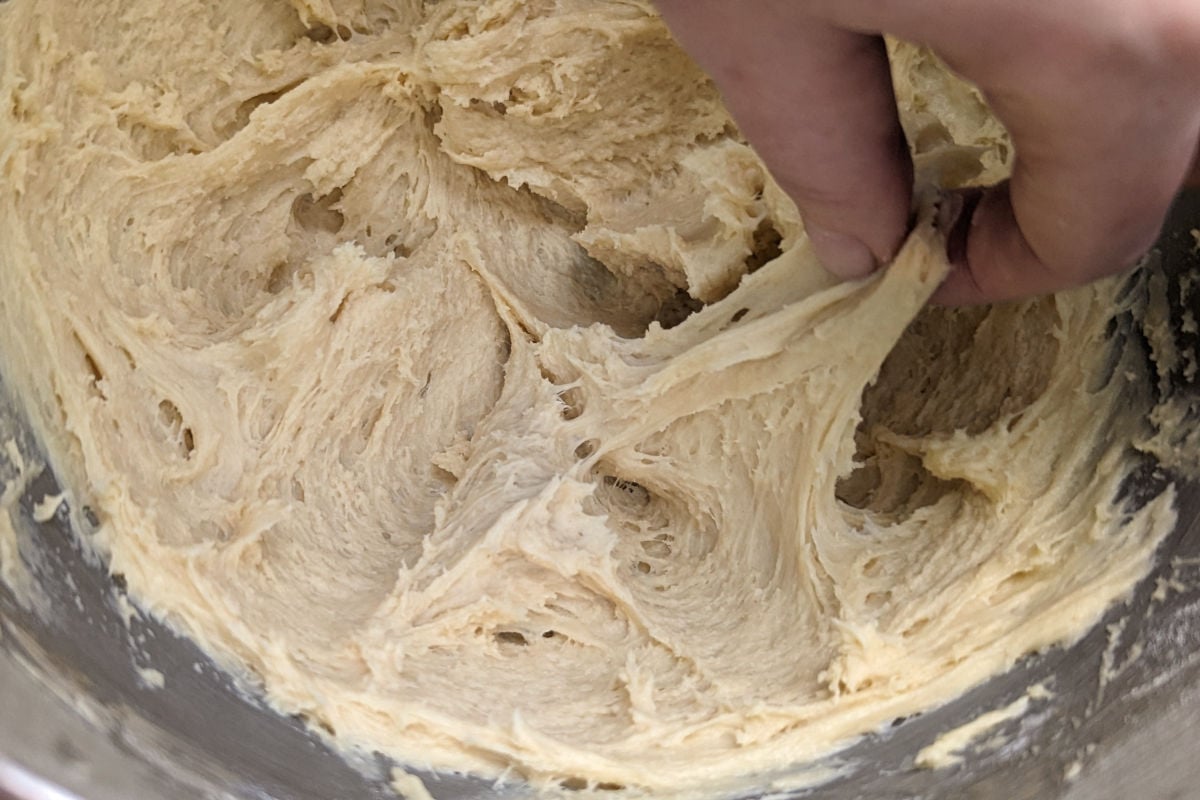
Four: Scrape down the bowl, then beat the mixture using the paddle attachment until the dough is smooth and stretchy. You won't be able to tell unless you pinch a bit of the dough.
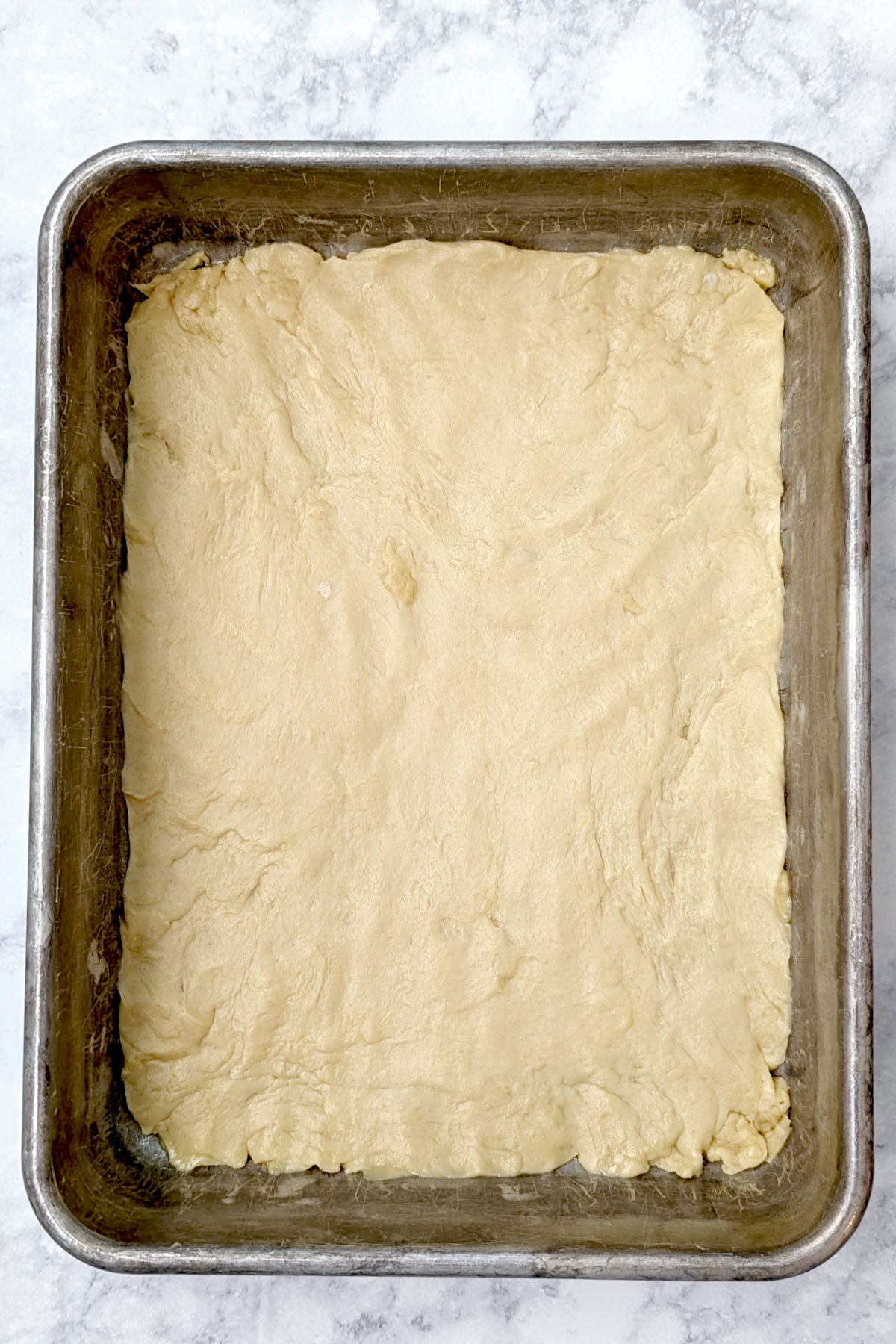
Five: Pat the dough into a greased (preferably aluminum) 9x13-inch pan. If the dough doesn't stretch all the way into the corners, let it rest for 5 minutes before trying again. The dough will not expand into the corners during the rise.
Six: Cover the pan with plastic wrap and let it rise for 2 ½ hours. The cake may be puffy, doubled in height, or not at all - as long as the dough smelled like yeast when you made it, all is fine.
Make the Gooey Butter Topping
Seven: After 2 hours and 10 minutes of rising time (20 minutes before bake time), preheat your oven to 350F. Stir together corn syrup, water, and vanilla in a small measuring cup, then set aside.
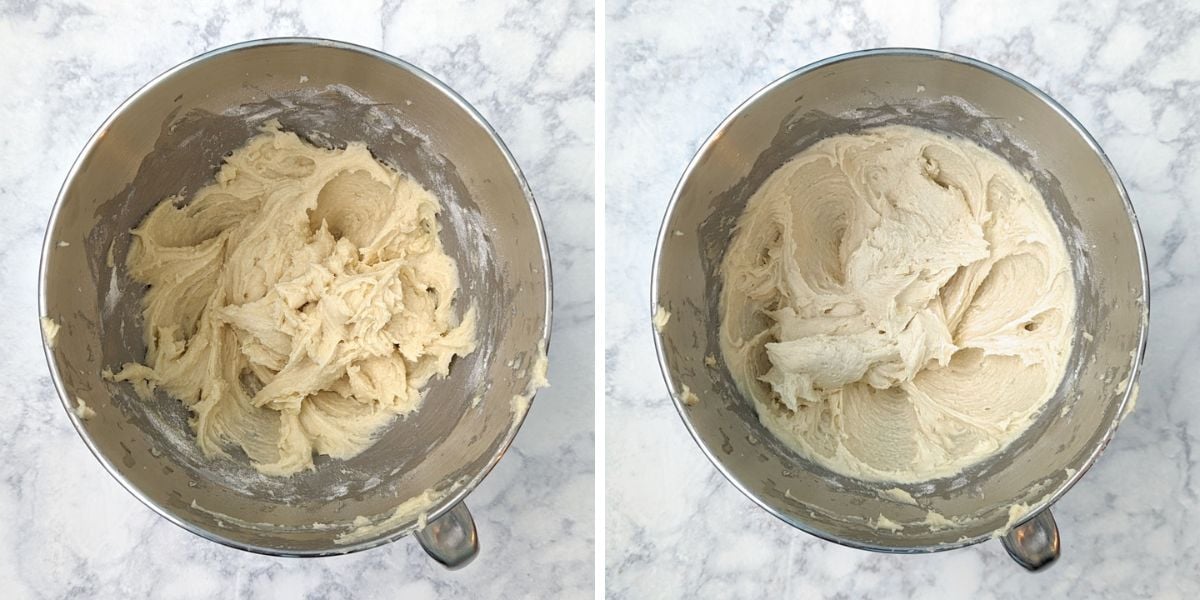
Eight: In a clean bowl, cream the butter, sugar, and salt until it's light and fluffy. Scrape, then mix in the egg until combined. Beat in half the flour, then all the corn syrup mixture, then the remaining flour (above left).
Nine: Scrape down the bowl, then beat on medium speed for 30 seconds (above right).
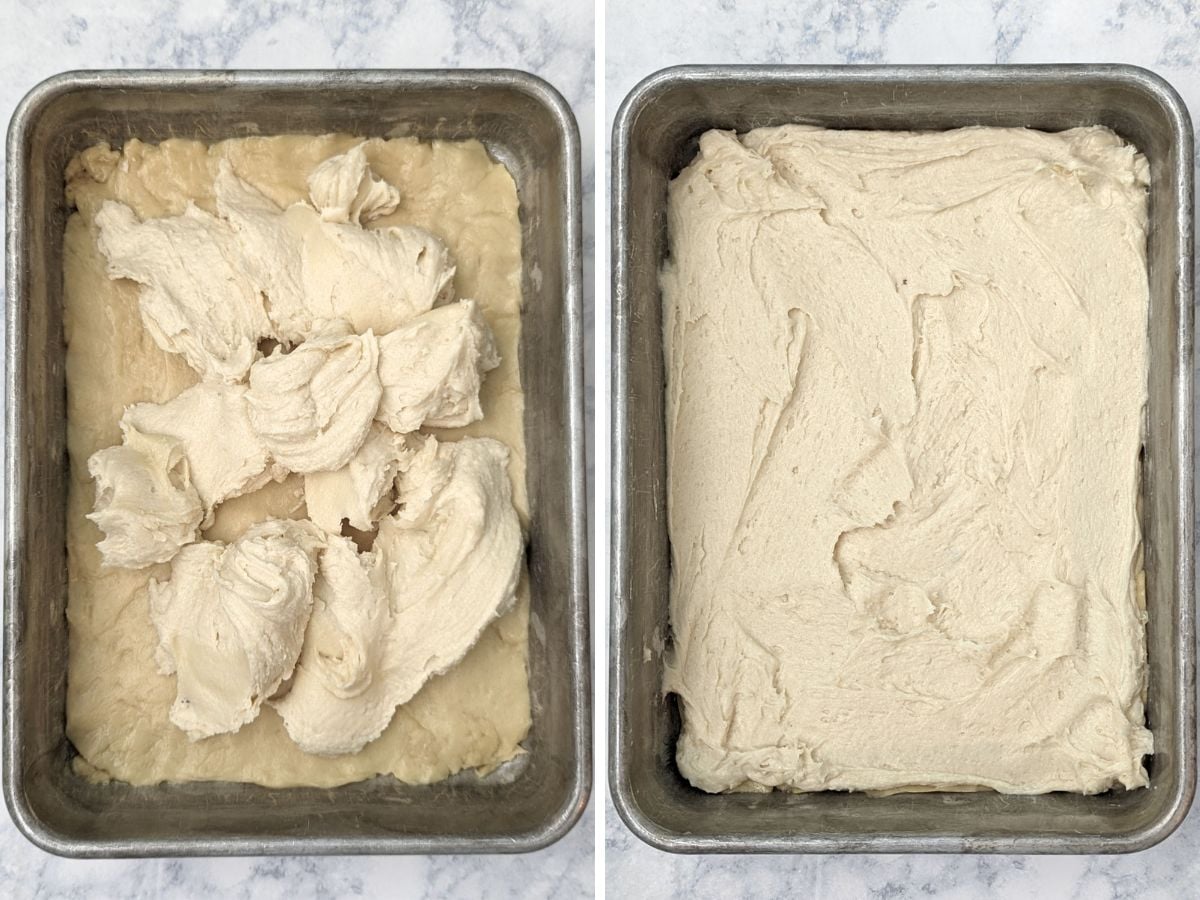
Ten: Gently spoon the topping over the risen cake base, being careful not to deflate it. Spread the topping all the way to the edges; it doesn't move much as it bakes.
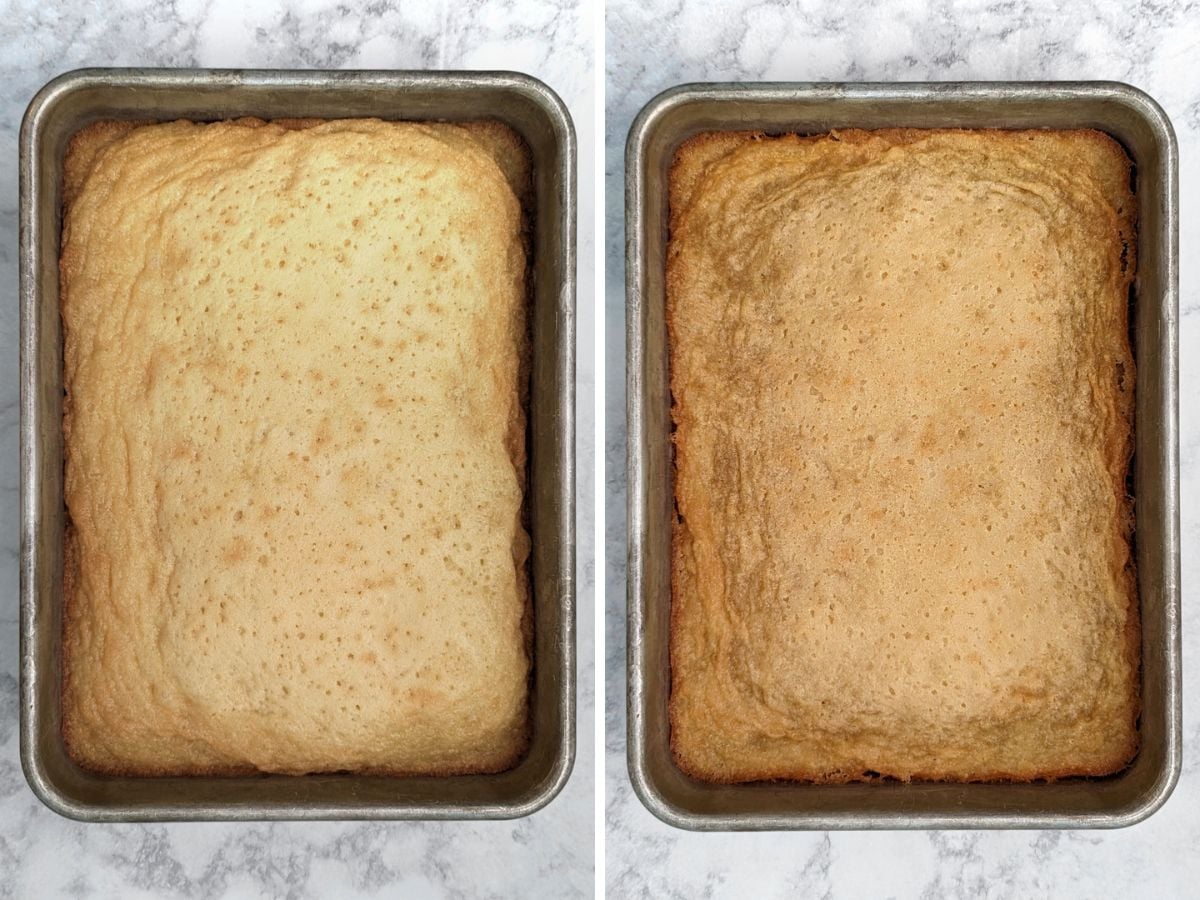
Eleven: Bake for 30 minutes in a metal pan, but it may take up to 45 minutes of baking time in a glass pan. The cake will be golden at the edges, but still liquidy in the center. You will think it isn't done, but it is. If you bake the cake a few minutes longer, it'll still be delicious, but it won't be quite as good or gooey. Cool the cake completely in the pan, at least 2 hours. It will deflate as it cools.
Serving and Storage
You can make Gooey Butter Cake a day in advance - bake it, cool it completely, and refrigerate it covered. Before serving, bring it back to room temperature and dust with powdered sugar.
Serve it as dessert, for breakfast, bring it to a potluck - there's no wrong occasion for this. Make it for a Mother's Day brunch alongside some pink Strawberry Bellinis. Definitely share with your friends - it's what we do in the Midwest.
Refrigerate leftovers in an airtight container; they'll keep for up to 3 days. Bring them back to room temperature before eating - they're best (and gooeiest) that way.
Tips for Great Gooey Butter Cake
⚖️ Weigh the flour for the most accurate results; extra flour can make the base tough and the topping less gooey.
🍞 Pay attention to your yeast. Instant yeast can be added with the flour, while active dry yeast must be dissolved into liquid first - the high butter content of the dough may prevent the granules from dissolving properly otherwise.
👃 Smell the dough. The base may or may not rise or puff up, but it will be fine as long as it smells yeasty.
👉 Dollop the topping and spread it gently. If you deflate the base unevenly, the topping will pool in low spots, while other spots will rise dramatically without being covered with goo.
⏰ Don't overbake the cake. The center will look liquidy and underdone - and that's correct, just like how Brownie Cheesecake jiggles when you pull it from the oven. A cake with a fully set center will be overbaked.
St. Louis Gooey Butter Cake from Scratch FAQs
Yes. This recipe uses a yeasted dough base made entirely from scratch. The from scratch method produces a more authentic texture and flavor - closer to what you'd find in a St. Louis bakery than any cake mix version.
Corn syrup is an invert sugar which keeps baked goods softer than granulated sugar does. In gooey butter cake, it prevents the topping from setting firm or crystalizing over time. Skipping it will change the texture significantly.
I only use a metal pan to bake gooey butter cake because it has baked unevenly in glass and ceramic pans in my experience, resulting in burnt edges. Using a metal pan gives you the most consistent results.
Other From-Scratch Favorites
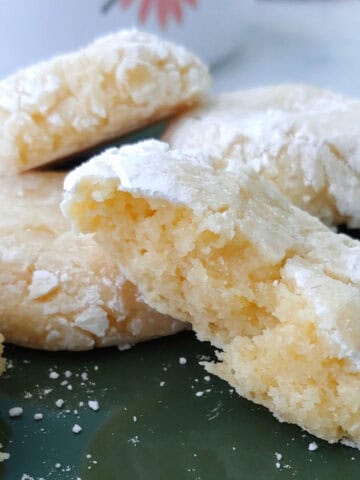
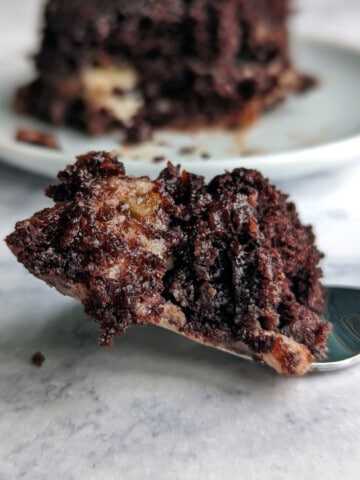
If you liked making this cake from scratch, these are worth your time, too - no mixes, no cans required.
I hope this becomes a recipe you'll return to. If you try it, a star rating below helps others find it - and I'd love to hear how yours turns out in the comments! 💕 Questions or trouble? Drop a note, and I'll do my best to help.
📖 Recipe
St. Louis Gooey Butter Cake from Scratch
Equipment
- electric mixer
- 9x13 inch pan
Ingredients
Yeasted Cake Base
- 3 tablespoons milk 45 grams
- 2 tablespoons lukewarm water 30 grams
- 2 teaspoons yeast
- 6 tablespoons unsalted butter 84 grams; at room temperature
- 3 tablespoons granulated sugar 40 grams
- ¾ teaspoon table salt
- 1 large egg ~50 grams; at room temperature
- 1 ¾ cups flour 210 grams
Gooey Butter Topping
- ¼ cup light corn syrup 78 grams
- 2 tablespoons water 30 grams
- 2 ½ teaspoons vanilla extract 13 grams
- 12 tablespoons unsalted butter 156 grams; at room temperature
- 1 ½ cups granulated sugar 300 grams
- ½ teaspoon table salt
- 1 large egg 50 grams; at room temperature
- 1 ¼ cups flour 155 grams
- powdered sugar for topping
Instructions
Yeasted Cake Base (25 Minutes)
- If using active dry yeast, stir to dissolve it in the milk and water. If you have trouble dissolving it, set it aside for a few minutes to soften the yeast, then stir again. The mixture will smell fragrant and yeasty. If using instant yeast, you'll add it with the flour at the beginning of Step 3.
- With an electric mixer or the paddle attachment of a stand mixer, cream the butter, sugar, and salt at medium speed for a few minutes, until smooth and combined. Scrape down the bowl, add the egg, and mix until combined.
- On low speed, mix in half of the flour and all of the instant yeast (if using). Follow it with all of the liquid mixture, then add the remaining flour.
- Scrape down the bowl, then mix with the paddle attachment at medium speed for 4-5 minutes, until the dough is smooth and stretchy. If using a hand mixer (affiliate link), knead the dough by hand instead.
- Pat dough into a greased 9x13 inch pan, stretching it out to the edges. If the dough doesn't stretch out to the edges, let the dough rest for a few minutes before patting it out the rest of the way.
Rise (2 hours 30 minutes)
- Cover with plastic wrap and let rise for about 2 ½ hours. Dough may just be puffy; it may be doubled; or it may seem no different. As long as the dough smells like yeast, all is fine.
Gooey Butter Topping (20 minutes)
- About 20 minutes from the end of rising time, preheat the oven to 350F and make the gooey topping. Whisk together the corn syrup, water, and vanilla in a small measuring cup.
- Using a stand or electric mixer, cream together the butter, sugar, and salt until light and fluffy. Scrape the bowl, then add the egg and mix until combined.
- Add half the flour to the butter mixture, then scrape down the bowl. Add the corn syrup mixture, then the rest of the flour.
- Scrape down the bowl again, then mix at medium speed for 30 seconds more. Gently spoon and spread the topping evenly over the cake dough and up to the edges of the risen base. Deflating the base unevenly causes the topping to pool in low spots and leaves other places without enough goo.
Bake (30-45 minutes)
- Bake cake for 30 (in a metal pan) to 45 (in a ceramic or glass pan) minutes. The cake will still be liquidy in the center when it is done, but it will be golden around the edges. You will think it's not done, but it is.
- Remove the cake from the oven and cool completely in the pan, at least 2 hours. The filling will initially be puffy but will deflate as it cools.
- Dust with powdered sugar before serving. Store in the refrigerator, but bring leftovers back to room temperature before serving.
Notes
Nutrition
[Originally published January 25, 2018. Rewritten text, instructions, and new photos in April 2023.]



Leona Konkel says
I love this cake - it brings a little bit of St. Louis and the Midwest with me to New Jersey. I hope you also enjoy this cake and find it as straightforward to make as I do. Let me know if you try it - I'd love to know how it turns out!